
Fixing Soil Erosion and Washouts After a Storm
Fix soil erosion after storm damage in Florida: read the washout, stop the water path and stabilize the slope. Call Level One Grading, +1 813-842-4840.

Miguel Orozco

To fix soil erosion after storm damage, deal with the water first and the hole second. A washout is a scar left by water that had nowhere safe to go, so filling the scar without changing the path invites the next storm to cut it again. We are Level One Grading, a Plant City grading and excavation team that repairs erosion damage for property owners in Hillsborough, Polk and Pasco. This guide covers how to read the damage, what to do first, which repairs are regrading and which need stabilizing, and when to call us. The wider cleanup sequence sits in our storm recovery in Central Florida guide.
What Does Storm Erosion Damage Look Like in a Yard?
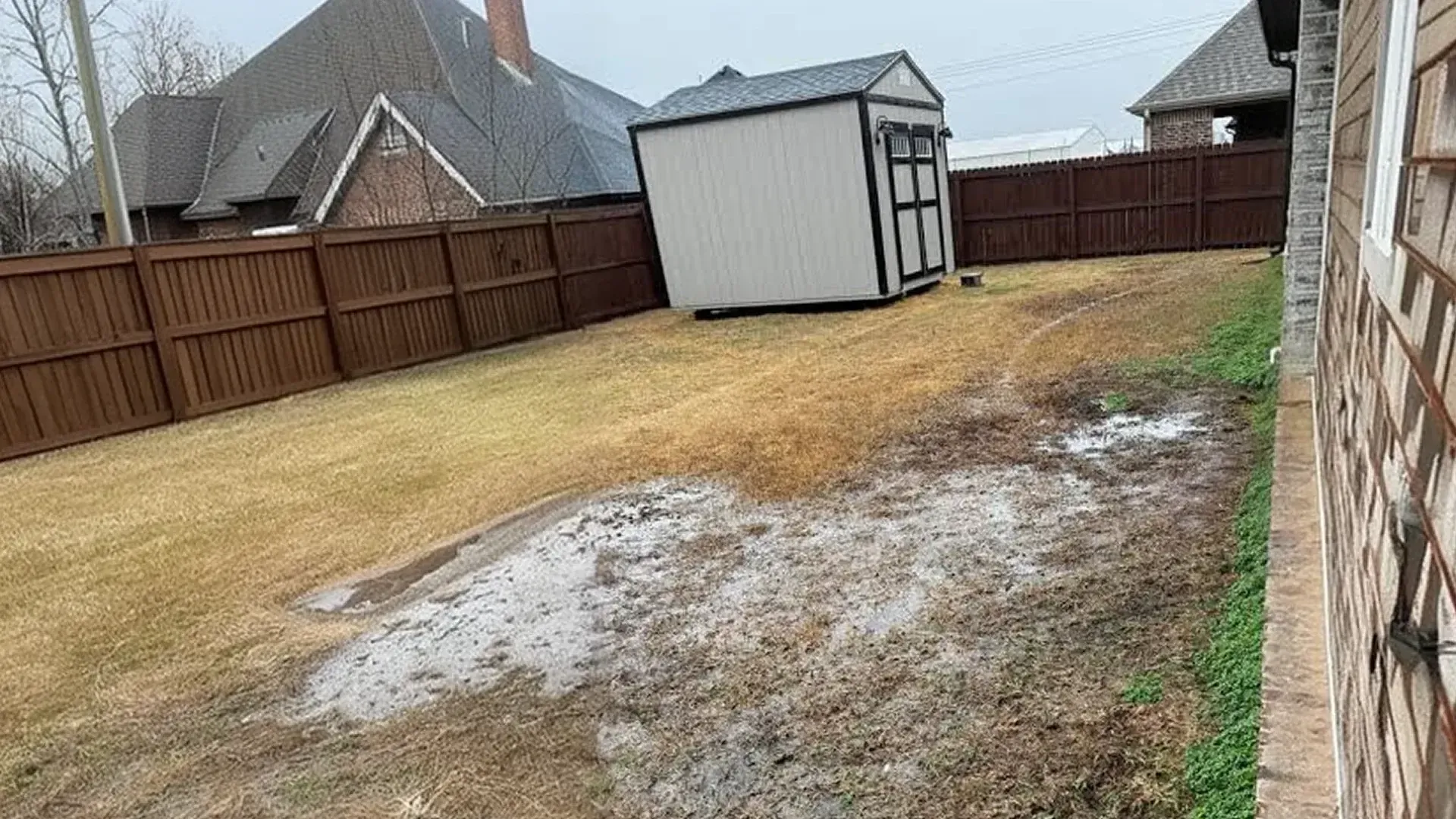
Storm erosion shows up in a few patterns, and each one tells you something about the water. The USDA Natural Resources Conservation Service describes sheet erosion in its water erosion fact sheet as the more or less uniform removal of soil from a surface, while rill and gully erosion happens when concentrated runoff cuts conspicuous channels. Its visual indicators include bare soil, exposed roots and soil deposited where the slope flattens. In a Florida yard, sandy soil erosion looks like pale sand fanned across a driveway apron, roots standing proud of the ground, a lawn edge that ends in a drop, or a narrow channel running downhill. Find where the channel starts, because that is where the water came in.
What Should You Do in the First Days After the Storm?
Safety comes first. Ready.gov tells people to follow local officials after a hurricane and to be careful during cleanup, so wait until the area is safe before you walk a washed out slope or an undercut bank. Photograph the scar so you can compare it after the repair, keep foot traffic, mowers and vehicles off soft ground, and note where water is still running. Pull loose branches and palm fronds out of the channel so they do not dam the flow, but leave the soil alone until you know where the water comes from. A bank that looks firm on top can be hollow underneath, so stay back from the edge.
Why Is Filling a Washout With Loose Dirt Not a Fix?
A washout is a channel, and a channel keeps carrying water until the source changes. Penn State Extension says rills and gullies need to be filled in or they will keep growing deeper and wider, and that the cause must be addressed so they do not form again. The University of Nebraska CropWatch team adds that unless the soil is anchored and protected, repaired gullies typically wash back out. Both were written for farm fields; the logic holds in a sandy yard. Loose fill is the first thing the next storm carries off, and buried limbs or broken concrete leave voids that settle later. Find the source first: a downspout outlet, the end of a driveway, a pipe discharge or a swale that overtops.
When Can You Fix Soil Erosion After Storm Damage With Regrading?
Shallow damage is usually a regrading job. When a storm leaves a low spot, a shallow channel or a drop at a lawn edge, we reshape the ground so water spreads out and leaves, then place fill and compact it so the repair does not slump. We use laser grading, which matters on flat Florida lots where a small error sends water the wrong way. To regrade a washed out yard properly, the finished surface has to tie into the ground around it and lead to a safe outlet. Our guide to how much slope a yard needs covers the rule beside a house, and rough and finish grading explains the two passes.
How Do You Stabilize a Slope After a Storm Washout?
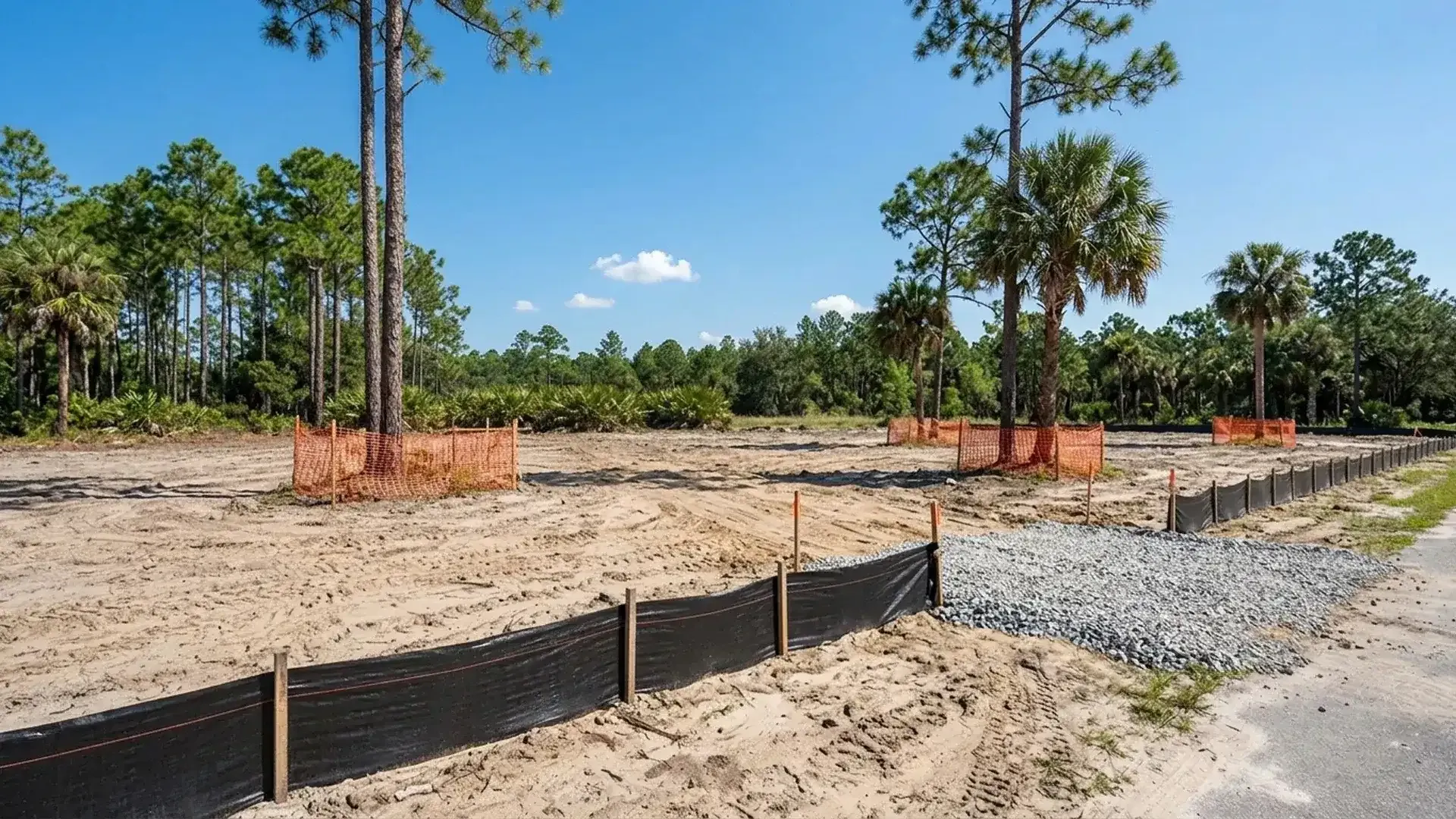
Regrading puts the ground back in shape, and stabilizing keeps it there. NRCS notes in the same fact sheet that bare soil between plants is the most susceptible to erosion. Our water and erosion control work uses silt fences, erosion control blankets, riprap, swales, terracing and vegetation, matched to how hard the water hits the spot. An erosion control blanket holds soil on a gentle slope while roots take hold, a silt fence after storm repairs traps sediment along the downhill edge, and riprap armors the place where concentrated water leaves a pipe or channel. A swale carries the flow to an outlet. See how sediment fences go in.
When Does a Washout Need a Grading Crew?
The signs are a channel that reopened after you filled it, damage close to a slab, a driveway edge or a culvert, a gully that needs machinery, water leaving your lot toward a neighbor or a road, and exposed tree roots. For storm washout repair we walk the site, trace the flow to its source, and tell you whether the fix is a regrade, a stabilizing measure, a drain or a mix. We are not the right first call for a cracked or shifted foundation, which belongs with a structural professional. For a driveway crossing, see our culvert and driveway washout guide, and for ground against a house, foundation erosion.
Do Washout Repairs Need Permits or an 811 Call?
Any digging starts with an 811 call. Florida Statute 556.105 requires an excavator to notify the one call system not less than 2 full business days before beginning any excavation that is not beneath the waters of the state. Some erosion control and stormwater management systems require permits, and we help navigate permitting requirements. Florida DEP says its construction generic permit applies to construction that disturbs one or more acres, or less than one acre that is part of a larger common plan of development or sale, and that discharges stormwater to surface waters or a municipal storm sewer, and that it is separate from the Environmental Resource Permit and any local stormwater permit. Work near a wetland, pond or canal can bring other rules, so confirm with your county and water management district first.
How Do You Protect the Repair Before the Next Storm?
Treat the first heavy rains after a repair as a test. Once the storm passes, check whether water reaches the intended outlet, whether sediment has piled against a fence or at the end of a swale, and whether the blanket or plantings are holding. Clear leaves, palm fronds and sand from outlets so the flow does not back up and go around the repair, and keep vehicles off soft new ground. If something shifts, tell your contractor early, while the fix is still small. For the checklist to run before the next season, read our erosion control guide for hurricane season, and for water that is still standing, see flooded yard emergency drainage.
Storm Erosion Repair FAQ
Can I fill a storm gully with dirt myself?
For a shallow rill on your own property, adding soil can work if the water source is redirected and the surface is protected afterward. A deeper gully tends to wash out again. If the channel is close to your house, driveway or a drain, have it looked at first.
Why did my washout come back after I fixed it?
The water path did not change. Rain kept arriving at the same spot, from a downspout, a pavement edge or a low section upslope. A lasting repair redirects or slows that flow and covers the ground, instead of only refilling the hole.
Will new grass stop a washout on its own?
Grass helps on a gentle slope because roots hold soil, but new plants take time and do not stand up to concentrated flow. Until they root, a blanket or silt fence holds the soil, and a spot where water pours in may need riprap or a swale.
Does Level One Grading repair storm erosion damage?
Yes. We repair erosion damage and put control measures in place to prevent future erosion, including silt fences, erosion control blankets, riprap, swales and terracing. Our work covers Hillsborough, Polk and Pasco counties out of Plant City. Phone +1 813-842-4840 and we will tell you whether your address is in range.
Planning to Fix Soil Erosion After a Storm?
If a storm cut a gully, undercut an edge or sent sand across your drive, tell us where the water comes from and what it reached, and we will walk the property with you. Licensed and insured crews do the work, and warranty claims on it run at 2 percent a year. To fix soil erosion after storm damage that keeps coming back, call Level One Grading at +1 813-842-4840 (we answer Monday to Saturday, 9AM to 5PM) or request a free estimate.
Checked against the NRCS water erosion fact sheet, Penn State Extension, University of Nebraska CropWatch, Ready.gov, Florida Statutes 556.105, the Florida DEP construction stormwater page and levelonegrading.com in November 2026.

About Miguel Orozco
Miguel Orozco is the President of Level One Grading, a trusted Central Florida grading and excavation company, delivering precise earthwork solutions and dependable results for residential and commercial projects since its founding.