
Rough Grading vs. Finish Grading: What Is the Difference?
Rough grading vs finish grading: what each pass does, the order on a Florida lot and what to check at handoff. Call Level One Grading, +1 813-842-4840.

Miguel Orozco

Rough grading vs finish grading comes down to order and precision. Rough grading moves large amounts of soil to bring a lot close to its planned elevations and to set the direction water will flow. Finish grading is the last careful pass, which trims that shape to exact height and leaves a smooth surface for sod, pavers, concrete or landscaping. Most new builds need both, and each one only works if the other was done well. From our base in Plant City, Level One Grading takes grading work in Hillsborough, Polk and Pasco counties. This guide explains what each pass does, how the two fit around underground work and what to check before you accept the result. Our land grading services guide covers the wider picture.
Rough Grading vs Finish Grading: The Short Answer
The difference between rough grading and finish grading is how close each pass gets to the surface you will actually see and use. Rough grading is the heavy pass that cuts high ground, fills low ground and sets the broad slopes. Finish grading is the careful pass that refines that shape to its exact height and smooths it out. Side by side:
- Rough grading happens early, with heavy machines, and aims for approximate elevations and the right drainage direction.
- Finish grading happens late, with light passes, and aims for exact elevations and a smooth, even surface.
- A rough grade can leave ruts, ridges and loose sand. A finish grade should not.
- Neither pass can stand in for the other.
What Does Rough Grading Do on a Florida Lot?
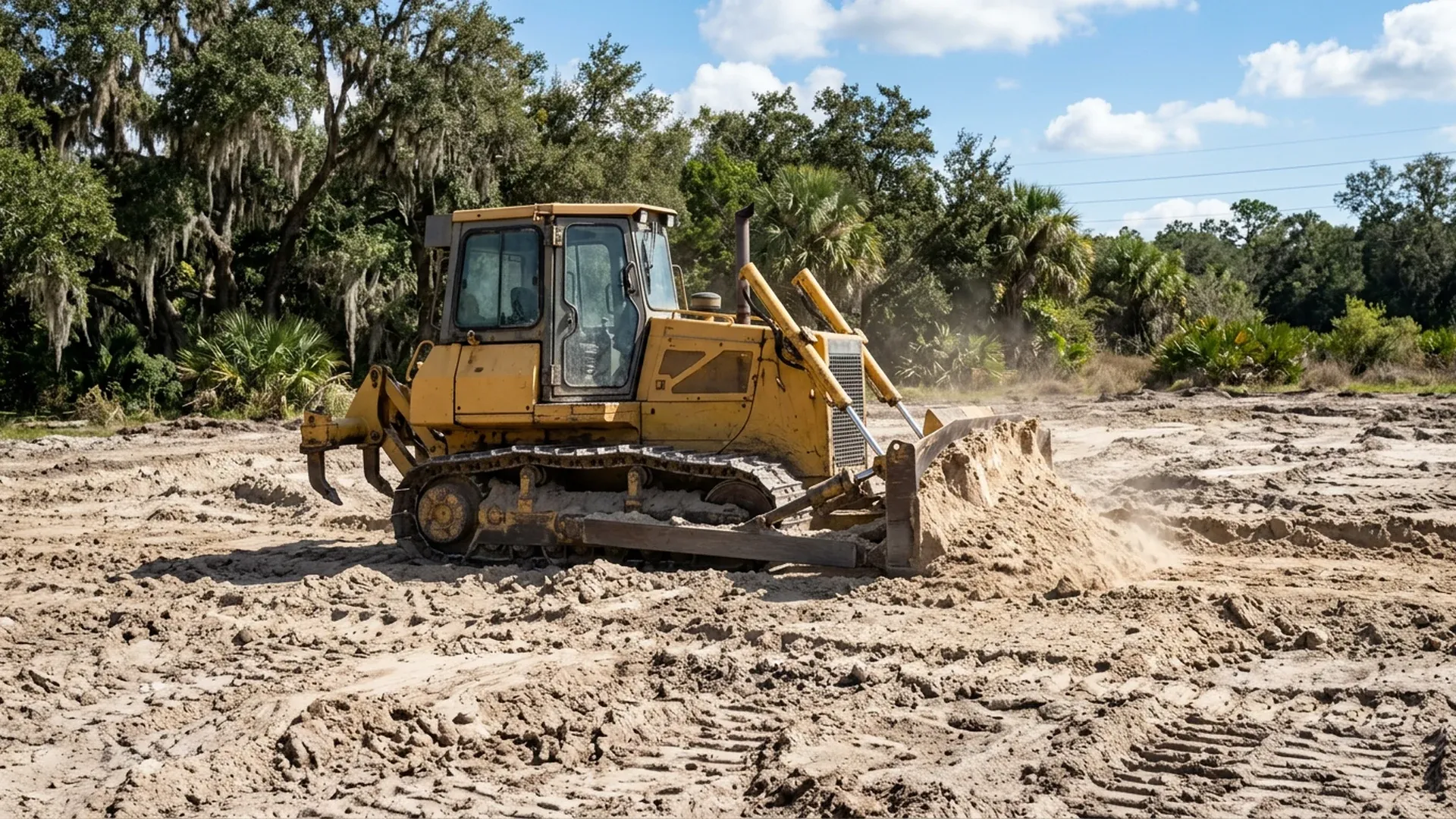
Rough grading shapes the lot so the finished project sits at the right height and water has somewhere to go. The machines cut high spots, fill low spots and build the building pad up to its planned elevation. On a flat Central Florida lot this is also where the drainage direction is decided, because a swale cut too shallow now stays too shallow later. For lawn areas, UF/IFAS advises that when extensive grading is needed, the topsoil is stockpiled and put back after the rough grade is established, and that the rough grade should match the final grade once that topsoil is replaced. Rough grading is not meant to look neat, and that is the clearest visible difference in rough grading vs finish grading: expect tracks, ridges and loose sand when this pass ends.
What Does Finish Grading Do Before Sod or Paving?
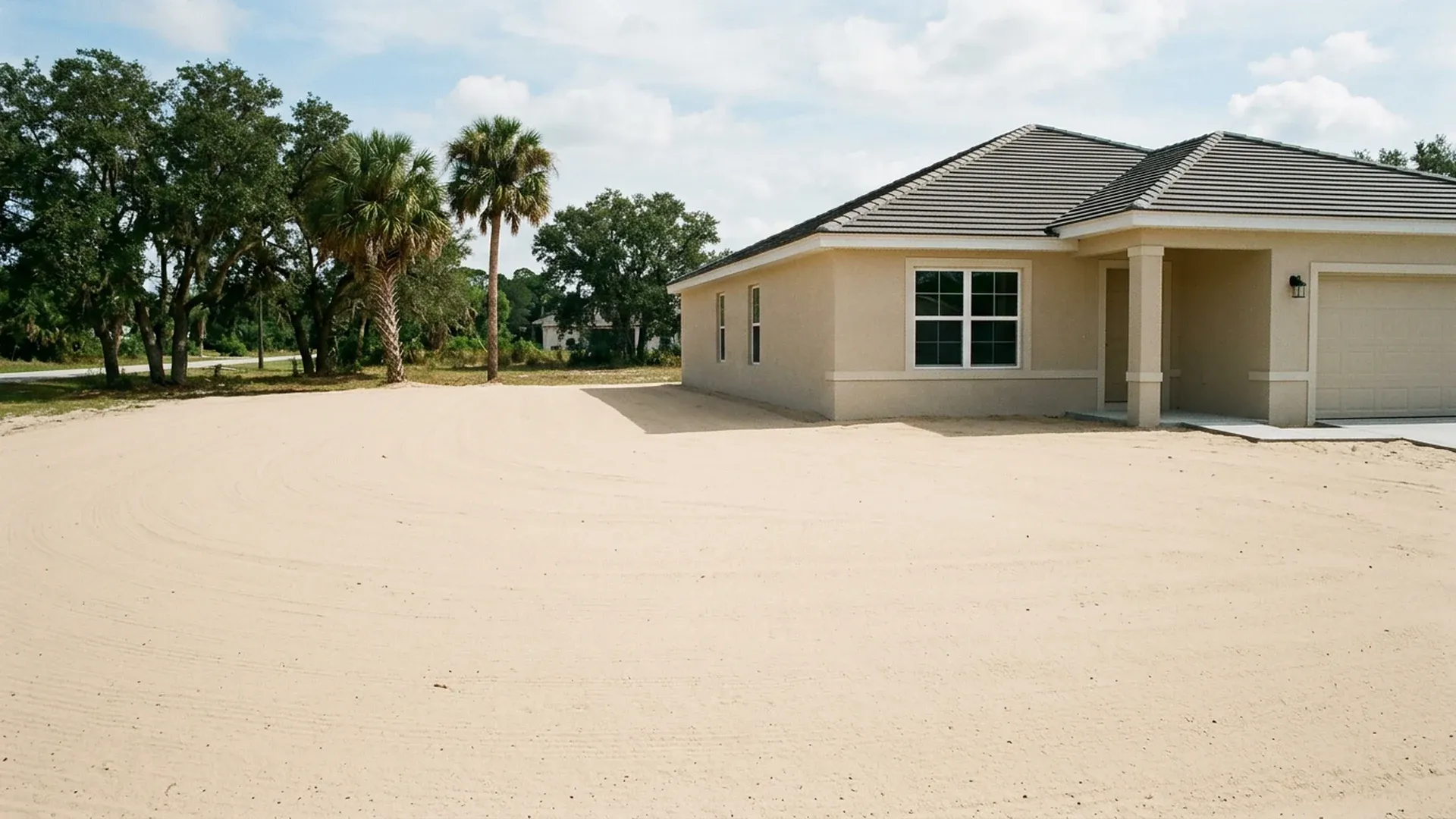
Finish grading is the last pass before the surface gets covered. It trims the rough shape to exact elevations, removes the ridges and ruts and leaves slopes that still drain. The UF/IFAS lawn guide says final grading is completed just before planting so the turf grows on a smooth surface, and that driveways and walks should sit level with, or slightly above, the final grade, with the thickness of the sod allowed for. The same logic applies to pavers and slabs, because their edges are set relative to the finished surface. A small error here becomes a lip at the edge of the patio, a puddle on the walk or a slab that sheds water toward the wall. We grade with laser and GPS guidance so the machine holds the numbers, not the eye.
Which Comes First, and Where Do Utilities Fit?
In the rough grading vs finish grading sequence, the rough pass comes first, the finish pass comes last and the underground work happens in between. On a typical new build the order is clearing, rough grade, footings and buried lines, then the finish pass. Before anyone digs a trench, section 556.105 of the Florida Statutes requires the excavator to give notice through the state system at least 2 full business days ahead. A trench cut after the finish pass tears up the surface and sends the crew back for a redo. Fill under a foundation is a separate question. The 2023 Florida Building Code, Residential, section R401.2 says fill that supports footings must be designed, installed and tested under accepted engineering practice, so ask your engineer or testing lab who signs off on it. We dig, grade and prep the ground, and testing is handled by others.
How Precise Does Finish Grading Need to Be?
Precise enough that water leaves the structure and every hard surface meets its neighbor cleanly. Section R401.3 of the same code says a lot must be graded so surface water drains away from foundation walls, and the grade must fall at least 6 inches in the first 10 feet. The same section adds a minimum slope of 2 percent away from the building for hard surfaces within 10 feet of the foundation. For a lawn, the UF/IFAS lawn guide suggests 1 to 2 percent away from the house. Your approved plans and your local permitting office set the final numbers for your lot, so work from those. Our guide to the yard slope away from the house shows how to measure the fall yourself.
What Goes Wrong When the Two Passes Get Mixed Up?
Trouble with rough grading vs finish grading starts when one pass is asked to do the other pass's job, or when other work follows it in the wrong order. A finish pass trims; it cannot rebuild a pad that was shaped to the wrong height. Heavy traffic after the finish pass causes a second problem. UF/IFAS notes that compaction often happens during home construction from vehicle traffic and can reach more than 12 inches below the surface. It adds that compacted soil slows water moving into the ground, which leads to more runoff. Bare rough grade has its own risk, since loose sand moves in a Florida downpour. A sediment fence is one way to hold that sand on the lot, and the finish pass belongs close to the day the surface gets covered.
What Should You Check Before You Accept the Finish Grade?
Walk the lot with the plan in hand and check the finish grade against it, not against how it looks from the driveway. In rough grading vs finish grading, the finish pass is the one you will live with, so use this list:
- Elevations at the stakes or marked points match the plan.
- Water leaves the house side, with no pooling along the wall after rain or a hose test.
- No ruts, ridges or loose clods remain.
- Edges of walks, driveways and the sod line allow for the thickness of the sod or pavers.
- Swale and drain outlets are open and lead somewhere legal.
- All underground work is finished and signed off.
If you are weighing a do-it-yourself pass, read DIY grading vs professional contractor first. Rules differ by county and city, and our land grading permit guide explains why you should confirm yours before work starts.
Rough Grading vs Finish Grading FAQ
Do finish grading and final grading mean the same thing?
In practice, yes. Contractors say finish grade, final grade or fine grade for the last pass before sod, pavers or concrete. Our laser grading page uses final grade and fine grading. Because the words vary, ask for the scope in writing so you know which passes the quote includes and in what order.
Can finish grading fix a bad rough grade?
Only a small part of it. Finish grading trims and smooths, so it can correct minor high and low spots. If the pad sits at the wrong height or the slopes send water the wrong way, the fix is more rough grading first, then a new finish pass on top of it.
Do I need finish grading before laying sod?
Yes, in most cases. UF/IFAS says final grading is completed just before planting so the turf grows on a smooth, even surface. UF/IFAS adds that good grading gives a more level site and a lawn that is easier to mow and maintain.
Can you handle both the rough and the finish pass on my lot?
Our grading work covers Hillsborough, Polk and Pasco counties from our Plant City base, and our laser grading page lists rough and fine grading. Tell us your address and your plan on the phone at +1 813-842-4840, and we will set up a free estimate and a walk of the lot.
Ready to Plan Rough Grading and Finish Grading?
If you are not sure how rough grading vs finish grading applies to your project, we will walk the lot, read the plan and tell you which passes it needs and in what order. Call Level One Grading at +1 813-842-4840 between 9AM and 5PM, Monday to Saturday, and ask for your free estimate.
Checked against the 2023 Florida Building Code, Residential, 8th edition, UF/IFAS Extension and Florida Statutes 556.105 in November 2026.

About Miguel Orozco
Miguel Orozco is the President of Level One Grading, a trusted Central Florida grading and excavation company, delivering precise earthwork solutions and dependable results for residential and commercial projects since its founding.