
How Much Slope Does a Yard Need Away From the House?
Yard slope away from house: Florida code calls for 6 inches of fall in the first 10 feet. Get a free estimate from Level One Grading, +1 813-842-4840.

Miguel Orozco

A yard needs to fall at least 6 inches in the first 10 feet away from the house, according to the 2023 Florida Building Code. That yard slope away from house is about 5 percent, and hard surfaces such as a patio or driveway beside the wall need at least 2 percent. Level One Grading is based in Plant City and grades yards across Hillsborough, Polk and Pasco counties. This guide explains the numbers, how to measure your own yard, and when to call a pro. For the bigger picture, see our land grading services guide.
How Much Yard Slope Away From the House Do You Need?
The 2023 Florida Building Code asks for a minimum fall of 6 inches within the first 10 feet from the foundation. Section R401.3 of the residential code says lots shall be graded to drain surface water away from foundation walls, and that surface drainage shall be diverted to a storm sewer conveyance or other approved point of collection that does not create a hazard.
Six inches over 10 feet is a minimum, not a target, and it is the standard for new construction. Older homes were permitted under earlier editions, and your city or county can add its own rules, so confirm the current text with your building department. The slope is only half the job, because the water also needs somewhere safe to go.
What Does 6 Inches in 10 Feet Look Like in Percent?
Six inches in 10 feet is a 5 percent slope. Ten feet is 120 inches, and 6 divided by 120 is 0.05. In everyday terms, the ground drops about six tenths of an inch for every foot you walk away from the wall. At 5 feet out, the soil should sit about 3 inches lower than it does at the foundation, and at 10 feet out about 6 inches lower.
The code counts the first 10 feet only. Beyond that distance the section sets no number, and the final grade depends on your lot, the outlet and the plans for the property. A yard slope of 5 percent near the wall can ease off farther out and still meet this section, as long as the water reaches a safe outlet.
What Slope Do Driveways, Patios and Sidewalks Need?
Hard surfaces get a gentler rule. Section R401.3 says impervious surfaces within 10 feet of the building foundation shall be sloped a minimum of 2 percent away from the building. Two percent is about a quarter of an inch per foot, or 2.4 inches across 10 feet.
Rain does not soak into concrete or pavers, so a patio, driveway apron or walkway that tilts toward the house sends water straight to the wall, even when the lawn is graded correctly. Check these surfaces first. Correcting one can involve more than moving soil, so have it looked at on site before deciding how to fix it.
Can a Flat Florida Lot Still Meet the Slope Rule?
Sometimes a lot cannot reach 6 inches of fall in 10 feet. The code has an exception for that: where lot lines, walls, slopes or other physical barriers prohibit the fall, drains or swales shall be constructed to ensure drainage away from the structure.
That matters in Central Florida, where lots are often flat and summer storms are heavy, so a flat lot often cannot give you the yard slope away from the house that the code asks for. Grading cannot move water that has nowhere to go, so the outlet is part of the plan. Depending on the lot, the answer may be a shallow swale, a French drain or a mix. Our guide to residential swale grading explains how swales work, and our French drains page shows what we install.
How to Measure Yard Slope With a String and a Level
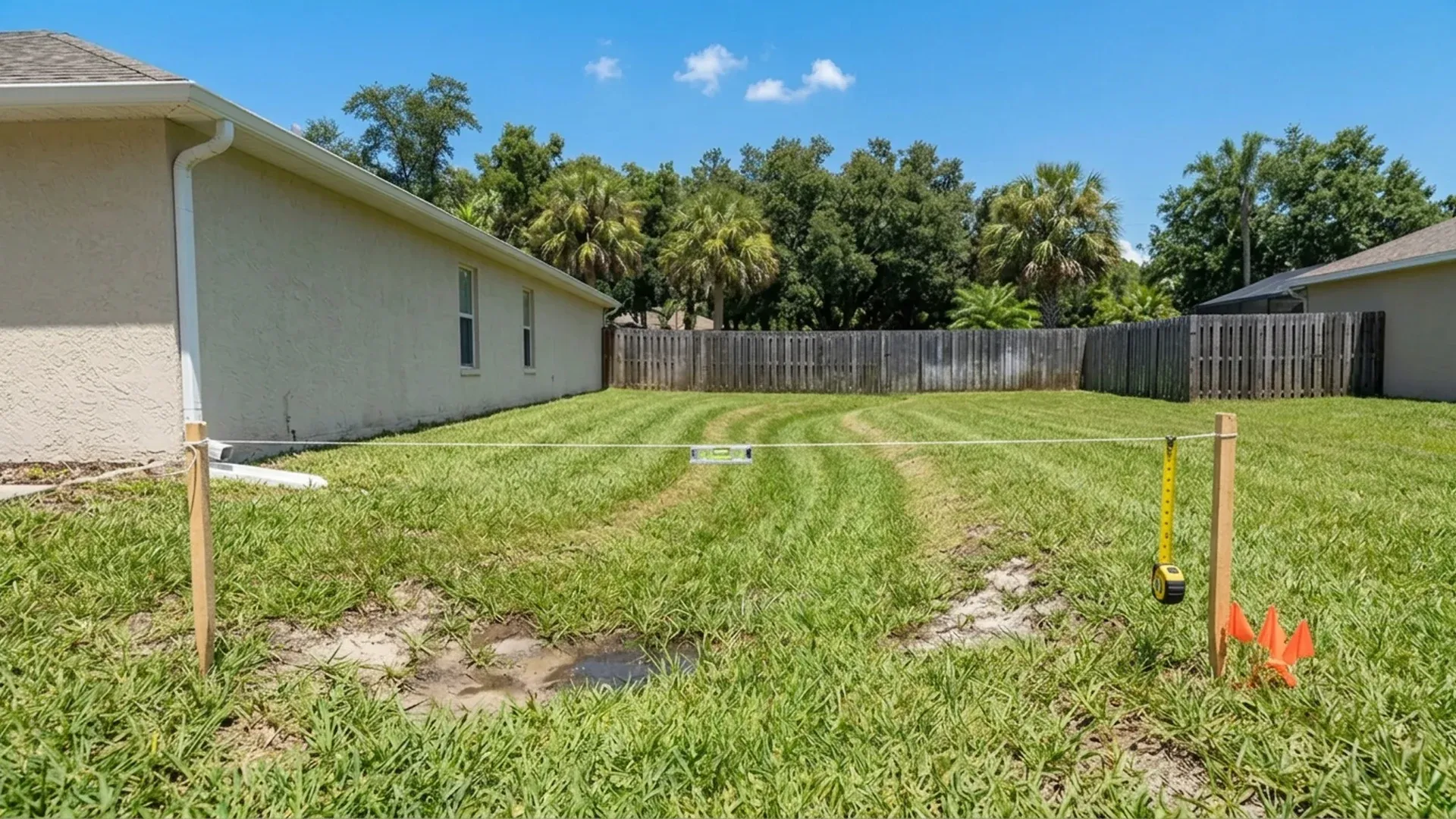
You can check your yard slope away from the house with a string, a line level and a tape measure. The result is a rough reading, not a survey, but it tells you whether the 6 inches in 10 feet is even close.
- Drive a stake beside the foundation and a second stake 10 feet out, in a straight line from the wall.
- Tie a string to the first stake at the height of the soil beside the wall, pull it taut to the second stake and slide the line level along it until the string is level.
- Measure from the string down to the ground at the second stake. A gap of 6 inches or more means the ground falls at least 5 percent over that stretch.
- Repeat at several spots along each wall, because the slope can change from corner to corner.
What Are the Signs Your Yard Slopes Toward the House?
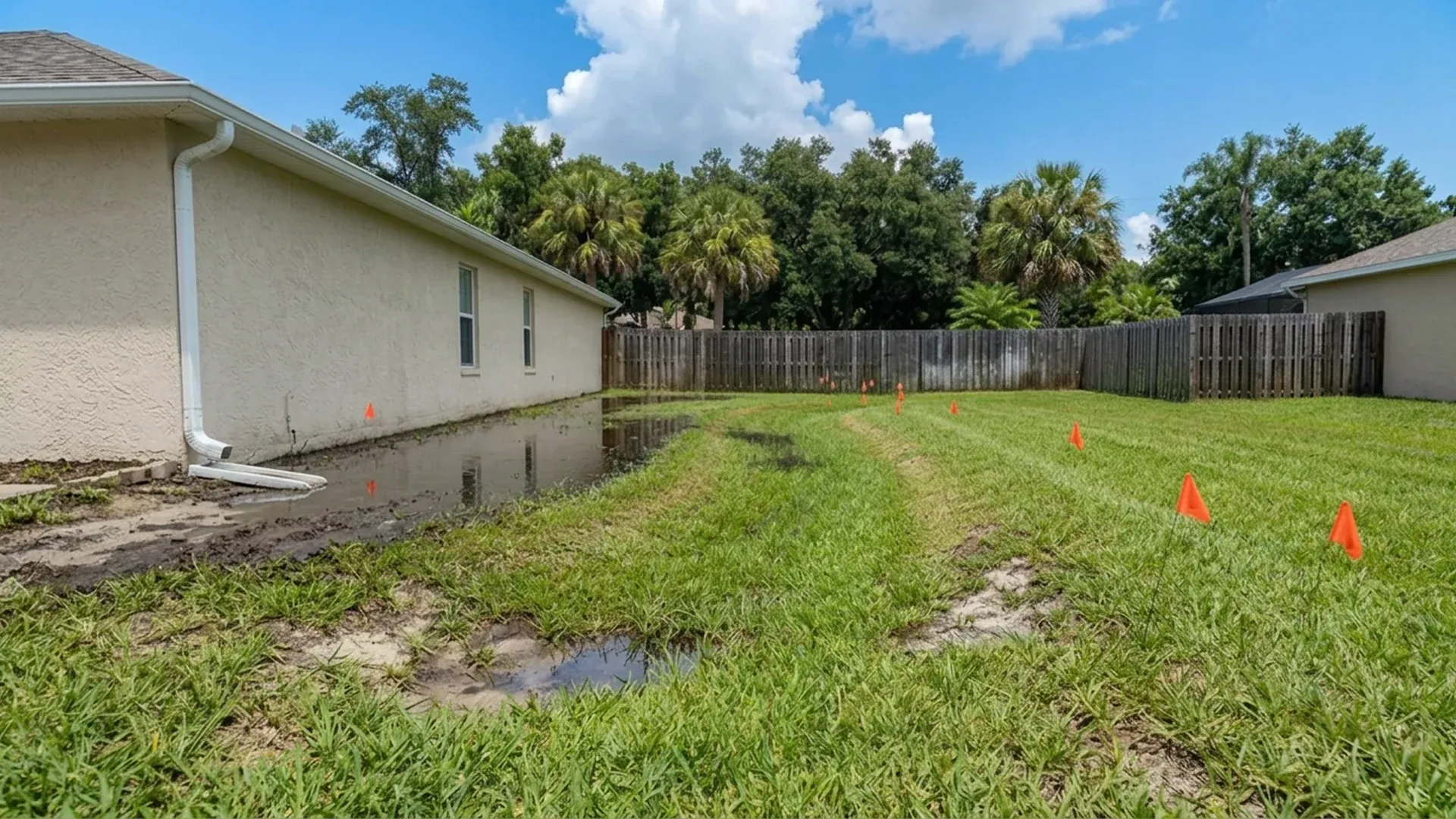
A yard that does not slope away from the foundation usually shows it after rain. Watch for these signs:
- Standing water along the slab or foundation edge after a storm.
- Soil or sand washed away from the foundation, or muddy streaks on the stucco near the ground.
- A downspout that empties right beside the foundation.
- A patio, walkway or driveway edge that tilts toward the house.
- Wet or soft ground that stays wet long after the rest of the lawn has dried.
Our guide to poor drainage and foundation damage signs lists the outside and inside warnings in more detail. If you see more than one of these, measure the slope before you spend time on anything else.
Can You Regrade a Yard Yourself?
Small cosmetic fixes, like leveling a planting bed, can be a weekend job. Call a pro when water reaches the foundation, when the area is large, when slopes must meet a plan or code, or when runoff has to connect to a street, a swale or a neighbor's lot. Adding soil without checking the numbers can push water toward the house instead of away from it.
Before anyone digs, Florida law requires an excavator to give notice through the state's underground utility notification system not less than 2 full business days ahead of excavation, under section 556.105 of the Florida Statutes. Our guide to a land grading permit in Florida explains when a permit may apply.
How Do You Choose a Grading Contractor for This Job?
Choose a contractor who measures before moving dirt, because grading around the foundation is where small errors show up first. Ask how the finished slope will be checked, where the water will end up and who handles permits. Be careful with anyone who promises a result without looking at your lot, because a yard slope that works in one yard can fail in the next.
Level One Grading is licensed and insured, with an industry-leading 2% warranty claim rate annually. We assess your site, grade it with laser and GPS guidance and recommend the drainage that gives a lasting fix. You can read more about our laser grading and our guide to how to fix a sloped yard.
Yard Slope Away From House FAQ
How much should a yard slope away from the house?
At least 6 inches of fall in the first 10 feet, which is a 5 percent slope, under section R401.3 of the 2023 Florida Building Code. Paved surfaces within 10 feet of the foundation need at least 2 percent. Your local building department and approved plans have the final say.
Is a steeper slope better?
Not automatically. The code sets a minimum, and the right slope depends on the lot, the soil and where the water can go. A slope that is too steep can wash sand out of the lawn. A site visit shows what your yard needs.
Does the 6 inches in 10 feet rule apply to my older home?
The code governs construction permitted under it, so an older home may have been built to an earlier edition. The 6 inches in 10 feet figure is still a useful benchmark when you check your yard. Confirm the current text with your county or city building department.
What areas do you serve?
Level One Grading is based in Plant City and serves Hillsborough, Polk, Pasco and Pinellas counties, including Plant City, Lakeland, Tampa, Zephyrhills, Riverview and St. Pete. Call +1 813-842-4840 to confirm service for your address and schedule a free estimate.
Ready to Check Your Yard Slope Away From the House?
If your yard slope away from the house looks wrong, or water collects near your foundation, tell us where and when, and we will walk the property with you. Call Level One Grading at +1 813-842-4840, Monday to Saturday, 9AM to 5PM, or request a free estimate today.
Checked against the 2023 Florida Building Code R401.3, Florida Statutes 556.105 and levelonegrading.com in October 2026.

About Miguel Orozco
Miguel Orozco is the President of Level One Grading, a trusted Central Florida grading and excavation company, delivering precise earthwork solutions and dependable results for residential and commercial projects since its founding.