
Emergency Drainage Fixes for Flooded Yards in Central Florida
Flooded yard emergency drainage steps for Central Florida: stay safe, open water paths, avoid costly mistakes. Free estimate: +1 813-842-4840.

Miguel Orozco

Flooded yard emergency drainage is the short list of safe actions you take while there is standing water in the yard: stay out of it, find where it comes from, open the paths it should use to leave and avoid moves that make it worse. It is first aid, not a cure. Level One Grading handles storm recovery and drainage across Hillsborough, Polk and Pasco counties, and this guide explains what an owner can do alone, what to leave alone and when to bring in a contractor.
What Should You Do First When Your Yard Floods?
Do nothing in the water until you know it is safe, because floodwater is a hazard even when it looks shallow. Ready.gov says not to walk, swim or drive through flood waters, and notes that just six inches of moving water can knock you down. Keep children and pets out, and do not wade across the yard to reach a drain.
Electricity is the next risk. The CDC says to be prepared to turn off electrical power when there is standing water. If water is near outlets, a pump or the service panel, stay away and call a licensed electrician or your utility. Follow your local emergency managers. Drainage can wait an hour. Safety cannot.
How Do You Find Where the Water Is Coming From?
You find the source by watching how the water moves, because its direction tells you what is feeding it. Once it is safe, look from a porch or higher ground and note which way the surface water flows. Take dated photos of each wet area and any low spot against the house, and set a stake at the waterline to see whether the level is rising or falling.
Then ask four questions. Is roof water landing near the foundation? Is water entering from a neighbor's lot, the street or a ditch? Is a swale, ditch or culvert blocked? Or is the ground simply full, with no visible flow? Our guide to fixing a yard that floods in Florida matches each pattern to a long-term fix.
Which Flooded Yard Emergency Drainage Steps Can You Try Yourself?
The safe steps are the ones that open a path for water without changing the shape of your land. Once the water has stopped rising and the area is safe, you can:
- Add downspout extensions so roof water lands well away from the foundation.
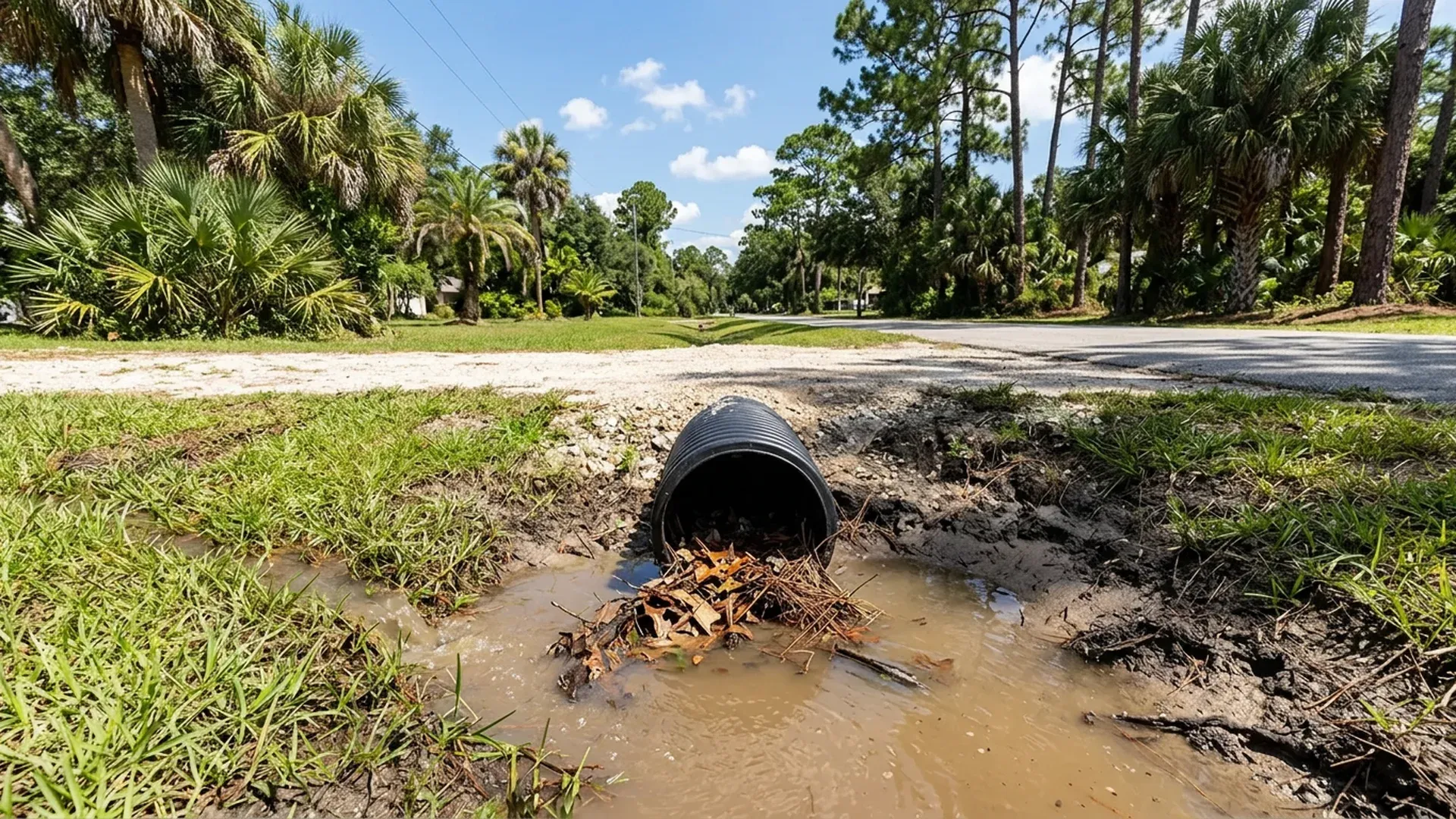
- Clear leaves, silt and trash from drain inlets and culverts.
- Rake debris out of swales so water enters at the high end and leaves at the low end.
- Move brush, fill and mulch piles away from drains, fences and the house.
- Turn off irrigation that keeps feeding the wet area.
These are maintenance steps, not construction. Our guides to residential swale grading and driveway culvert washouts show how swales, culverts and inlets work together.
What Should You Not Do While Water Is Standing?
Do not dig a trench, cut a ditch or push up a berm on a guess, because water you move has to land somewhere. The 2023 Florida Residential Code, section R401.3, says surface drainage shall be diverted to a storm sewer conveyance or other approved point of collection that does not create a hazard. A new cut that sends water onto a neighbor's lot or a road can create exactly that hazard.
Do not pile fill or soil against the house, and do not dam a ditch with a temporary mound. Do not run a pump hose into the street or a storm inlet until your city or county confirms it is allowed. Postpone slab and foundation repairs until the ground has drained. A quick patch that fails can leave the yard worse than before.
How Do You Know if Flooding Is Threatening the House?
A flooded yard threatens the house when water stands against the slab or walls instead of draining away. Watch for pooling along the foundation, soil washed out at the slab edge, stained or damp lower walls and downspouts that empty at the wall. Our guide to poor drainage and foundation damage lists the outside and inside signs.
Cracks, sticking doors and walls that move are structural questions. They belong to a licensed structural engineer, not a grading contractor, so do not treat them as drainage problems. Water inside the home is a separate emergency: follow your emergency managers and call your insurance company. What grading can do is correct the slope that sent the water to the wall.
Does Standing Water Bring Mosquitoes?
Yes, flooding can bring nuisance mosquitoes. The CDC says that after a hurricane or flood, eggs laid in soil by floodwater mosquitoes in earlier floods hatch, and an increase in nuisance mosquitoes is expected in the weeks after flooding. Most do not spread germs, but they bite hard.
The CDC's advice is to remove standing water where mosquitoes lay eggs. Once a week, empty and scrub, turn over, cover or throw out items that hold water, such as buckets, tarps, toys, birdbaths and flowerpot saucers. Getting water off the yard sooner also shortens the time it can feed the problem. Wear repellent and long sleeves while you work outside.
When Does an Emergency Fix Need a Permanent Drainage Solution?
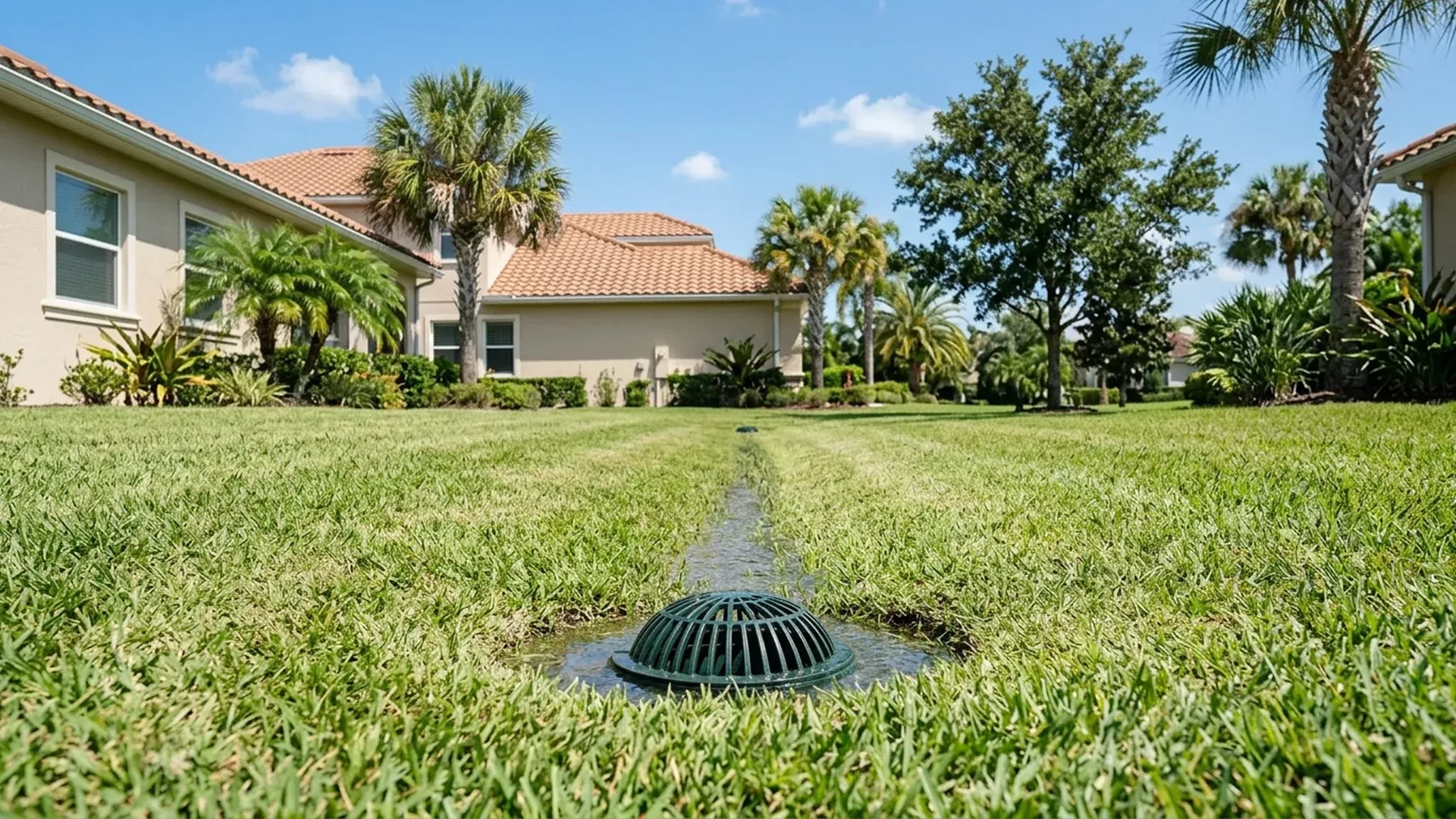
An emergency fix needs a permanent drainage solution when the water comes back after every heavy rain, because first aid only buys time. A flooded yard that returns usually has a grade, outlet or soil problem that maintenance cannot solve. A contractor can measure elevations and match the fix: regrading and a swale for surface water, a French drain for soggy ground, a catch basin for a low spot, or a culvert where a driveway crosses a ditch.
Level One Grading designs and installs drainage systems with the right mix of pipe, trench and culvert for each site, as our water and erosion control service page explains. Read French drain vs catch basin in Florida to compare the two, and see how our laser grading service uses laser-guided equipment to reach planned slopes.
Do Emergency Drainage Repairs Need a Permit?
Clearing a drain inlet is maintenance, but changing the slope of your land can need a grading permit even when the goal is to stop flooding. Hillsborough County requires a natural resources permit for land alteration, which it defines as grubbing, tree removal, clearing, grading, filling or excavating, except for activities undertaken to maintain existing grounds. The page does not describe an emergency exception, so confirm what applies before work starts.
Rules differ in Polk and Pasco counties and in cities such as Plant City, Tampa and Lakeland, and work that touches a road, ditch or storm sewer can add requirements. Our guide to land grading permits in Florida lists the questions to ask. Before the next storm, use our hurricane season property preparation checklist.
Flooded Yard Emergency Drainage FAQ
How long does water stay in a flooded yard?
It depends on the rainfall, the soil, the slope and how full the ground already is, so no single answer fits every yard. Flat Florida lots can stay wet for a long time after heavy rain. If water is still there well after the rain stops, the yard has a drainage problem worth measuring.
Can I pump water out of a flooded yard myself?
Only if you have a legal place to send it. Pumping onto a neighbor's lot, a road or a storm inlet can create a hazard and may break local rules, which differ by county and city. Ask your city or county first, and never run electrical equipment near standing water.
Does flooded yard emergency drainage fix the problem for good?
No. Clearing inlets, extending downspouts and removing debris reopen the paths water should use, but they do not change the slope or add capacity. If the yard floods again after the next heavy rain, ask for a site visit to measure the grade and recommend a permanent fix.
What areas do you serve?
We provide drainage solutions in Central Florida from our Plant City office, covering Hillsborough, Polk and Pasco county communities, including Tampa, Lakeland, Riverview and Zephyrhills. If you do not see your city, call and we will confirm whether your property is in range.
Ready for Flooded Yard Emergency Drainage Help?
Tell us where the water collects and when it started, and we will walk the property with you to plan flooded yard emergency drainage and the permanent fix. Level One Grading is licensed and insured, with an industry-leading 2% warranty claim rate annually. Call +1 813-842-4840, Monday to Saturday, 9AM to 5PM, or request a free drainage estimate today. For storm debris, see our emergency storm recovery service.
Checked against Ready.gov, the CDC, Hillsborough County and the 2023 Florida Building Code, Residential, R401.3 in October 2026.

About Miguel Orozco
Miguel Orozco is the President of Level One Grading, a trusted Central Florida grading and excavation company, delivering precise earthwork solutions and dependable results for residential and commercial projects since its founding.