
Foundation Erosion: Protect Your Home From Soil Damage
Foundation erosion is one of the most serious threats to your home. Learn how to fix soil grading, improve yard drainage, and prevent costly structural damage.

Miguel Orozco

Your home's foundation is its most critical structural element, and foundation erosion is one of the most common, and most overlooked, threats to it. Every time it rains, water runs off your roof, pools in your yard, and flows directly toward your home. If the soil around your foundation isn't graded and managed correctly, that water doesn't drain away. It stays. It saturates. And over time, it erodes the very ground holding your house in place.
Foundation erosion happens gradually. By the time cracks appear in your walls or your doors stop closing properly, the damage may already be expensive to repair. The good news? With the right approach to foundation erosion prevention, starting with proper soil grading, drainage improvements, and smart landscaping, you can protect your home before problems start.
In this guide, you'll learn exactly what causes foundation erosion, how to identify early warning signs, and what solutions actually work for long-term protection.
Why Soil Grading Around Foundation Is the First Line of Defense
The most direct cause of foundation erosion is water that has nowhere to go. When the ground around your home is flat or slopes inward toward the structure, rainwater naturally collects at the base of the foundation. That standing water softens the soil, weakens compaction, and begins eroding the material that supports your home's weight.
Soil grading around foundation is the practice of shaping the ground so that it slopes away from the house on all sides. According to the International Residential Code (IRC), the ground should drop at least 6 inches within the first 10 feet from the foundation wall. That gradient is enough to direct water away before it has a chance to saturate the soil.
When soil grading is inadequate or deteriorates over time, which it naturally does due to settling, heavy rain, and foot traffic, foundation erosion accelerates. The soil closest to your foundation becomes loose, waterlogged, and unable to support the structural load placed on it.
Signs that your soil grading around foundation needs attention include:
- Standing water near the base of your home after rain
- Muddy patches that stay wet for days
- Soil pulling away from the foundation wall, leaving visible gaps
- Plant roots growing into foundation cracks, worsening erosion
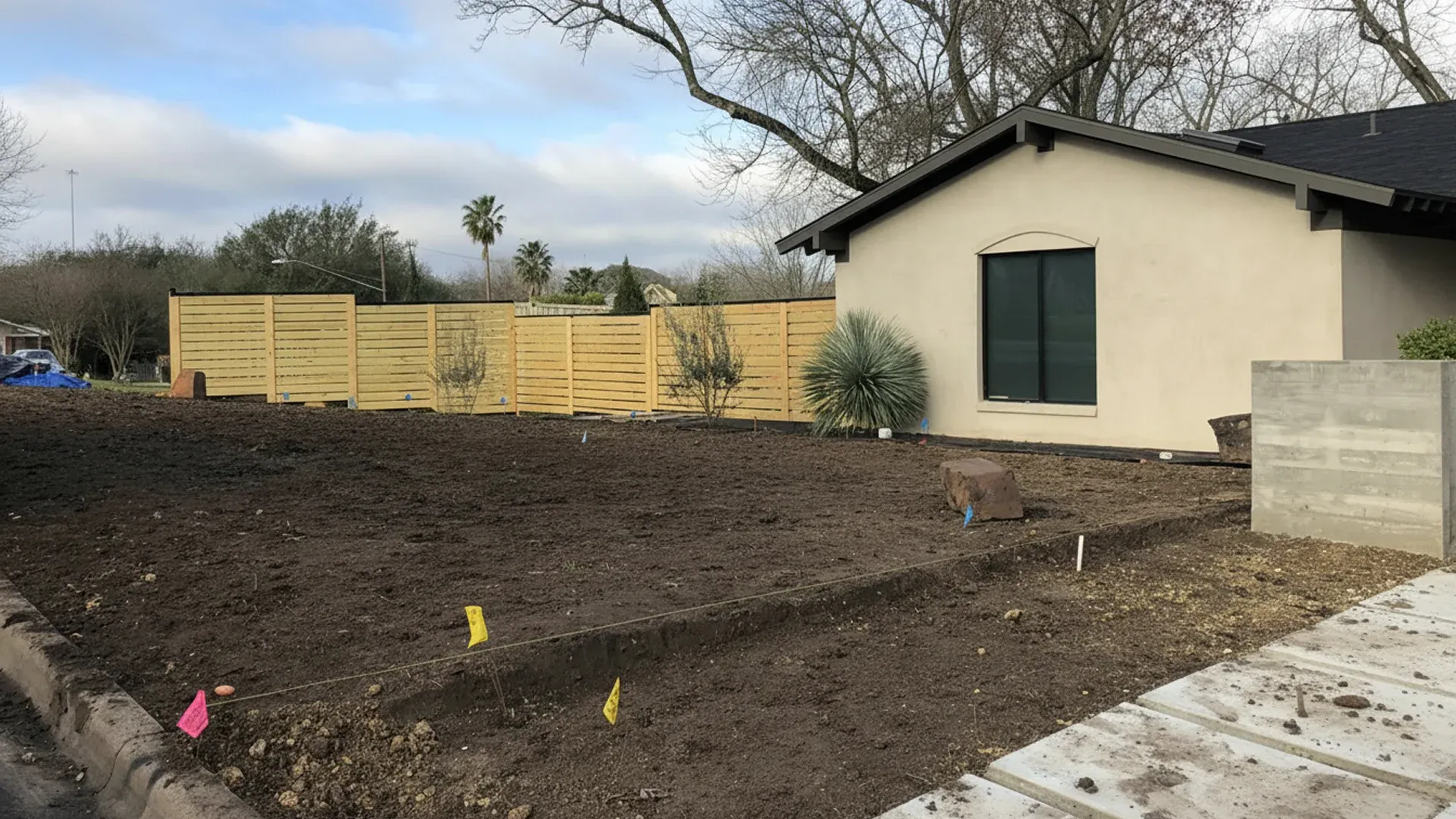
Regrading the soil is typically the first step any contractor takes when addressing foundation erosion. It's also one of the most cost-effective preventive measures available, far cheaper than foundation repair.
Yard Drainage Solutions That Actually Stop Foundation Erosion
Even with correct grading, some properties deal with excess water that grading alone can't handle. Heavy rainfall, clay-heavy soil, and impermeable surfaces like driveways and patios can overwhelm natural drainage. That's when yard drainage solutions become essential for protecting against foundation erosion.
The most effective yard drainage solutions for homes with persistent water issues include:
French drains — A perforated pipe buried in a gravel-filled trench, typically installed a few feet from the foundation. French drains intercept subsurface water and redirect it away from the home before it ever reaches the foundation soil. They're one of the most widely recommended solutions for foundation erosion in both residential and commercial properties.
Surface swales — Shallow, sloped channels dug into the yard that guide water toward a safe discharge point. Swales are particularly useful on larger properties where water collects in low-lying areas near the house.
Gutter extensions and downspout redirects — A large percentage of foundation erosion cases are directly linked to downspouts that dump water within a few feet of the foundation. Extending downspouts at least 6 to 10 feet away from the house or connecting them to an underground drainage line dramatically reduces the erosion risk.
Dry creek beds — A decorative and functional yard drainage solution that channels runoff through a gravel-lined path. These are especially effective on sloped properties where water accelerates and hits the foundation with force.
Combining two or more of these yard drainage solutions typically yields the best results for long-term foundation erosion control.
How to Prevent Erosion Around House Using Vegetation and Mulch
Vegetation is one of the most underestimated tools in the fight against foundation erosion. Plant roots bind soil particles together, reducing the impact of rain and slowing the flow of water across the surface. Strategic planting is a practical and cost-effective way to prevent erosion around house perimeters.
To effectively prevent erosion around the house, choose plants with deep, fibrous root systems. Ground covers like creeping juniper, liriope, and ornamental grasses are excellent choices — they're low-maintenance, drought-tolerant once established, and create a dense root network that stabilizes soil. Native plants adapted to your local climate tend to be the most resilient.
Mulch plays a complementary role. A 2-to-3 inch layer of organic mulch, hardwood, pine straw, or shredded bark around your foundation beds slows water runoff, reduces soil compaction from rain impact, and retains moisture at a safe distance from the structure. When placed properly, mulch shouldn't touch the foundation wall directly, as that can trap moisture and encourage wood rot or pest entry.
To prevent erosion around house most effectively:
- Avoid bare soil within 5 feet of the foundation — it erodes fastest
- Use retaining borders or edging to keep mulch and soil in place
- Plant dense ground cover on slopes that funnel water toward the house
- Avoid large trees too close to the foundation — their roots can displace soil and crack concrete over time
Combining vegetation strategies with proper grading and drainage creates a layered defense against foundation erosion that holds up even during heavy storm seasons.
Foundation Water Damage: Recognizing the Signs Before It's Too Late
Foundation erosion and foundation water damage are closely linked, one typically leads to the other. Water that pools against a foundation doesn't just erode the surrounding soil; it eventually penetrates the concrete or masonry itself, creating cracks, efflorescence (white mineral deposits), bowing walls, and in severe cases, structural failure.
The challenge with foundation water damage is that it often develops slowly and invisibly. By the time homeowners notice symptoms, significant deterioration has already occurred. Knowing what to look for allows you to intervene early, before simple foundation erosion becomes a structural crisis.
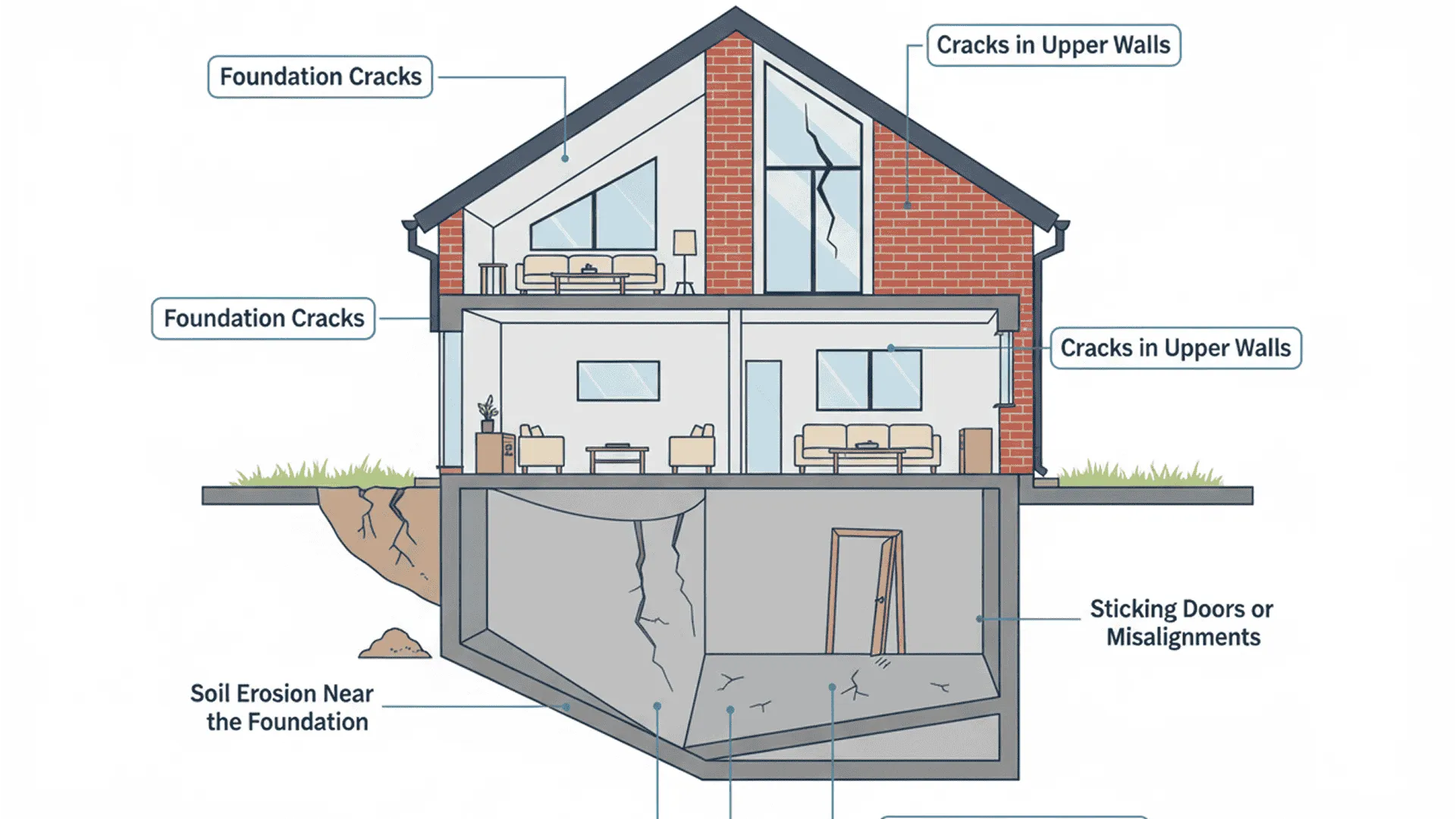
Key warning signs of foundation water damage include:
- Horizontal cracks in basement walls (often indicate hydrostatic pressure from water-saturated soil)
- Vertical cracks wider than ¼ inch in the foundation wall
- Stair-step cracks in brick or block foundations, following mortar joints
- Damp or wet basement walls even without visible flooding
- Musty odors in the basement or crawlspace, indicating sustained moisture
- Doors and windows that stick or no longer close squarely — a sign the foundation is shifting
If you notice multiple signs simultaneously, it's important to have a structural engineer or foundation specialist assess the damage before it progresses. Foundation water damage repairs can range from a few thousand dollars for crack injection to tens of thousands for full underpinning or wall replacement, making early detection through foundation erosion monitoring an extremely valuable habit.
Landscape Grading Services: When to Call a Professional
Some foundation erosion problems are well within the DIY range, adding downspout extensions, spreading mulch, planting ground cover. But when the issue involves significant elevation changes, clay soils, high water tables, or visible structural symptoms, landscape grading services become essential.
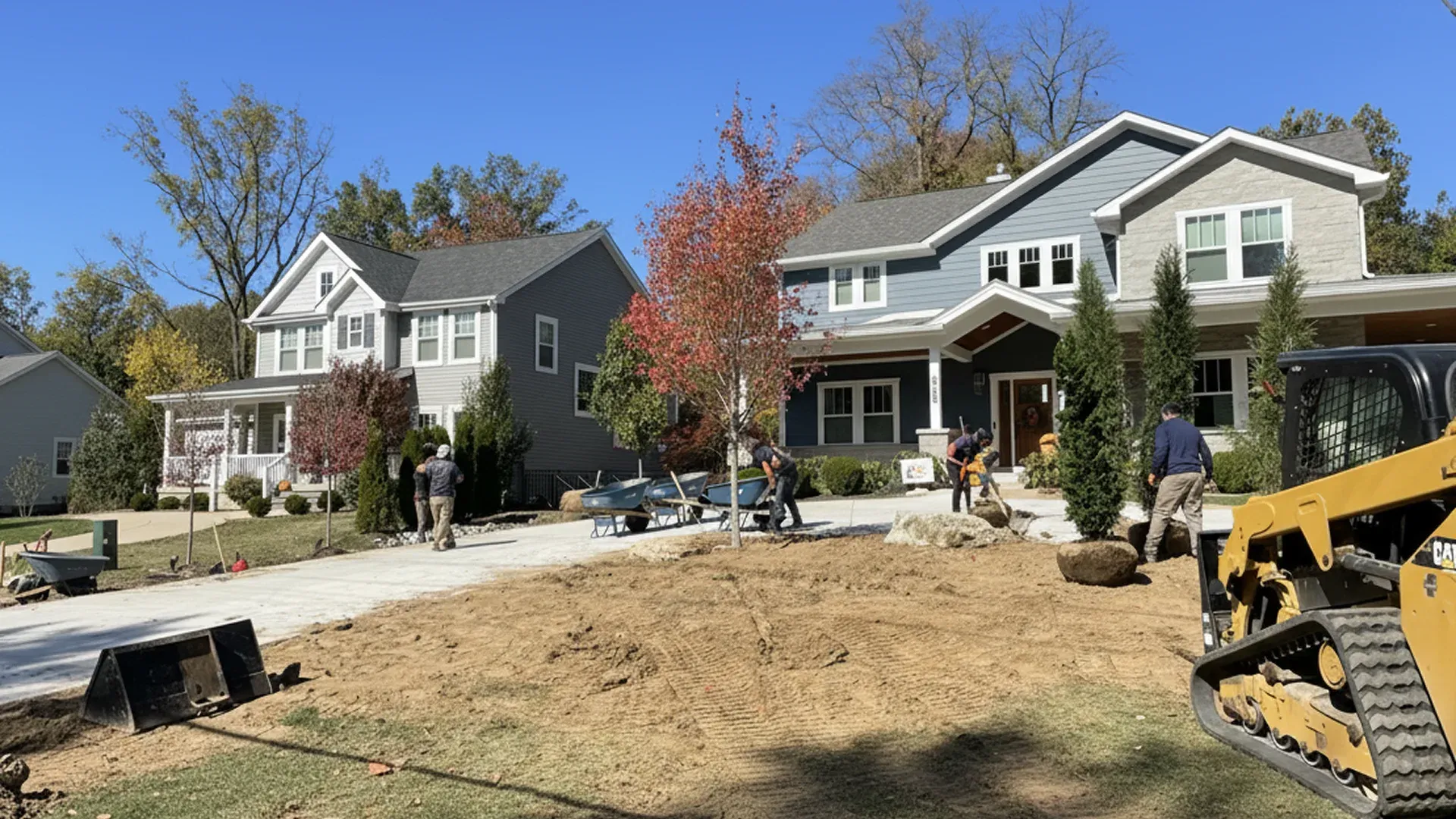
Professional landscape grading services combine heavy equipment, engineering knowledge, and experience with local soil conditions to deliver solutions that last. A qualified contractor will assess the existing drainage patterns, calculate the correct slope gradients, and determine which drainage infrastructure your property needs, whether that's a French drain system, a surface swale network, or full regrading of the yard.
When evaluating landscape grading services, look for contractors who:
- Conduct an on-site drainage assessment before quoting
- Have experience with foundation erosion specifically, not just general landscaping
- Provide a detailed plan showing proposed grades and drainage paths
- Are licensed and insured in your state
- Offer a warranty on their grading work
The cost of landscape grading services varies widely depending on lot size, soil conditions, and the scope of drainage infrastructure needed. A basic regrading project for a standard residential lot might range from $500 to $3,000, while complex projects involving French drain installation and full yard regrading can exceed $10,000. Either way, it's a fraction of what foundation water damage repair costs once structural issues develop.
One important note: many homeowners delay calling landscape grading services because the yard "looks fine." But foundation erosion often happens underground, in the soil layers you can't see. A professional assessment can reveal erosion and drainage issues long before they become visible and long before the repair bill becomes catastrophic.
Frequently Asked Questions
What is foundation erosion and why is it dangerous?
Foundation erosion occurs when soil around the base of a home is gradually worn away by water movement, poor drainage, or inadequate grading. It's dangerous because it removes the supportive soil that holds the foundation in place, creating uneven pressure, settlement, cracking, and ultimately structural instability. Left untreated, foundation erosion can compromise the entire structural integrity of a home.
How do I know if my home has a foundation erosion problem?
Common signs of foundation erosion include standing water near the foundation after rain, soil pulling away from foundation walls, horizontal or stair-step cracks in the foundation, sticking doors and windows, damp basement walls, and soil settlement causing uneven floors. If you notice any combination of these signs, it's worth having a professional assess your drainage and foundation.
Can I fix foundation erosion myself?
Minor issues, such as extending downspouts, adding mulch, planting ground cover, or improving surface grading with a rented grader, can often be DIY projects. However, significant drainage problems, clay soils, high water tables, and any visible foundation damage should be assessed and addressed by a licensed professional. Attempting complex fixes without proper knowledge can worsen foundation erosion.
How long does landscape grading last?
Proper landscape grading can last many years if done correctly and maintained. Over time, soil naturally settles, plants grow and shift ground cover, and heavy rains can erode fresh grading. Most contractors recommend inspecting your yard grading every 3 to 5 years and after any major storm event to ensure drainage patterns are still directing water away from your foundation.
Conclusion: Stop Foundation Erosion Before It Stops You
Foundation erosion is not an if it's a when. Every home faces the ongoing challenge of managing water around its foundation, and without the right measures in place, that water will eventually do damage. The difference between a home that holds up for generations and one that develops expensive structural problems often comes down to a few key decisions: getting the soil grading right, investing in yard drainage solutions, planting smart vegetation, and calling in professional landscape grading services when the situation demands it.
Start with the basics, check your downspouts, inspect your grading after the next rain, and look for the early signs of foundation erosion damage. If you see water pooling, soil shifting, or cracks forming, don't wait. The sooner you address foundation erosion, the less it will cost and the safer your home will be.
Level One Grading specializes in exactly this kind of work. From soil regrading and French drain installation to full yard drainage systems, their team has the equipment, experience, and local knowledge to protect your home from foundation erosion before damage sets in and to fix drainage problems that are already causing concern. Don't wait for cracks to appear or water to enter your basement. Contact Level One Grading today for a professional site assessment and a drainage plan built around your property's specific needs.

About Miguel Orozco
Miguel Orozco is the President of Level One Grading, a trusted Central Florida grading and excavation company, delivering precise earthwork solutions and dependable results for residential and commercial projects since its founding.