
Regrading vs. Drain Pipe: When Slope Alone Fixes the Problem
Regrading vs French drain: does slope alone fix your wet Florida yard, or do you need a drain pipe? Phone +1 813-842-4840 for a free Level One estimate.

Miguel Orozco

Regrading vs French drain comes down to one question: is the water sitting on top of the ground, or is it coming up from inside it? If the yard simply lacks slope, reshaping the ground can fix it with no pipe at all. If the soil stays full, or the water has no downhill path, slope alone will not be enough. Level One Grading works out of Plant City and takes on grading and excavation jobs for properties across Hillsborough, Polk and Pasco counties. This guide covers the signs that point to each fix and what regrading cannot do on a flat Florida lot. For every option side by side, see our drainage solutions guide.
Regrading vs French Drain: What Does Each One Do?
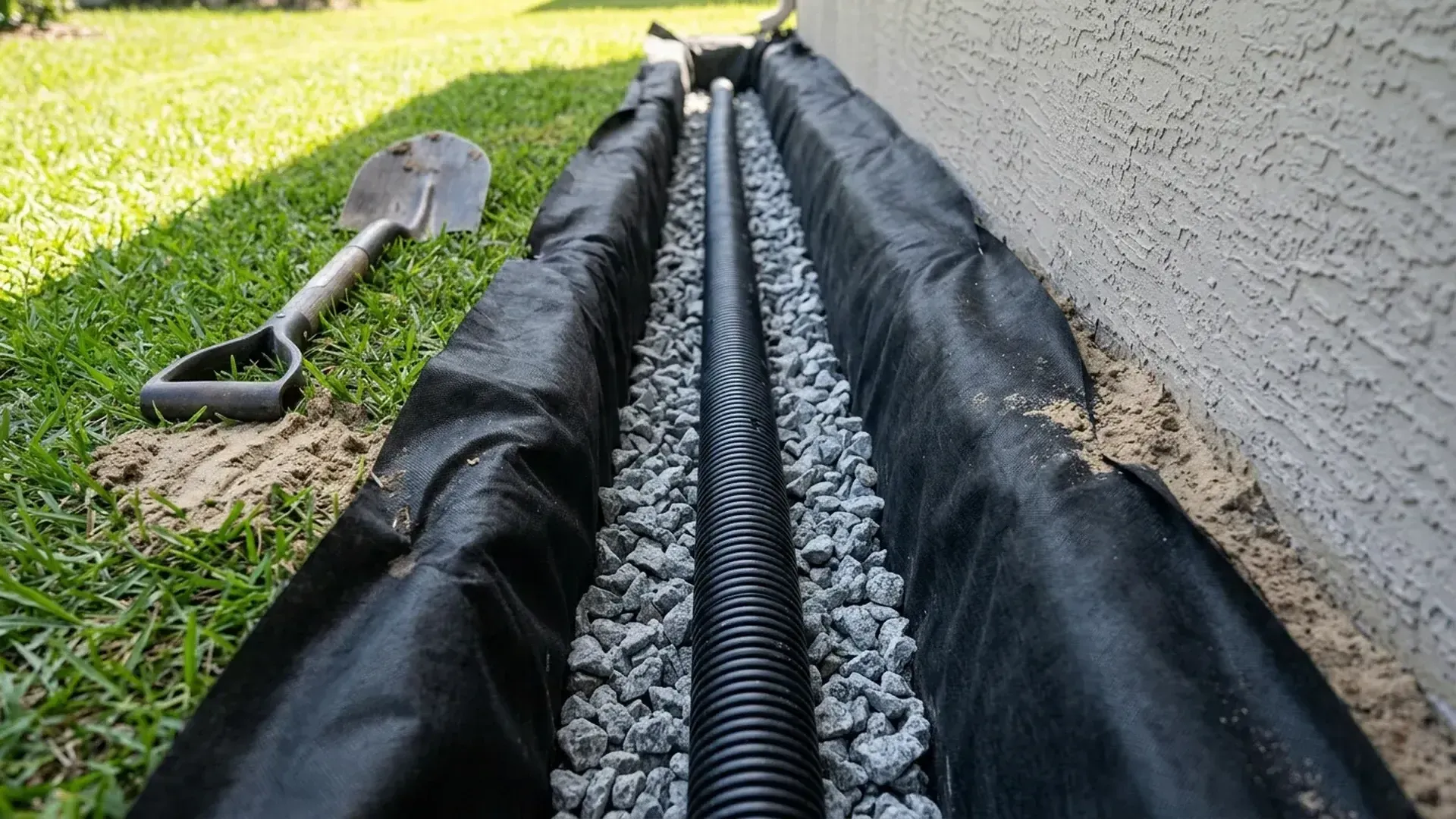
Regrading reshapes the surface so water runs off the lot or into a channel on its own. We cut high spots, fill low ones and finish the ground to a planned slope, and our laser grading work uses laser-guided equipment to reach it. A French drain works below the surface. It is a gravel-filled trench with a perforated pipe that intercepts groundwater and carries it away, and we install them as described on our French drains page. One moves water you can see, the other moves water you cannot. Neither one helps a lot that has no place to send water. Our comparison of a swale, a French drain and a dry well covers the other choices.
How Can You Tell a Surface Problem From a Groundwater Problem?
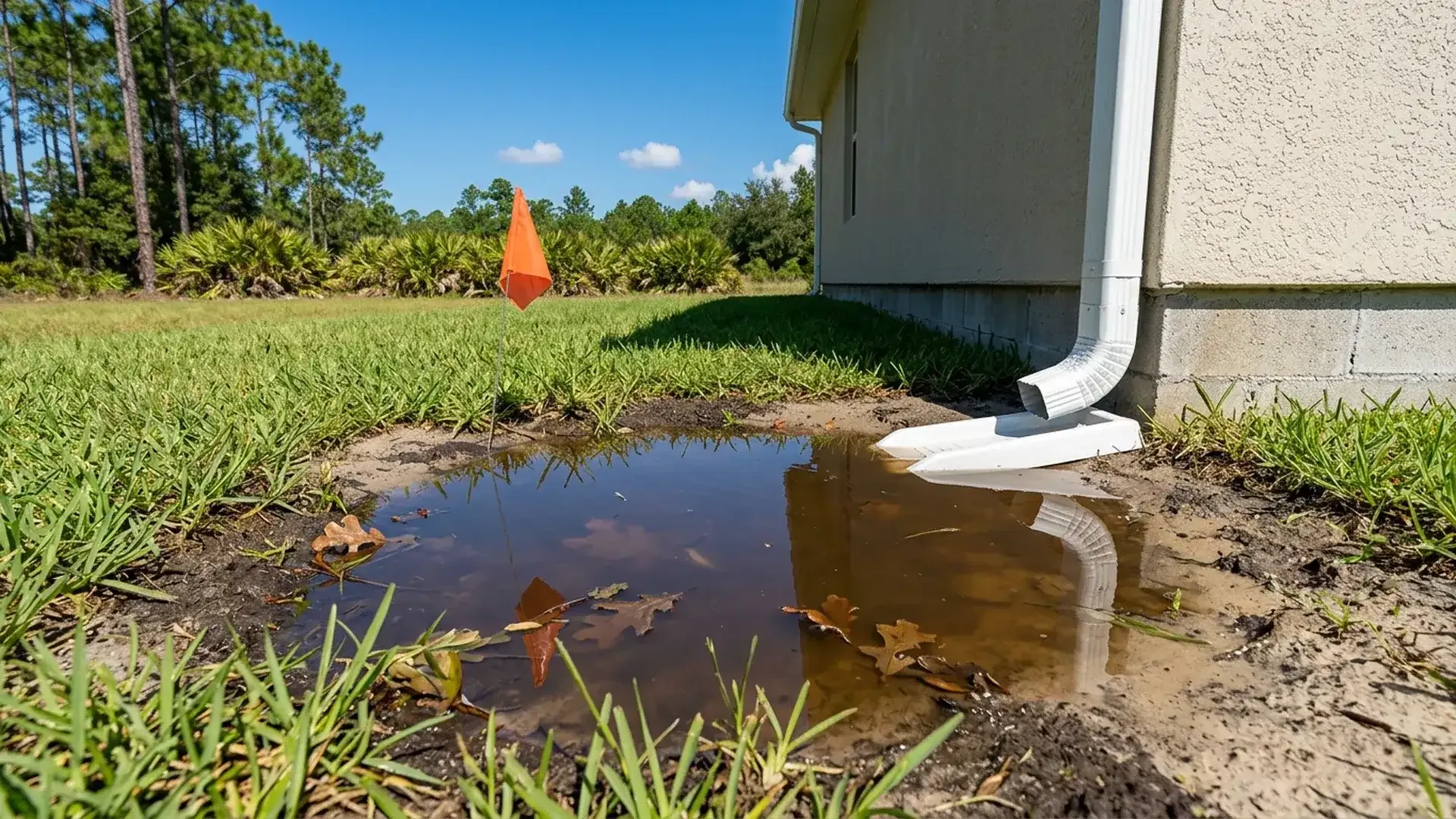
Watch the yard during a storm, then again a few days later, because the two visits show different things. Surface problems appear while it rains: water ponds in a shallow low spot, stops at a flat stretch or runs toward the house, and it clears soon after the rain ends. Groundwater problems show up afterward. The ground stays soft or spongy under clear skies, a hand-dug hole fills from below, or the whole yard feels wet instead of one corner. UF/IFAS Extension points to three warning signs: low-lying areas, spots where rainwater gathers, and patches that stay wet once the soil around them has drained. We read the first two as slope clues and the third as a drainage clue.
When Does Regrading Alone Fix the Problem?
Regrading alone is enough when the soil drains normally and the only fault is the shape of the ground. A shallow dip that holds a puddle or a lawn that tilts toward the wall are surface faults. UF/IFAS says that where natural topography or poor soil grading causes poor drainage, re-grading the site may be necessary. The work is to reshape that area so water leaves it, and it succeeds only when the finished ground ends at an outlet that can take the water. Our guide to fixing a sloped yard shows how that looks on a real lot, and the slope a yard needs away from the house gives the code rule.
What Can Regrading Not Do on a Flat Florida Lot?
Regrading cannot make water run downhill where there is no downhill. Flat yard drainage in Central Florida often depends on a street ditch, a swale or a storm inlet that sits lower than your ground, and that outlet may be off your property. Regrading also cannot empty ground that is already full. In its soil guide, UF/IFAS says somewhat poorly drained soils are wet at a shallow depth from a seasonally high water table, a restricting layer, seepage or high rainfall, and may need artificial drainage. Reshaping the surface above that layer does not remove the water below it. If the yard stays soggy for days, piling on fill can push the wet zone toward a neighbor or the foundation. Our guide on why Florida yards stay wet explains those causes.
Do You Need a French Drain Instead of Regrading?
A pipe system earns its place when the water is in the ground, or when it cannot travel across the surface. Think of soil that stays wet for days after rain, a soggy strip along a wall or fence, or a low spot with level or higher ground on every side. Owners often ask us, do I need a French drain? If those signs match your yard, probably, and the pipe still needs a legal, lower outlet. We excavate the trench, lay clean gravel, set the perforated pipe wrapped in filter fabric, backfill and restore the surface. When one run is not enough, our advanced drainage systems combine several parts. Our French drain installation guide walks through the build.
Regrading vs French Drain: Which Do You Try First?
Start with the simplest, least disruptive step and move up only when the yard tells you to. First, stop adding water, because roof runoff that lands beside the wall makes any yard look worse. Second, clear what already exists, such as a silted swale or a blocked inlet. Third, regrade where the fault is the shape of the ground. Fourth, add a drain where the soil stays wet after the surface is right. Many lots end up needing both, and a drain often discharges into a graded swale, as our French drain vs catch basin comparison shows. Any plan to regrade yard for drainage is a test of the surface, not a promise of a dry lawn.
Why Does the Outlet Decide Both Fixes?
Both fixes fail without an outlet. Yard water has to end up somewhere safe, and the residential code names the destination: in section R401.3 of the 2023 Florida Building Code, Residential, that is a storm sewer conveyance or another approved collection point, one that "does not create a hazard." In practice that means never aiming a regrade or a pipe at a neighbor's lot. Changing the grade or digging a trench can also involve approvals, so confirm what applies with your county and your building department before work starts. Before a trench is opened, section 556.105 of the Florida Statutes requires the excavator to give the state notification system at least 2 full business days of warning. Measuring elevations first shows where the water can really go.
What Should You Ask a Contractor Before Choosing?
Put these questions to anyone who quotes a fix for your yard, and expect plain answers:
- Is the problem on the surface, in the ground, or both?
- Where will the water go once it leaves the work area?
- How will the finished slope be checked?
- Who confirms the permits and the utility locate?
- What happens to the plan if the wet area does not dry?
We are licensed and insured, and we report a 2% warranty claim rate each year. We assess your site and recommend the system, or the combination of systems, that fits how your property drains. A site visit settles more of these yard drainage solutions than a phone call can.
Regrading vs French Drain FAQ
Can regrading alone replace a French drain?
Sometimes. If the soil drains normally and the problem is a dip or ground that tilts toward the house, reshaping the surface can be enough. If the ground stays wet for days or the water has nowhere to travel, a drain is usually part of the answer.
Does a French drain help if my lawn tilts toward the house?
Not by itself. A trench under the grass does not change which way surface water runs, so a tilted lawn still sends rain to the wall. The slope has to be corrected first. A drain can then deal with any soil that stays wet along the foundation.
Is a soggy yard always a high water table?
No. Compacted fill, a lost slope, roof runoff and water from neighboring land can all keep a yard wet. A high water table is one cause among several, and it is the one regrading cannot touch. Watching where the water sits, and for how long, narrows it down before anyone digs.
Do regrading and drain work need a permit?
It depends on the lot, the work and the local rules, and we do not give legal advice. Changing grades or discharging water can involve approvals from your city or county. Confirm with your county before work starts, and ask your contractor who handles the permit and the utility locate.
Plan Your Regrading vs French Drain Decision
If you are weighing regrading vs French drain for your own yard, tell us where the water sits and how long it stays, and we will walk the property with you. Call Level One Grading at +1 813-842-4840 or ask for a free estimate and we will set a time at your yard.
Sources re-opened in November 2026: UF/IFAS Extension, section R401.3 of the 2023 Florida Building Code, Florida Statutes 556.105 and levelonegrading.com.

About Miguel Orozco
Miguel Orozco is the President of Level One Grading, a trusted Central Florida grading and excavation company, delivering precise earthwork solutions and dependable results for residential and commercial projects since its founding.