
Swale vs. French Drain vs. Dry Well: Which Is Right for Your Property?
Swale vs French drain vs dry well: learn which fits your Florida yard and when to combine them. Free estimate from Level One Grading, +1 813-842-4840.

Miguel Orozco

Swale vs French drain comes down to where your water is: a swale moves water across the surface, a French drain collects it underground, and a dry well holds it and lets it soak into the soil. Most Central Florida yards need the first or the second, sometimes both. Level One Grading is based in Plant City and works on drainage across Hillsborough, Polk and Pasco counties. This guide shows how each one works and how to match it to your yard. For the full menu of fixes, see our drainage solutions guide.
Swale vs French Drain vs Dry Well: What Is the Difference?
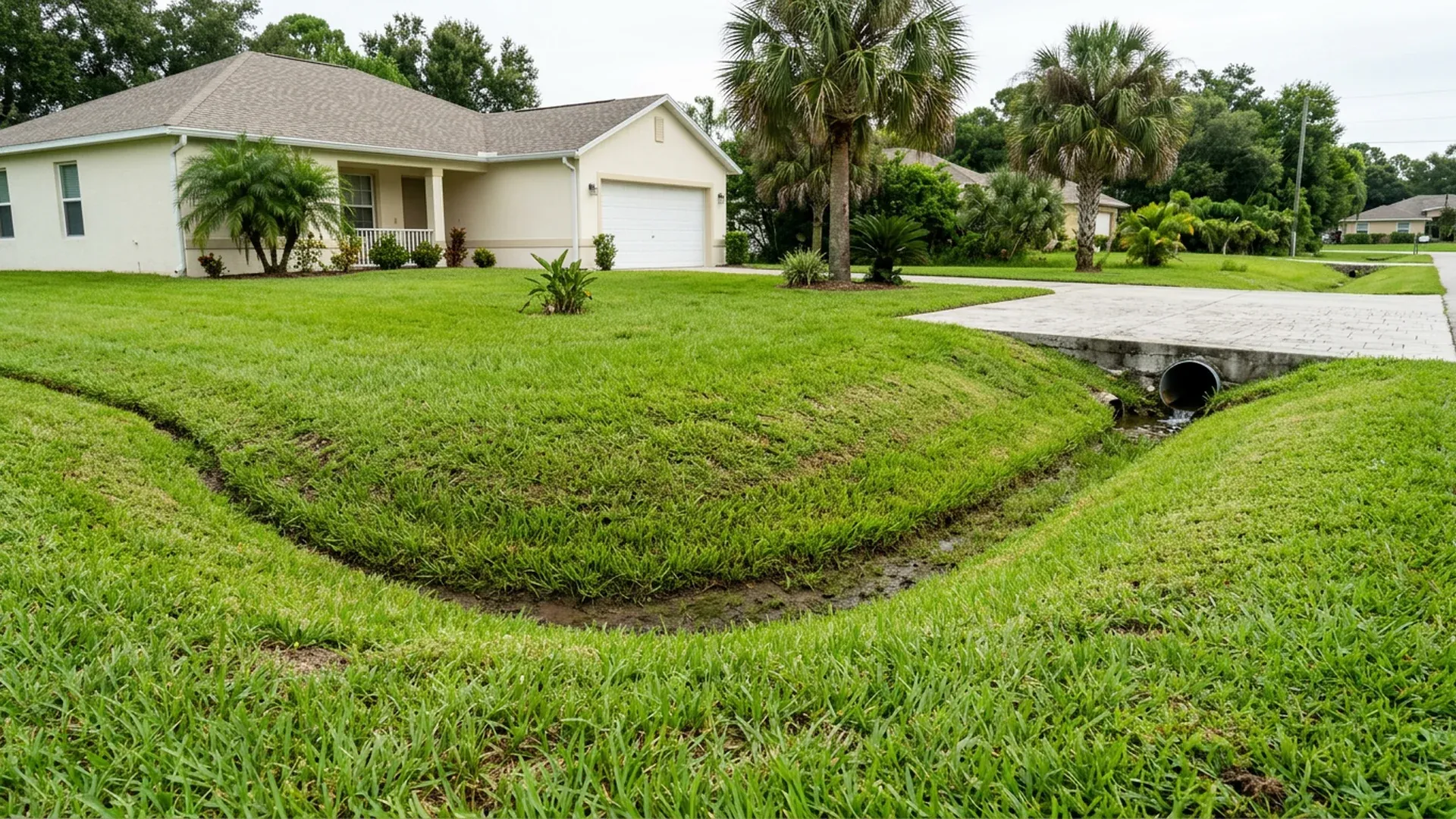
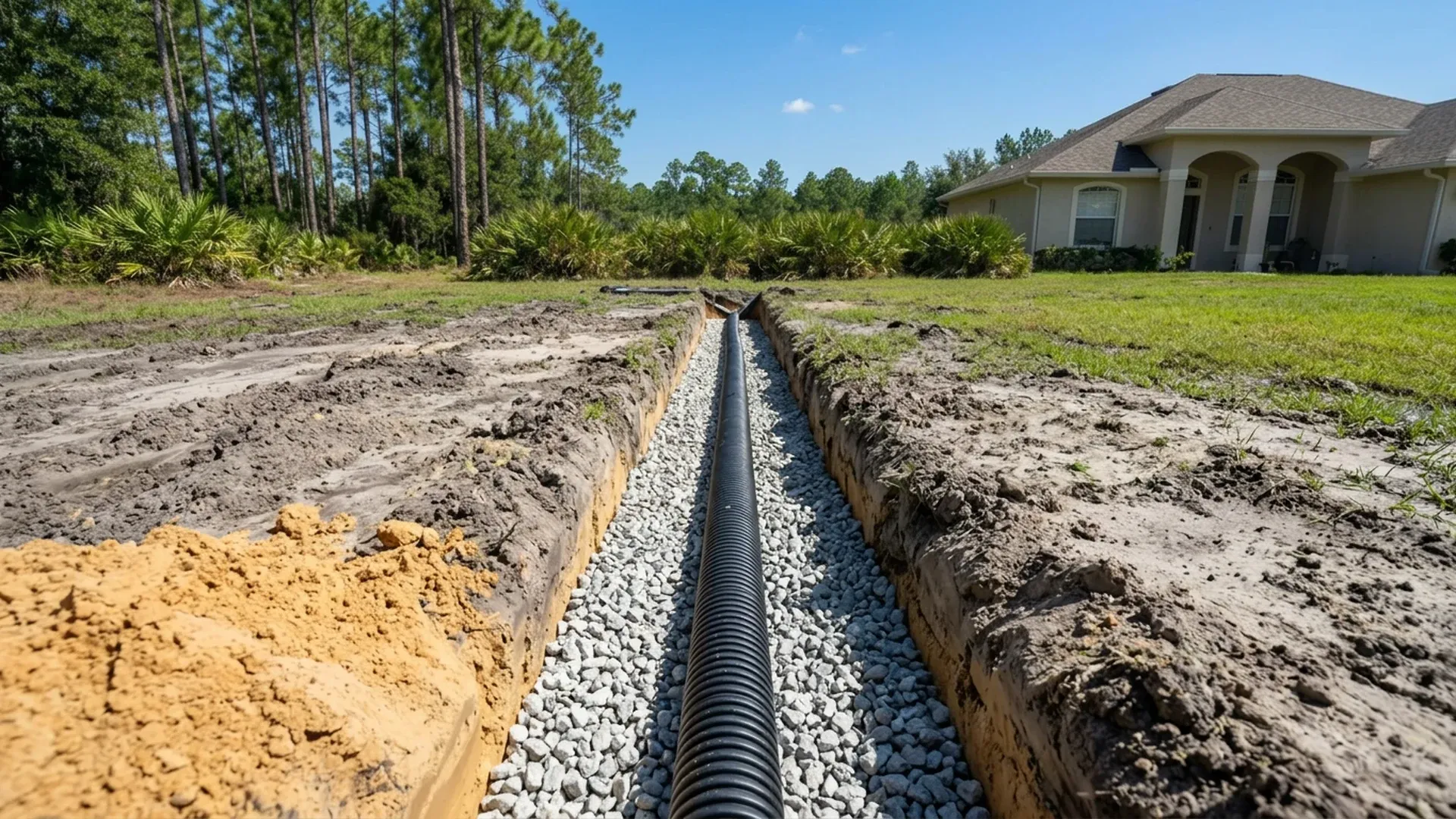
The difference is where each one handles the water. A swale is a shallow, gently sloped channel in the ground that guides surface water to a safe outlet. A French drain is a gravel-filled trench with a perforated pipe that collects groundwater and carries it away. A dry well is a buried chamber that holds collected water and lets it seep slowly into the surrounding soil.
So a swale works on water you can see running across the yard, a French drain works on water inside wet ground, and a dry well gives collected water a place to go. These yard drainage options are tools, not rivals, and a site visit shows which job your water needs done.
How Does a Swale Work in a Florida Yard?
A swale works by gravity. The ground is shaped so water flows along a shallow channel to a street ditch, a storm inlet or another legal outlet. It needs open space and a continuous slope, so it suits wide yards with room to reshape the ground. Swale drainage has no pipe to clog, but thatch, clippings and sod can build up in the channel, and it does little for a puddle away from its path.
The 2023 Florida Building Code, Residential, section R401.3 names swales directly: where lot lines, walls or slopes prevent the required fall near a house, drains or swales shall be constructed to ensure drainage away from the structure. Our guide to residential swale grading explains why yards lose their slope.
How Does a French Drain Work?
A French drain works below ground. Water in wet soil seeps into the gravel, enters the perforated pipe and flows downhill to an outlet. It suits chronically soggy ground, a wet strip along a wall or fence, and low spots where the problem is groundwater, not surface slope. Once the surface is restored, the yard looks normal.
It does not fix a bad slope. If water runs across the lawn toward the house, a trench under the grass will not stop it. A French drain also needs a steady fall and a legal place to discharge. Our French drain installation guide explains how a drain is built, and our French drains page lists what we install.
Where Does a Dry Well Fit?
A dry well is usually a supporting piece, not the main fix. It works only if the soil around it can absorb the water. The UF/IFAS pine flatwoods page describes typical flatwoods soils as moderate to poorly drained fine sands, and flatwoods cover about half of Florida's land area, so you cannot assume a dry well will drain in your yard.
The EPA lists dry wells among the simplest Class V injection wells, which fall under the Underground Injection Control program of the Safe Drinking Water Act. Rules differ by state and local authority, so check what applies before anyone digs one. Our French drain guide covers how a dry well can serve as a drain outlet when the soil allows it.
Swale vs French Drain: How Do You Choose for Your Property?
Choose by matching the system to where the water shows up. This quick sort covers most Central Florida yards:
- Water runs across the yard or sits in a shallow dip: regrade or build a swale.
- The ground stays soggy, or a wet strip runs along a wall: a French drain.
- Water stands in one low spot that cannot reach a ditch: a drain or basin piped to an outlet.
- Water arrives from a neighbor's lot or a driveway: a swale or drain placed to intercept it.
- Several of these at once: a combination, such as a French drain that discharges into a swale.
The swale vs French drain choice is rarely one or the other. If water is reaching the house, read the warning signs in our guide to poor drainage and foundation damage first.
Why Does the Outlet Matter More Than the System?
Every option fails if the water has no legal place to go. Section R401.3 says surface drainage shall be diverted to a storm sewer conveyance or other approved point of collection that does not create a hazard, which is a good reason never to point a drain or swale at a neighbor's lot. In flat Florida, the nearest lower spot may be a street ditch, a storm inlet or a swale shared along the block, and it is often not on your property.
That is why a contractor should measure elevations before choosing a system. Our laser grading service uses laser-guided equipment to reach the slopes and elevations in the plan. A system sold before the outlet is checked can fill, back up or move the flooding next door.
Do You Need a Permit for a Swale, French Drain or Dry Well?
Sometimes, and the answer depends on your county, your city and what the work connects to. Hillsborough County requires a natural resources permit for land alteration, which it defines as removing vegetation from or changing the topography of the land by grubbing, tree removal, clearing, grading, filling or excavating, except for activities undertaken to maintain existing grounds. Reshaping a yard into a swale can fall under that language.
Polk and Pasco counties and cities such as Plant City, Tampa and Lakeland have their own rules, and a dry well can bring injection-well rules on top. Check with your county or city before work starts, and ask your contractor what applies to your parcel. Our guide to land grading permits in Florida goes deeper.
How Do You Choose a Drainage Contractor for This Decision?
Choose a contractor who diagnoses before selling a system, because swale vs French drain is not a call to make by guesswork. Ask where the water will go once it is collected, who handles permits and how the surface will be restored. Be careful with anyone who recommends the same fix for every wet yard without checking the grade, the soil and the outlet.
Level One Grading is licensed and insured, with an industry-leading 2% warranty claim rate annually. We assess your site and recommend the system, or combination of systems, that gives a lasting fix instead of a temporary patch. If your yard needs more than one part, our advanced drainage systems page shows what we install, and our guide to French drain vs catch basin compares two more options.
Swale vs French Drain FAQ
Is a swale or a French drain better for a flooded yard?
It depends on the cause. A swale is better when water runs across the surface because the slope is wrong. A French drain is better when the ground itself stays saturated. A site visit shows which one you have, and many flooded yards need both. Our guide to fixing a yard that floods explains the patterns.
Can a French drain and a swale work together?
Yes, and it is common. A French drain collects water from soggy ground and carries it through the pipe to an outlet, and a swale can be that outlet, carrying the water across the surface to the street or another legal discharge point. A site survey shows how the two should connect.
Do dry wells work in Florida?
Only where the soil around the well can absorb water and local rules allow one. Typical flatwoods soils are moderate to poorly drained fine sands, so a dry well vs French drain comparison depends on your lot. A site evaluation shows whether a dry well is practical or whether a drain with a surface outlet is safer.
What areas do you serve?
We provide drainage solutions in Central Florida from our Plant City office, covering Hillsborough, Polk and Pasco county communities, including Tampa, Lakeland, Riverview and Zephyrhills. If you do not see your city, call and we will confirm whether your property is in range.
Ready to Settle Swale vs French Drain for Your Yard?
To settle swale vs French drain for your yard, tell us where the water collects and when, and we will walk the property with you. Call Level One Grading at +1 813-842-4840, Monday to Saturday, 9AM to 5PM, or request a free drainage estimate today.
Checked against the 2023 Florida Building Code R401.3, the EPA, UF/IFAS and Hillsborough County in October 2026.

About Miguel Orozco
Miguel Orozco is the President of Level One Grading, a trusted Central Florida grading and excavation company, delivering precise earthwork solutions and dependable results for residential and commercial projects since its founding.