
Why Central Florida Yards Stay Wet: High Water Table and Sandy Soil
Why a Florida yard stays wet: a high water table, sandy soil over a hard layer and flat land. Call Level One Grading, +1 813-842-4840, for a free estimate.

Miguel Orozco

A Florida yard stays wet when the water has nowhere to go: the land is flat, the rain is heavy and the ground underneath is already full. In Central Florida the usual causes are a high water table, sandy soil sitting on a restrictive layer, compacted fill and runoff from neighboring lots. Based in Plant City, Level One Grading helps owners with wet yards in Hillsborough, Polk and Pasco counties. This guide explains why a yard stays wet in this region, how to tell which cause fits your property and what each fix can and cannot do. Our drainage solutions guide covers the full range of fixes.
Why Your Florida Yard Stays Wet Long After the Rain
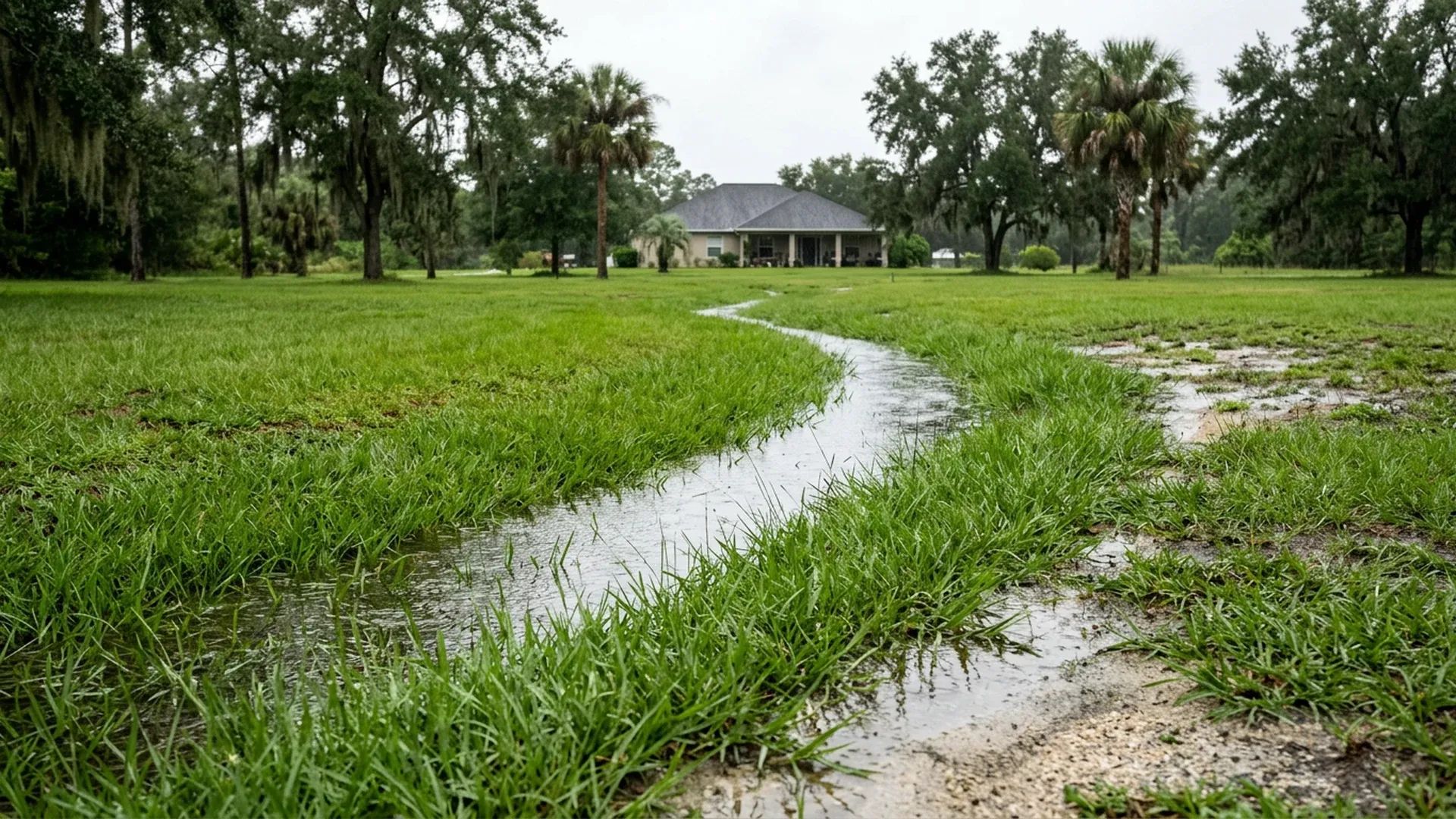
A yard stays wet after the rain because water leaves a flat, sandy lot slowly and the soil often has no room left for more. The NOAA state climate summary gives Florida a long-term average of 53.8 inches of rain a year and says summer thunderstorms are almost a daily occurrence, so the ground is refilled again and again. UF/IFAS describes pine flatwoods as low, flat land with relatively poorly drained, sandy soil, where minimal runoff leaves the soil waterlogged in the rainy season, with standing water for varying periods. Six causes show up again and again:
- A seasonal high water table.
- Sandy soil over a restrictive layer.
- Flat terrain with no natural outlet.
- Compacted or filled ground.
- Runoff arriving from next door, the street or a ditch.
- Roof water that lands in a low spot.
How Does a High Water Table Keep a Yard Wet?
A high water table keeps a yard wet because the saturated zone sits so close to the surface that rain has little dry soil left to enter. In its soil drainage guide, UF/IFAS MG458 says somewhat poorly drained soils are wet for periods at a shallow depth, due to a seasonally high water table, a restricting layer, seepage or high rainfall. In low, flat parts of Central Florida the water table can rise close to the surface in the wet season. A yard with this problem usually feels spongy everywhere, not only in one dip.
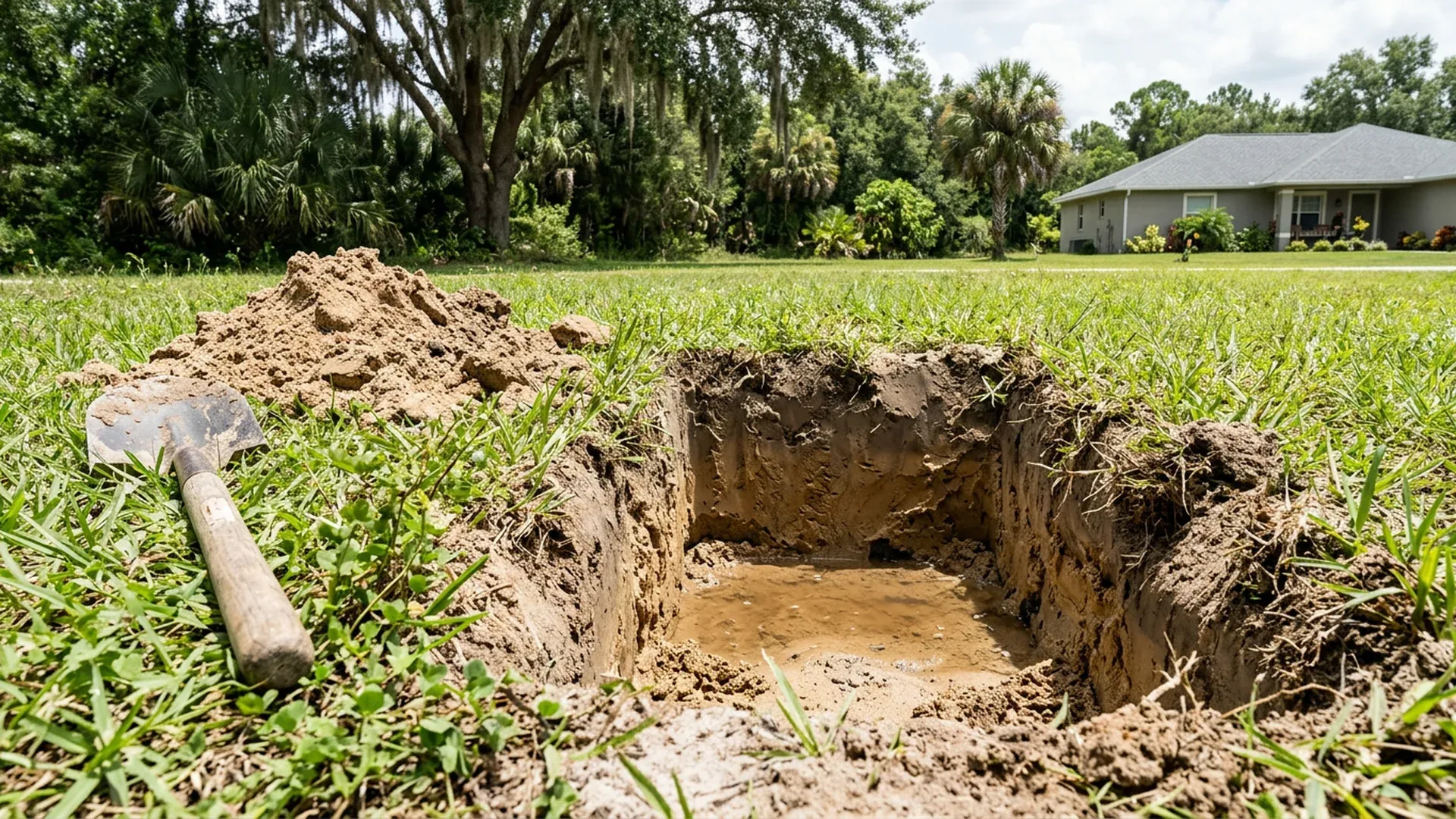
A shallow hand-dug hole that fills with water when it has not rained for days is a clue that the water table is close, but it is a clue and not a measurement. Digging has its own rule: under section 556.105 of the Florida Statutes, the excavator must file notice with the state system at least 2 full business days before the work starts.
Why Does Sandy Soil Stay Soggy Instead of Draining?
Sand drains quickly, so a sandy yard that stays wet usually has something under the sand that holds the water back. UF/IFAS reports that Spodosols are the most widespread soils in Florida, that most of them are poorly or very poorly drained and that they are common on flatwoods landscapes. The flatwoods page above describes a spodic organic layer in these soils and, in places, an impermeable hardpan. Rain soaks through the loose sand, meets that layer and backs up toward the surface. That is why a Florida yard stays wet underfoot a few days after a storm, even when the top looks dry. Our guide to why Central Florida soil needs specialized grading explains why local knowledge matters on this ground.
Can Flat Land, Compacted Fill and Runoff Make It Worse?
Yes, because a yard can be wet for reasons that have nothing to do with the native soil. UF/IFAS says that soil drainage problems can result from natural topography, soil grading during construction or compaction, and that compacted soil is not ideal for water infiltration. On a new lot, heavy equipment and imported fill can pack the surface so rain puddles instead of soaking in. A flat lot has little slope to carry water off, and a lot that sits lower than its neighbors collects what they shed. Downspouts that empty near a low spot add to it, which is another reason a Florida yard stays wet. The UF/IFAS publication on agricultural soils of Florida also warns that soil maps can be less accurate where land was filled or mixed, so your yard may not match its mapped soil.
How Do You Tell Which Cause Fits Your Yard?
You tell why your Florida yard stays wet by watching where the water sits and how long it stays, then matching the pattern. UF/IFAS lists three places to look: low-lying areas, spots where water collects after a rain and areas that remain wet once the nearby soil is dry. Match what you see to one of these:
- One dip holds water: a low spot or lost grade.
- A soggy strip along the house or fence: roof water or ground that slopes toward the wall.
- The whole yard feels spongy: a high water table or a restrictive layer.
- Water arrives from outside the lot: runoff from a neighbor, the street or a ditch.
- The wet area matches where fill or equipment traffic went: compaction.
Then look up your address in the USDA Web Soil Survey, which reports drainage class and depth to water table for mapped soils. Treat it as a map, not a measurement of your yard.
What Can Each Fix Do, and What Can It Not Do?
Each fix solves one cause and misses the others, so match the fix to the cause. Regrading and a swale move surface water toward an outlet, but they cannot lower a full water table; see how to fix a yard that floods in Florida. A French drain collects water from soggy ground and needs a lower, legal place to discharge; compare it with a swale and a dry well in swale vs French drain vs dry well. A catch basin serves one low spot that collects runoff, as explained in French drain vs catch basin. Clean fill can lift a small dip, but it does not remove the reason the water gathered there. None of these promises a dry yard in a Florida rainy season. The goal is water that leaves faster and stays away from the house.
When Is It Time to Call a Contractor?
Call a contractor when the wet area is large, returns after every storm or sits next to the house, because the right fix depends on measured elevations and a place for the water to go. Ask who will check the slope, where the water will end up and who handles permits, since rules differ by county and city. Cracks or walls that move are structural questions for a licensed structural engineer, not a grading problem. For wet ground and the signs it leaves at the house, read our guide to poor drainage and foundation damage. We are licensed and insured, we run a 2% warranty claim rate annually and we grade with laser and GPS guidance. You can see our laser grading and French drains work online.
Florida Yard Stays Wet FAQ
Why does my yard stay wet when it has not rained?
Usually because the ground itself is saturated. A high water table, a restrictive layer under the sand or runoff from a neighboring lot can keep the surface soggy for days after the last storm. Note where the wet spot sits and when it appears, then have the grade and the outlet measured.
Does a wet yard mean my foundation is in danger?
Not by itself, but water standing along the wall is a warning worth acting on. Photograph it and have the grade checked. Cracks, sticking doors or moving walls are structural questions for a licensed structural engineer, so do not treat them as a simple drainage problem.
Can I fix a wet yard by adding fill soil?
Only for a small, shallow dip, and only with clean fill. Piling soil onto a yard that stays wet because of the water table or a hard layer can push the water toward a neighbor or the house, which creates a bigger problem. Measure the yard first, then decide.
Will you look at my wet yard if I live outside Plant City?
Probably, if the property sits in Hillsborough, Polk or Pasco county. Our base is Plant City. Share the address and a short description of where the water collects when you phone +1 813-842-4840, and we will confirm the location, then arrange a free estimate and a visit.
Ready to Find Out Why Your Florida Yard Stays Wet?
If your Florida yard stays wet, we will walk the property with you, check the grade and the outlet, and tell you which cause we see. The office line, +1 813-842-4840, is open Monday to Saturday from 9AM to 5PM, so ask for your free estimate and we will set a time at your yard.
Checked against NOAA, UF/IFAS, USDA NRCS and Florida Statutes 556.105 in November 2026.

About Miguel Orozco
Miguel Orozco is the President of Level One Grading, a trusted Central Florida grading and excavation company, delivering precise earthwork solutions and dependable results for residential and commercial projects since its founding.