
French Drain Installation Florida | Level One Grading
Learn how french drain installation works in Florida, when you need one, and how Level One Grading installs drainage systems across Central Florida.

Miguel Orozco

If your yard holds water after every rain, or you've noticed soggy ground near your foundation, a french drain installation in Florida might be exactly what your property needs. Florida's intense rainfall and high water table make proper drainage one of the most important investments a property owner can make and french drains are one of the most effective tools available.
In this guide, you'll learn how french drains work, when they're the right solution, what the installation process looks like, and how to find the right contractor for the job in Central Florida.
What Is a French Drain and How Does It Work in Florida?
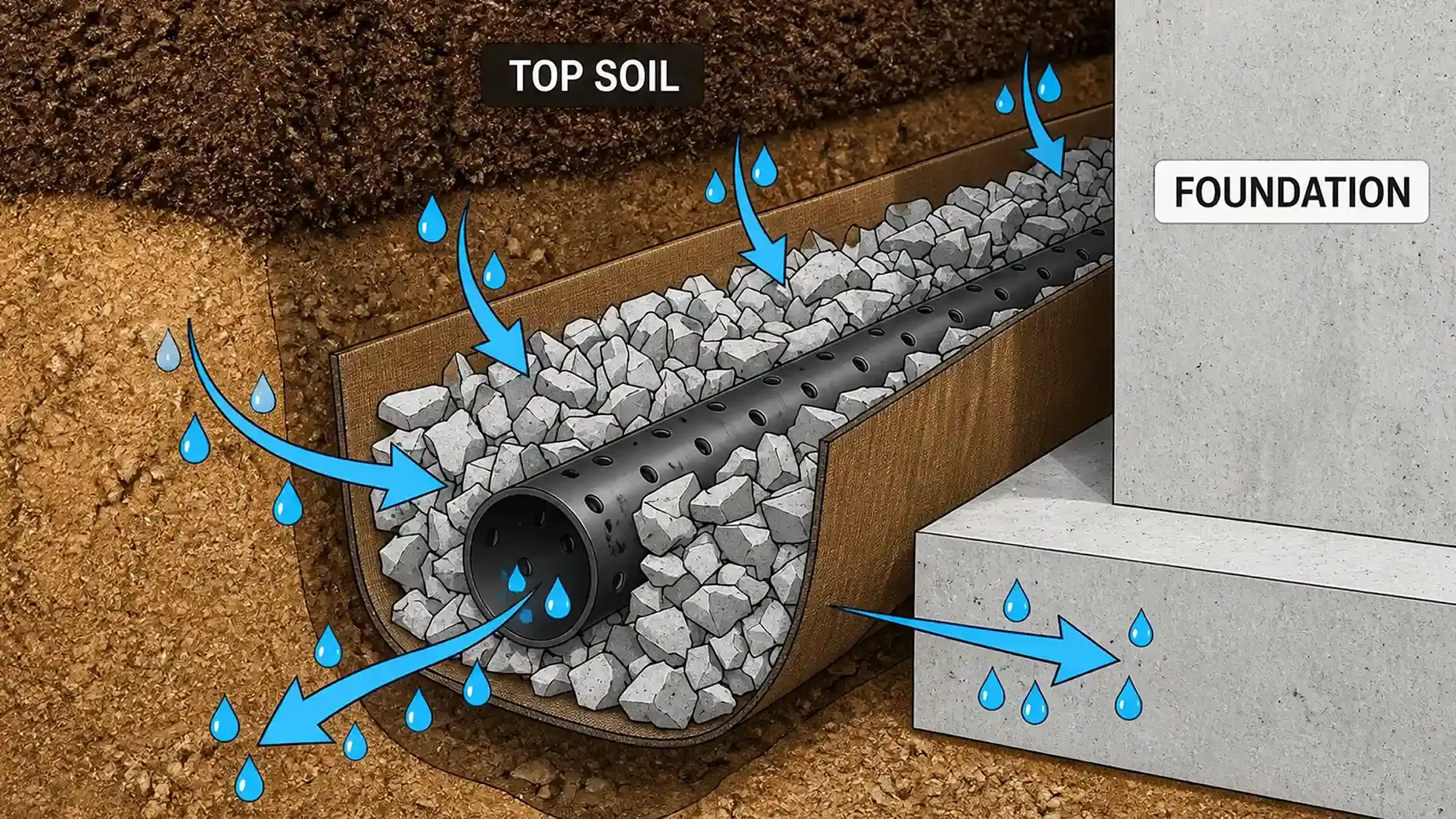
A french drain is a gravel-filled trench that contains a perforated pipe designed to redirect groundwater and surface water away from a specific area. Water naturally moves toward the lowest point on a property, a french drain gives it a controlled path to follow instead of pooling around your foundation, yard, or driveway.
In Florida, the combination of sandy soil, flat terrain, and heavy seasonal rain makes french drains especially useful. Unlike northern states where soil freezing creates drainage challenges, Florida properties deal with water accumulation from year-round humidity and concentrated summer storms. A well-designed french drain in Florida has to account for both surface runoff and subsurface water pressure.
The basic components of a french drain include a sloped trench, a filter fabric liner, clean crushed gravel, and a perforated pipe that carries water to a designated outlet, typically a dry well, a swale, or a municipal drainage point.
Signs Your Florida Property Needs a French Drain Installation
Not every wet yard needs a french drain, but certain patterns are clear indicators that water management is necessary.
Standing water after rain. If puddles remain on your lawn or driveway 24 to 48 hours after a storm, your soil isn't draining fast enough. In Central Florida, that's a common problem on properties with compacted clay-heavy subsoil or minimal slope.
Water pooling near your home's foundation. This is one of the most important warning signs. Water sitting against a foundation over time can compromise structural integrity, cause mold growth inside walls, and lead to expensive repairs. A french drain installation around the perimeter redirects that pressure before it becomes a problem.
Soggy or soft ground in specific areas. If one section of your yard is consistently wet even during dry periods, it may be receiving subsurface water from a neighbor's property or from a natural underground water path. A french drain intercepts that flow and redirects it.
Basement or crawl space moisture. Many Central Florida properties don't have traditional basements, but crawl space moisture is common. A french drain system installed around the perimeter of the structure helps keep that moisture level manageable.
If you're seeing any of these patterns on your property, a professional site evaluation is the best next step.
How French Drain Installation Works in Central Florida
The french drain installation process in Florida follows a specific sequence. Understanding it helps you know what to expect and ask the right questions when getting a quote.
Step 1 — Site evaluation and drainage plan. Before any digging starts, a qualified contractor evaluates the slope of the property, identifies where water is entering and accumulating, and determines the best outlet point for the drain. This step is critical in Florida because properties often have minimal grade, which means the contractor needs to create or amplify slope to make the system function correctly.
Step 2 — Trenching. The trench is dug along the path of the french drain layout. Depth and width vary depending on the volume of water being managed and the soil type. In sandy Florida soils, the trench may need additional support to maintain its shape during excavation.
Step 3 — Filter fabric installation. A geotextile filter fabric is laid into the trench before gravel is added. This fabric prevents fine soil particles from migrating into the gravel and clogging the perforated pipe over time — a step that's especially important in Florida where sandy soil is fine-grained.
Step 4 — Gravel and pipe placement. A layer of clean, crushed stone goes in first. Then the perforated pipe is placed, surrounded by more gravel, and the fabric is folded over the top to seal the system. The pipe must maintain a consistent downward slope toward the outlet.
Step 5 — Backfill and finish grade. Once the pipe and gravel are in place, the trench is backfilled with soil and graded to blend with the surrounding landscape. In most cases, sod or ground cover is restored over the area.
A complete installation typically takes one to three days depending on the scope of the project, but every property is different. Level One Grading evaluates each site before providing a timeline and scope of work.
French Drain vs. Other Drainage Solutions in Florida
French drains are highly effective, but they're not the only drainage solution available. Understanding the differences helps property owners make informed decisions.
French drain vs. surface drain. Surface drains (catch basins) collect water at a single low point and pipe it away. They work well for driveways and paved areas but aren't effective for subsurface water movement. French drains handle both surface and underground water along the length of the trench, making them more versatile for yard drainage.
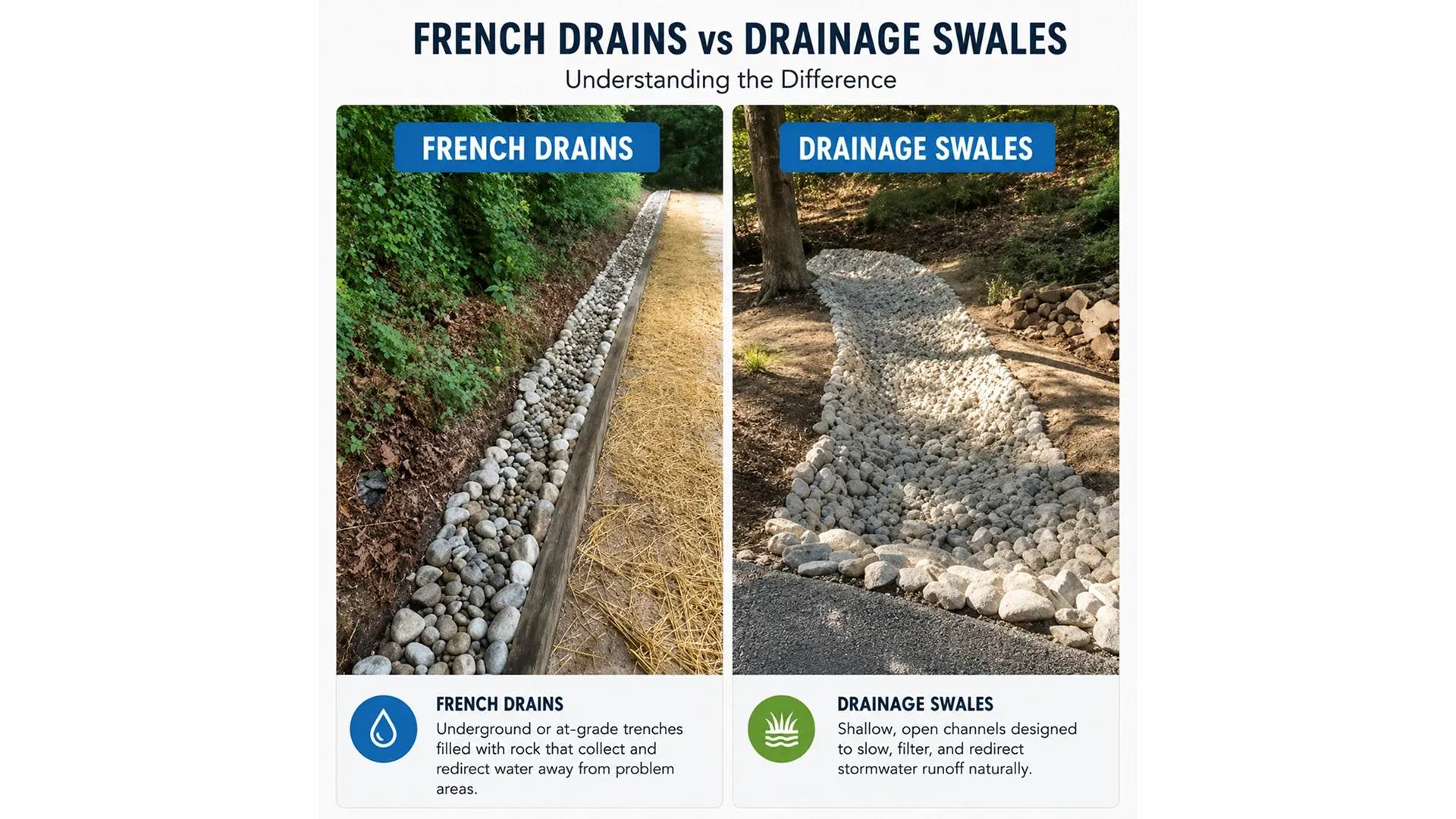
French drain vs. swale. A swale is an open channel graded into the landscape that directs surface water away from a structure. Swales work well for large volumes of water but require open space and careful grading. French drains are better for areas where aesthetics matter or where there isn't enough room for an open channel.
French drain vs. dry well. A dry well is a subsurface structure that holds collected water and allows it to slowly percolate into the surrounding soil. Dry wells are often used as the outlet for a french drain system — they work together rather than as alternatives. In Florida, soil permeability varies, so a professional drainage evaluation helps determine whether a dry well is a practical option for your property.
French drain vs. advanced drainage system. For properties with more complex drainage challenges — large lots, commercial sites, or areas with significant elevation changes, a full engineered drainage system may incorporate multiple components including french drains, culverts, catch basins, and graded swales. Level One Grading offers advanced drainage systems for projects that go beyond a single french drain installation.
How Long Does a French Drain Last in Florida's Climate?
Florida's climate puts more demand on drainage systems than in most other states. High humidity, frequent rainfall, and organic material in the soil all affect the lifespan of a french drain. The most common cause of french drain failure isn't the pipe itself, it's the gravel or filter fabric becoming clogged with fine soil particles over time.
Proper installation makes the biggest difference. When the filter fabric is correctly placed and the gravel meets the right specification for particle size, the system maintains flow significantly longer than a system that skips these details.
Routine inspection, especially after a major storm season, helps catch early signs of reduced drainage before a full cleanout or partial reinstall is needed.
Frequently Asked Questions About French Drain Installation in Florida
How deep does a french drain need to be in Florida?
Depth depends on the problem being solved. For surface water management around a foundation, a french drain is typically installed between 18 and 24 inches deep. For intercepting subsurface water pressure, deeper trenches may be required. A site evaluation determines the right depth for each specific property.
Do I need a permit for a french drain in Florida?
In most cases, french drain installation on private residential property in Florida does not require a permit. However, if the drain discharges to a public right-of-way, storm sewer, or water body, local regulations may apply. Level One Grading is familiar with county-specific requirements in Hillsborough, Polk, Pasco, and Pinellas counties and handles this as part of the project planning process.
Can a french drain fail in Florida's sandy soil?
Sandy soil can accelerate filter fabric clogging if the fabric isn't matched to the specific soil gradation on the property. Professional drainage contractors specify fabric based on local soil characteristics, which is why the quality of the installation matters as much as the design.
How do I know if my french drain is working?
After a significant rainstorm, the areas that were previously problematic should no longer hold standing water. If drainage is slower than expected or pooling returns, the outlet may be partially blocked or the grade may have settled, both issues a contractor can inspect and address.
Does Level One Grading install french drains throughout Central Florida?
Yes. Level One Grading installs french drains across Hillsborough, Polk, Pasco, and Pinellas counties, including Plant City, Tampa, Lakeland, Riverview, St. Pete, and surrounding areas. Every project starts with a free on-site estimate.
Get a Free Estimate for French Drain Installation in Central Florida
Standing water on your property doesn't have to be a seasonal problem you work around. A properly installed french drain gives water a place to go, and keeps it away from the areas where it causes damage.
Level One Grading specializes in drainage solutions designed specifically for Florida properties. Our team evaluates your site, recommends the right drainage approach, and installs the system with the precision and accountability our clients count on.
Ready to solve your drainage problem? Call Level One Grading at +1 813-842-4840 to schedule your free estimate. We serve Plant City, Tampa, Lakeland, Riverview, Seffner, St. Pete, Zephyrhills, and all of Central Florida.

About Miguel Orozco
Miguel Orozco is the President of Level One Grading, a trusted Central Florida grading and excavation company, delivering precise earthwork solutions and dependable results for residential and commercial projects since its founding.