
Poor Drainage and Foundation Damage: Warning Signs to Watch For
Poor drainage foundation damage starts outside the house. Learn the warning signs, what grading can fix and when to call an engineer. Call +1 813-842-4840.

Miguel Orozco

Poor drainage foundation damage usually starts as a wet spot, not a crack. When rain runs toward a house and sits against the slab, the soil that supports the foundation softens, washes out or shifts, and the first signs show up long before anything looks structural. Level One Grading is based in Plant City and works on grading and drainage across Hillsborough, Polk and Pasco counties. This guide lists the warning signs to watch for outside and inside the house, explains what grading and drainage can and cannot fix, and says when to call a structural engineer. For the full menu of fixes, see our drainage solutions guide.
How Does Poor Drainage Lead to Foundation Damage?
Poor drainage leads to foundation damage when water collects at the base of a house and changes the ground that carries the building. Wet soil loses some of its ability to support weight, and running water can carry sand away from the edge of a slab. Florida makes this easy, because the rainy season brings heavy storms, the land is flat, and UF/IFAS notes that surface soils in the state tend to be sandy, loamy sand or sandy loam. Roof runoff, a lawn that slopes toward the wall or a downspout that ends beside the house can feed the same spot every time it rains. Poor drainage foundation damage builds slowly, one storm at a time, which is why the early signs matter more than the late ones.
What Outside Signs Point to Poor Drainage Foundation Damage?
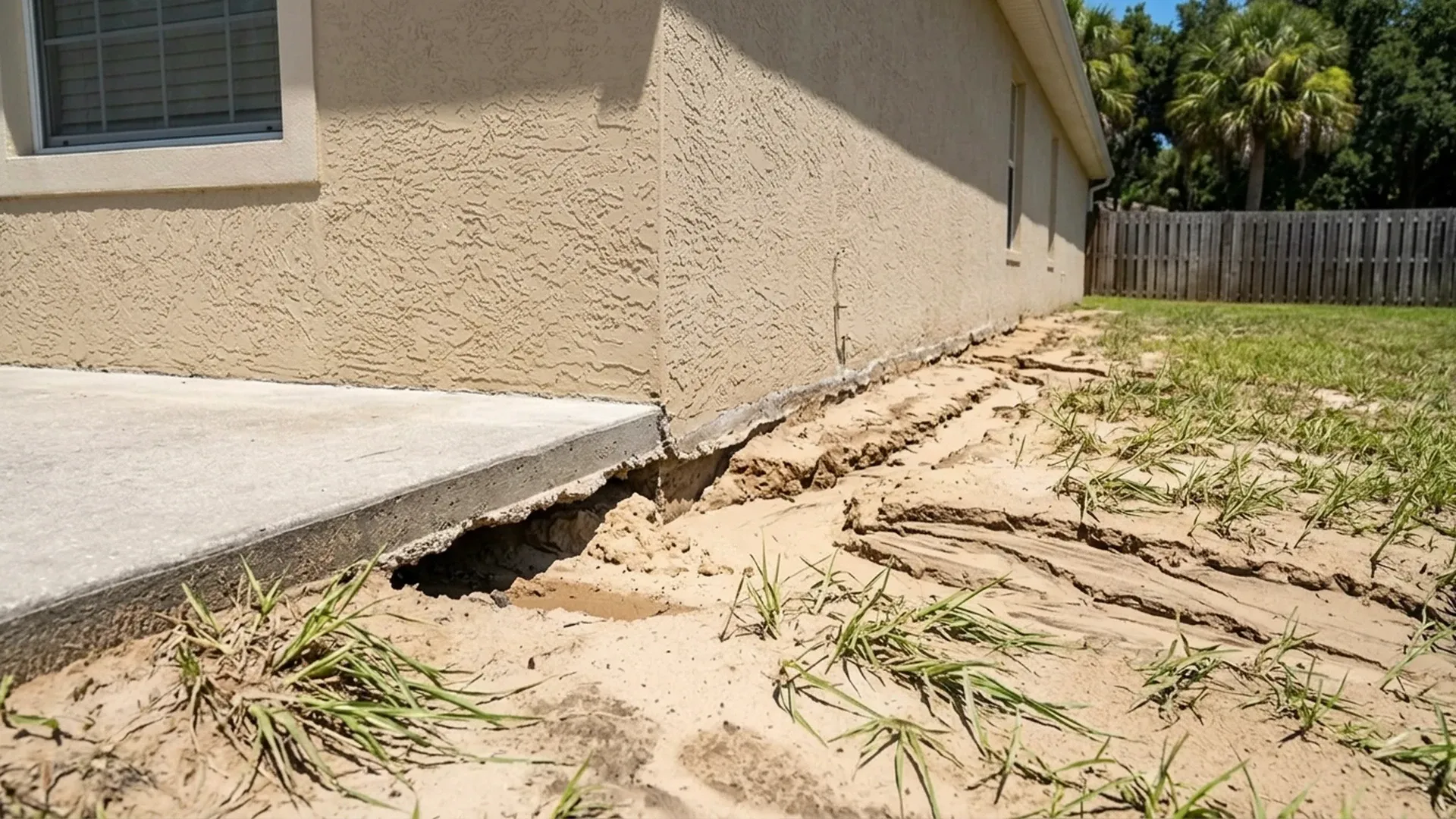
The outside signs are the easiest to catch, because you can watch them happen, and water pooling near the foundation is the clearest of them. Walk the perimeter of the house during or right after a storm and look for:
- Water pooling along the slab or standing against the wall after the rain stops.
- Soil washed away from the foundation edge, leaving exposed sand, a gap or a small trench under a downspout.
- Mulch, sod or landscape edging that keeps getting pushed out in the same place.
- Gutters that overflow, or downspouts that empty right at the wall.
- Dark stains, algae or mildew low on an exterior wall.
- A yard that slopes toward the house instead of away from it.
Any one of these means water is reaching the foundation. Several together mean the grade deserves a closer look soon.
What Inside Signs Point to Foundation Trouble?
Inside signs appear after water has worked on the soil for a while, and they are easy to blame on something else. Watch for:
- Doors and windows that start sticking or no longer latch the way they did.
- Hairline cracks in drywall, especially at the corners of doors and windows.
- Gaps opening between trim, baseboards or tile and the wall.
- Damp spots, a musty smell or peeling paint along an exterior wall.
- Floors that feel uneven.
These signs do not prove the foundation moved, and they do not prove drainage is the cause. A plumbing leak, a roof leak or ordinary settling can look similar. Write down what you see with the date, then compare it with the outside list. If the two lists line up, water around the house is a likely contributor. Our list of drainage issues in Florida covers more lot-wide signs.
Is a Crack in the Wall a Drainage Problem or a Structural One?
A crack is a structural question, and it should not be diagnosed from a photo by a homeowner or by a grading company. Drainage can contribute to the movement behind a crack, but a crack can also come from settling, plumbing leaks, soil conditions or how the house was built. Call a licensed structural engineer or a foundation specialist about any crack that worries you, especially one that keeps growing or comes with a door that no longer closes. Take dated photos and mark the ends of the crack with a pencil so the engineer can see whether it moved. Level One Grading does not repair foundations or do structural work. We deal with the water that feeds the problem, and we can work from the engineer's findings.
How Do You Check Where the Water Goes Around Your House?
You check by watching the lot during a real storm, because dry ground hides most problems. Stand at each corner of the house and note where the water runs, where it stops and where it sits longest. UF/IFAS suggests looking for low-lying areas, places where water collects after rain and spots that stay wet after the surrounding soil has drained. Then compare what you see with the code. Section R401.3 of the 2023 Florida Building Code, Residential calls for lots graded to drain surface water away from foundation walls, with the grade falling at least 6 inches within the first 10 feet. Where a wall or lot line blocks that much fall, it calls for drains or swales instead. Photograph what you find and bring the photos to any estimate. If the water stands far from the walls instead, see how to fix a yard that floods in Florida.
What Can Grading and Drainage Actually Fix?
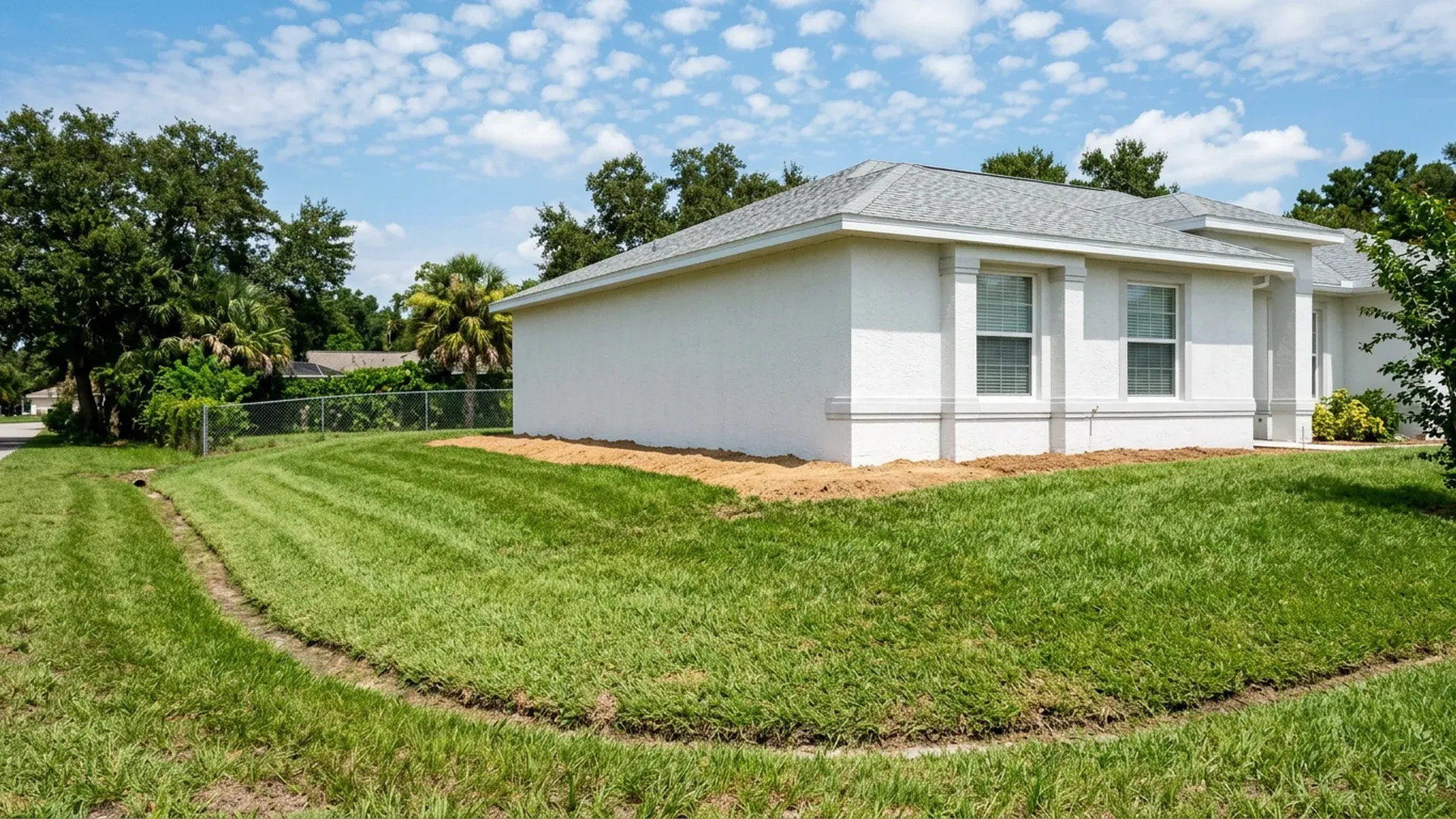
Grading and drainage fix the water side of poor drainage foundation damage. Regrading means grading away from foundation walls, which reshapes the ground so it slopes away from the house; a swale carries runoff around it, and a French drain collects water before it sits at the footing. Our foundation work page lists foundation drainage and compacted backfill among the services we provide, and our French drains page describes foundation French drains that intercept groundwater before it reaches the structure. Our laser grading service uses laser-guided equipment to reach the slopes in the plan. For how a channel works in a flat yard, read our guide to residential swale grading. Stopping the water keeps new damage from being fed. For soil loss around a wall, see our guides to foundation erosion and why foundation erosion control cannot wait.
What Can Grading and Drainage Not Fix?
They cannot undo poor drainage foundation damage that has already happened. Grading does not close a crack, level a slab that has settled or replace soil that washed out from under a footing, and that work belongs to a structural engineer and a foundation specialist. Other water sources call for other trades: a licensed plumber for a leaking supply or drain line, a roofer or gutter contractor for roof runoff, and a certified arborist to assess a tree whose roots worry you. A lot with a high water table or no legal place to send water can also limit what any drain can do, so ask where the water will go before you agree to a system. If anyone promises that a regrade alone will repair a cracked foundation, ask for that promise in writing.
Poor Drainage Foundation Damage FAQ
Does Level One Grading repair foundation cracks?
No. We do not repair foundations or do structural work. We handle the earthwork side, which is regrading, swales, French drains and foundation drainage that move water away from the house. A licensed structural engineer or foundation specialist should evaluate cracks first, and we can work around their findings.
How fast does poor drainage damage a foundation?
It depends on the soil, the rain, how much water reaches the wall and how the house was built, so no honest timeline fits every home. Damage usually builds over many storms, not one. That is why recurring pooling, washed-out soil or sticking doors deserve a look now instead of next year.
Do I need a permit to regrade near my house?
Possibly. Hillsborough County requires a natural resources permit for land alteration such as grading, filling or excavating, with an exception for work that maintains existing grounds, per its permit page. Polk, Pasco and city rules differ, so confirm with your county or city first.
What areas do you serve?
We work out of our Plant City office and serve Hillsborough, Polk and Pasco counties, including Tampa, Lakeland, Riverview and Zephyrhills. If your city is not on our list, call us and we will tell you whether your property is in range.
Ready to Stop Water Before It Reaches Your Foundation?
If you suspect poor drainage foundation damage at your house, tell us where the water collects and when, and we will walk the property with you. Call Level One Grading at +1 813-842-4840, Monday to Saturday, 9AM to 5PM, or request a free drainage estimate today. We are licensed and insured, with an industry-leading 2% warranty claim rate annually.
Checked against the 2023 Florida Building Code R401.3, UF/IFAS and Hillsborough County in October 2026.

About Miguel Orozco
Miguel Orozco is the President of Level One Grading, a trusted Central Florida grading and excavation company, delivering precise earthwork solutions and dependable results for residential and commercial projects since its founding.