
Why Home Foundation Erosion Control Can't Wait
Worried about home foundation erosion control? Learn the causes, prevention methods, and when to call a professional in Hillsborough County.

Miguel Orozco

Florida's heavy rain seasons and sandy soil make home foundation erosion control one of the most important things a homeowner can invest in, and also one of the most overlooked. Erosion around a foundation happens slowly, often without any obvious sign until cracks, settling, or drainage problems show up. This guide walks through what causes foundation erosion, what home foundation erosion control actually involves, and how to know when it's time to bring in a professional before a small issue turns into a major structural repair.
At Level One Grading, we've worked with property owners throughout Hillsborough County for years, helping them protect their homes before erosion has a chance to undermine the foundation. Florida's flat terrain and heavy summer storms mean that even a small drainage flaw can quietly move a surprising amount of soil over a single rainy season, which is exactly why home foundation erosion control tends to matter more here than in drier, hillier parts of the country. Here's what every homeowner should understand about home foundation erosion control before problems start.
What Causes Home Foundation Erosion?
Home foundation erosion control starts with understanding what causes soil to wash away or shift around a foundation in the first place. In Florida, the most common culprits behind the need for home foundation erosion control are heavy rainfall, poor drainage, and grading that slopes the wrong direction, all of which push water toward a home instead of away from it.
The most common causes behind the need for home foundation erosion control include:
- Poor lot grading. If the ground around a home slopes toward the foundation instead of away from it, every heavy rain sends water pooling against the structure instead of draining off the property.
- Clogged or missing gutters. Gutters that overflow or downspouts that dump water right next to the foundation concentrate erosion in specific spots, which speeds up soil loss dramatically.
- Sandy, loose soil. Much of Florida sits on sandy soil that drains quickly but also washes away easily during heavy storms, making home foundation erosion control especially important in this region.
- Tree roots and landscaping. Roots growing too close to a foundation can disrupt soil structure and create channels for water to travel along, accelerating erosion over time.
- Irrigation runoff. Sprinkler systems that run too long or are aimed the wrong direction slowly erode soil right at the foundation line without anyone noticing for months.
Left unaddressed, any of these factors can lead to settling, cracking, and eventually the kind of foundation movement that requires far more expensive repairs than erosion control would have. This is exactly why home foundation erosion control is worth budgeting for proactively rather than waiting until a structural engineer is already involved.
How Home Foundation Erosion Control Works
Home foundation erosion control isn't a single fix. It's usually a combination of grading, drainage, and landscaping adjustments designed to keep water moving away from a structure instead of pooling against it. A proper home foundation erosion control assessment starts by identifying exactly where water is collecting and why, since the right solution depends entirely on the specific conditions around a property.
Common home foundation erosion control methods include:
- Regrading the property. Reshaping the soil around a foundation so it slopes away from the structure is often the single most effective erosion control measure available.
- French drains and drainage systems. Underground drainage channels redirect water away from vulnerable areas before it has a chance to pool and erode soil near the foundation.
- Retaining walls. On sloped properties, a retaining wall is a common part of home foundation erosion control that can hold soil in place and prevent it from washing toward a foundation during heavy rain.
- Erosion control matting and ground cover. Vegetation and specialized matting help hold soil in place on exposed slopes where erosion is already an active problem.
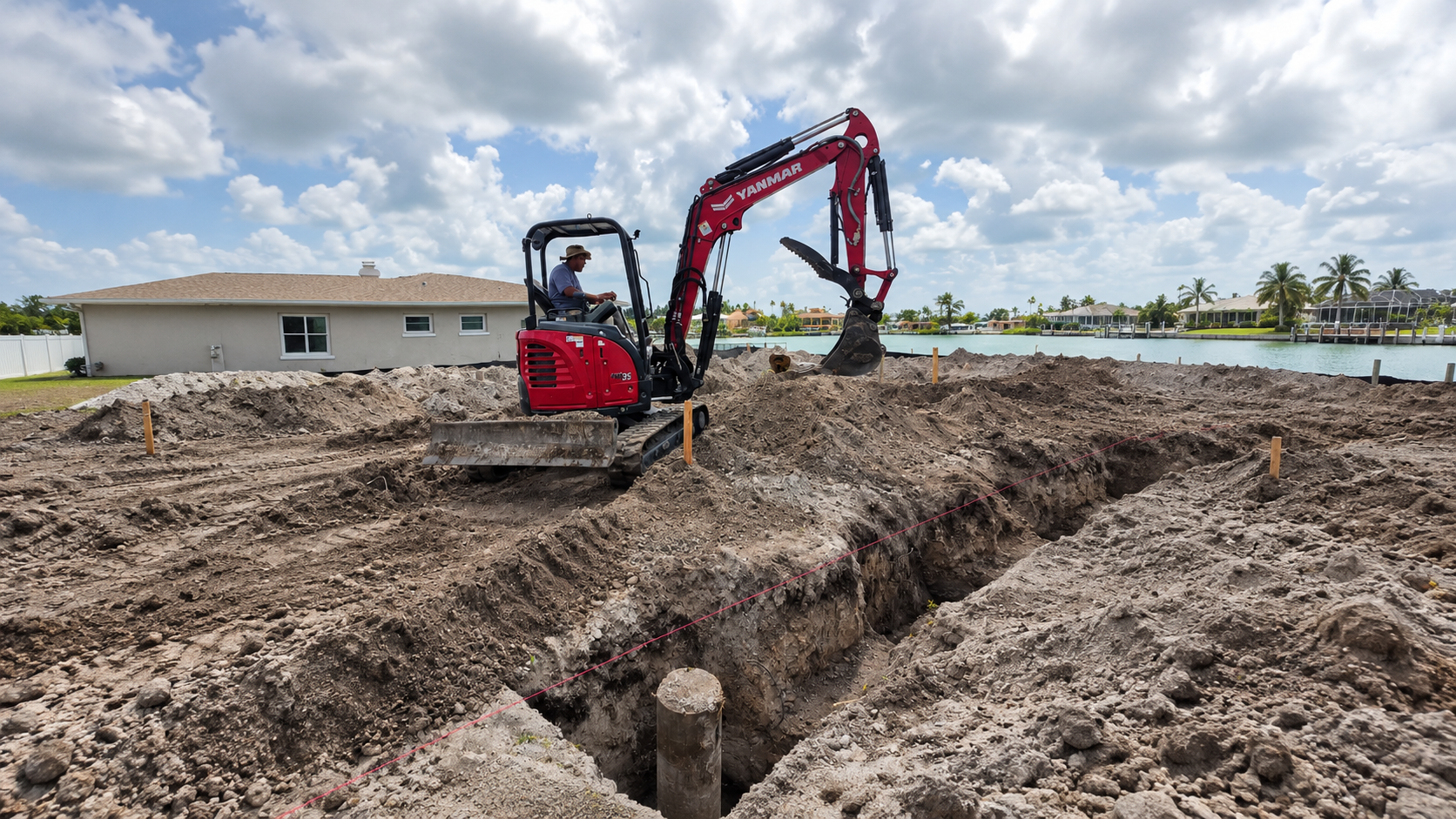
The right combination depends on the property's grading, soil type, and how water naturally moves across the lot, which is why home foundation erosion control almost always starts with an in-person site evaluation rather than a one-size-fits-all recommendation.
When to Call a Professional for Erosion Control
Not every erosion issue requires a full-scale intervention, but there are clear signs that home foundation erosion control needs professional attention rather than a DIY fix. If a property is showing more than one of these signs at once, it's usually time to move past small fixes and bring in a home foundation erosion control specialist. Here's what to watch for:
- Visible soil loss near the foundation. Gaps, exposed footings, or noticeably lower ground right next to the structure are a sign erosion is already underway.
- Standing water after rain. Water that pools near the foundation and takes hours to drain points to a grading or drainage problem that needs correcting.
- Cracks in the foundation or walls. Once erosion has progressed far enough to affect the structure itself, home foundation erosion control needs to happen alongside structural repair.
- Uneven or sunken walkways and patios. Erosion doesn't stop at the foundation line. Nearby hardscaping often shows the same soil movement first.
A professional grading and erosion control team can assess the full property, not just the symptom that's visible, which matters because erosion control that only addresses one spot often just pushes the water problem somewhere else on the lot. This is one of the biggest reasons DIY fixes alone rarely solve home foundation erosion control problems for good, they tend to treat the visible symptom instead of the underlying grading issue.
Frequently Asked Questions
How much does home foundation erosion control cost?
Costs depend heavily on the scope of the problem and which methods are needed. Simple regrading is typically less expensive than installing a full French drain system or retaining wall. A site evaluation is the only reliable way to get an accurate estimate.
How do I know if my home needs erosion control?
Signs like standing water near the foundation, visible soil loss, or cracks in walls or walkways all point to a need for home foundation erosion control. If in doubt, a professional site evaluation can confirm whether erosion is actively affecting the property.
Can I prevent foundation erosion myself?
Some steps, like cleaning gutters regularly and adjusting sprinkler placement, are manageable on your own. But regrading, drainage installation, and retaining walls typically require professional equipment and grading expertise to do correctly and avoid making the problem worse.
How long does erosion control work take?
Smaller projects like gutter and downspout adjustments can be done in a day. Larger regrading or drainage projects usually take several days depending on the size of the property and the extent of the erosion.
Does home insurance cover foundation erosion?
Typically not. Most homeowners' policies exclude gradual erosion and settling since it's considered a maintenance issue rather than a sudden covered event. This is one more reason proactive home foundation erosion control tends to be far more cost-effective than waiting for damage to occur and hoping a claim will cover it.
Protect Your Home Before Erosion Becomes a Bigger Problem
Home foundation erosion control is one of those investments that's far cheaper before a problem develops than after. Catching poor drainage or grading issues early can save thousands of dollars in foundation repair down the line.
At Level One Grading, our team has helped property owners throughout Hillsborough County identify erosion risks and put the right home foundation erosion control measures in place before they turn into structural problems. Reach out today to schedule a site evaluation and protect your home's foundation for the long term.

About Miguel Orozco
Miguel Orozco is the President of Level One Grading, a trusted Central Florida grading and excavation company, delivering precise earthwork solutions and dependable results for residential and commercial projects since its founding.