
Residential Swale Grading: How to Direct Stormwater Away From Your Florida Home
Fix backyard flooding and standing water with precision residential swale grading in Central Florida. Get a free estimate from Level One Grading.

Miguel Orozco

Central Florida receives an average of over 50 inches of rainfall annually, with the vast majority crashing down in intense summer cloudbursts between June and October. For homeowners in communities across Tampa Bay, Lakeland, Plant City, and Brandon, this volume of water presents an immediate threat if property grades are neglected.
If your yard remains a muddy swamp for days after a storm, if water collects against your foundation stem wall, or if your patio turns into an accidental wading pool, your property is suffering from grading failure. While underground French drains have their place, the primary, most effective, and most durable drainage mechanism in Florida is a properly engineered surface swale.
In this practical guide, Level One Grading explains how residential swales function, why standard yards lose their drainage efficiency over time, and how precision regrading protects your home from costly water damage.
What Exactly Is a Drainage Swale?
A drainage swale is a wide, gently sloped, shallow contour cut into the ground designed to channel water along a designated path. Unlike a steep ditch or trench, a properly constructed swale looks like a natural, graceful dip in your lawn that you can easily mow over with a standard riding mower.
The Anatomy of an Effective Swale:
- The High Points (Shed Lines): The earth directly adjacent to your home's foundation should slope downward at a minimum rate of 6 inches over the first 10 feet (a 5% grade) to protect footings from water intrusion.
- The Flowline (Invert): The lowest point of the swale channel where water gathers and flows. This flowline must maintain a continuous, uninterrupted downward pitch toward an approved discharge point.
- The Discharge Area: The safe exit point for collected water, typically a county roadside ditch, street storm sewer, or natural stormwater easement.
Why Florida Yards Develop Severe Drainage Issues
Many homeowners ask: 'My yard drained fine five years ago -- why is it holding water now?'
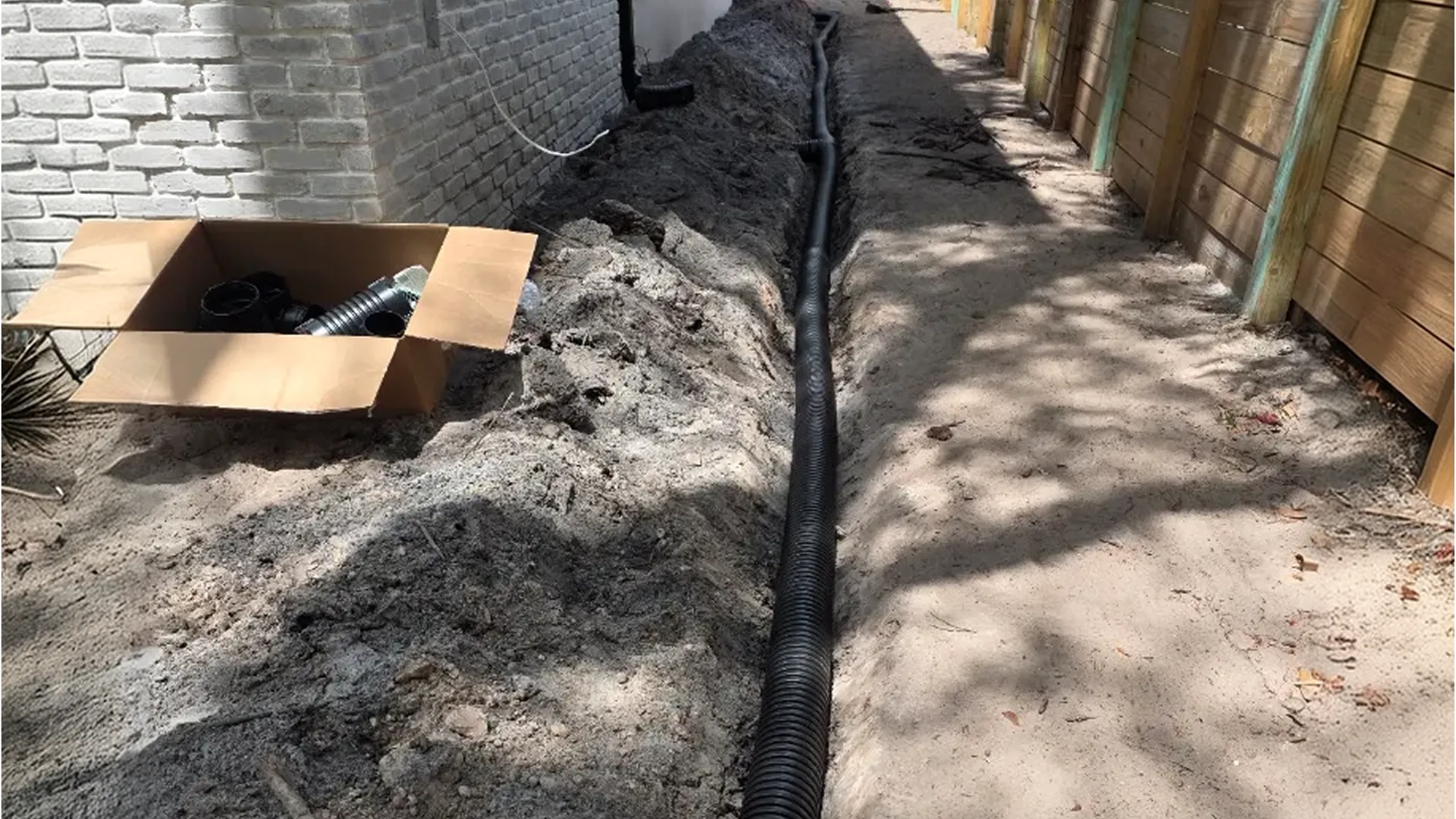
Several common factors cause residential drainage to fail over time:
- Soil Compaction and Settling: Florida sand settles and shifts. Heavy mowing equipment, foot traffic, and settling subsoil create low pockets where water gets trapped.
- Dense Sod Mat Buildup: St. Augustine and Bahia turf grasses produce thick thatch layers over several seasons. As thatch builds up, it physically raises the lawn elevation along property lines, creating an accidental dam that prevents water from exiting toward the street.
- Neighboring Construction and Fencing: New pool installations, patios, home additions, or solid privacy fences installed along property boundaries frequently block historic drainage paths, routing neighboring runoff directly into your yard.
- Poor Original Sub-Division Grading: In fast-growing developments across Polk and Pasco counties, production builders often perform hasty final grades that leave minor depressions capable of holding hundreds of gallons of stagnant water.
The Danger of Ignoring Poor Swale Drainage
Standing water in your yard is more than an aesthetic nuisance; it is an active hazard to your property:
- Foundation Settling and Cracks: Water pooling around concrete stem walls and monolithic slabs softens the supporting soil, causing differential settlement, exterior stucco cracking, and interior drywall seams to split.
- Termites and Pest Breeding: Subterranean termites require continuous moisture to thrive. Saturated ground against your slab provides ideal nesting conditions, while standing water serves as a prime breeding ground for mosquitoes within 48 hours.
- Turf Root Rot (Fungus): Florida turf grasses cannot survive submerged root zones in high summer temperatures, leading to large patches of dead, brown, fungus-ridden lawn.
Grading vs. French Drains: Why Surface Grading Comes First
Contractors who do not own earthmoving machinery often promote expensive French drains for every water issue. While subsurface perforated pipes are useful in narrow side yards where elevation drop is physically impossible, surface swales are superior for general yard drainage:
| Feature | Precision Swale Grading | Subsurface French Drain |
|---|---|---|
| Volume Capacity | Handles massive surface runoff instantly | Limited by pipe diameter (usually 4 to 6 inches) |
| Maintenance | Zero maintenance; simply mow the grass | Requires regular flushing; prone to root and silt clogging |
| Durability | Permanent geographical shape; never fails | 5 to 10 year lifespan before fabric blinding occurs |
| Cost Efficiency | Lower cost per linear foot for large areas | High cost in pipe, gravel, and manual hand-trenching |
In most residential properties, a laser-graded surface swale is the most reliable, permanent investment you can make.
How Level One Grading Fixes Yard Water Problems
When our crew arrives to correct property drainage, we don't rely on guesswork. We deploy precision transit levels and laser-guided grading equipment to evaluate your site:
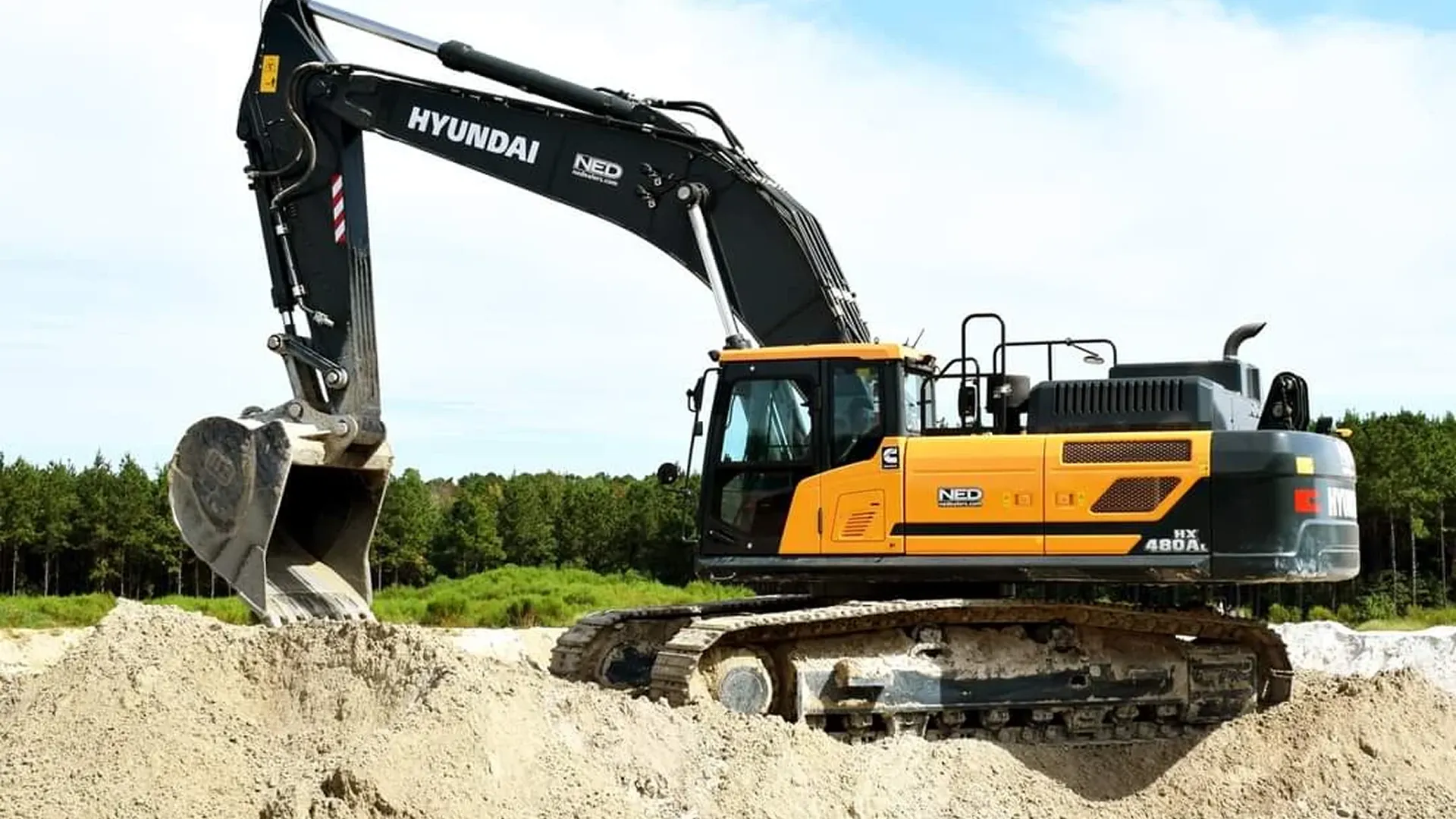
- Elevation Mapping: We shoot elevation points across your property, from your foundation slab to the street curb or easement outfall, identifying the exact high spots trapping water.
- Precision Earthmoving: Utilizing low-impact, rubber-tracked compact loaders, we shave down high spots and carve clean, uniform swale flowlines that guarantee continuous gravitational flow.
- Foundation Pitching: We import clean fill dirt where needed to restore the mandatory 5% slope away from exterior walls.
- Seed or Sod Prep: The reshaped ground is fine-graded and smoothed, leaving the soil fully prepared for fresh sod installation.
Frequently Asked Questions About Residential Swales in Florida
What is the minimum slope required for a yard swale to drain properly?
For grass-lined swales in sandy Florida soil, a minimum longitudinal slope of 1% (1 foot of drop per 100 feet of run) is recommended to keep water moving smoothly. Swales flatter than 0.5% will often retain puddles during summer storm cycles.
Can I block or fill in the swale in my front yard?
No. In most Florida municipalities, roadside swales sit within public drainage easements. Filling them in or installing non-permitted landscaping walls violates county stormwater ordinances and can result in code enforcement citations.
How long should water stand in a swale after a heavy rain?
Under Southwest Florida Water Management District (SWFWMD) guidelines, residential drainage swales are designed to retain stormwater temporarily for percolation. Water should completely drain or absorb within 24 to 48 hours following a storm event.
Key Maintenance Rules to Keep Your Florida Swale Flowing
Once your yard swale has been laser-graded and stabilized with fresh sod, simple seasonal maintenance keeps water moving freely year after year:
- Avoid Scalping the Invert: When mowing your lawn, adjust deck height so the blades do not scalp the lowest point of the swale channel. Exposed bare soil accelerates mud erosion.
- Clear Organic Debris Before Heavy Storms: Rake up lawn clippings, palm fronds, and fallen tree branches that can dam up the flowline during afternoon cloudbursts.
- Never Install Solid Raised Borders Across the Swale: Avoid lining property edges with landscape timbers, continuous brick edging, or concrete curbing that cuts perpendicularly across natural drainage paths.
- Aerate Saturated Soil Annually: Core aerating your lawn relieves soil compaction and improves the natural percolation rate of native Florida sands.
Reclaim Your Lawn From Florida Storms
You do not have to accept a flooded backyard every time it rains in Central Florida. By restoring proper swale elevations and grading slopes, you can enjoy a dry, usable yard and protect your home's structural integrity.
Contact Level One Grading today to schedule a residential drainage consultation in Plant City, Tampa, Lakeland, and surrounding Central Florida communities.

About Miguel Orozco
Miguel Orozco is the President of Level One Grading, a trusted Central Florida grading and excavation company, delivering precise earthwork solutions and dependable results for residential and commercial projects since its founding.