
How to Fix a Yard That Floods in Florida: Causes and Solutions
Fix a yard that floods in Florida: find the cause, then pick the right fix. Call Level One Grading at +1 813-842-4840 for a free estimate.

Miguel Orozco

To fix a yard that floods in Florida, find out where the water comes from before you pick a solution. Most flooded yards trace back to flat land, a high water table, a lost slope or runoff from somewhere else, and each cause needs a different fix.
Level One Grading is based in Plant City and works on drainage problems across Hillsborough, Polk and Pasco counties. This guide shows how to read the signs, which fixes you can try first, and when a regrade, swale or French drain is the right call. For the full menu, see our drainage solutions guide.
Why Does a Yard Flood in Florida?
A yard floods in Florida because the land is flat, the rain is heavy and the soil often cannot take in water fast enough. Statewide rainfall averages about 54 inches a year, and more of it falls from June through September, according to the NOAA State Climate Summary for Florida.
UF/IFAS describes pine flatwoods as low, flat land with relatively poorly drained, sandy soil, where minimal runoff leaves the ground waterlogged and standing water can last for varying periods in the rainy season (UF/IFAS Florida Land Steward). When the ground is already full, new rain has nowhere to go but across the surface. A separate UF/IFAS guide adds that drainage problems can come from natural topography, grading during construction or soil compaction, and that regrading may be needed.
How Do You Find the Cause of Yard Flooding?
You find the cause of yard flooding by watching where the water goes during and after rain, then matching the pattern to a likely source. These patterns point to the usual causes:
- Water pools in one low spot: a dip or lost grade is trapping it.
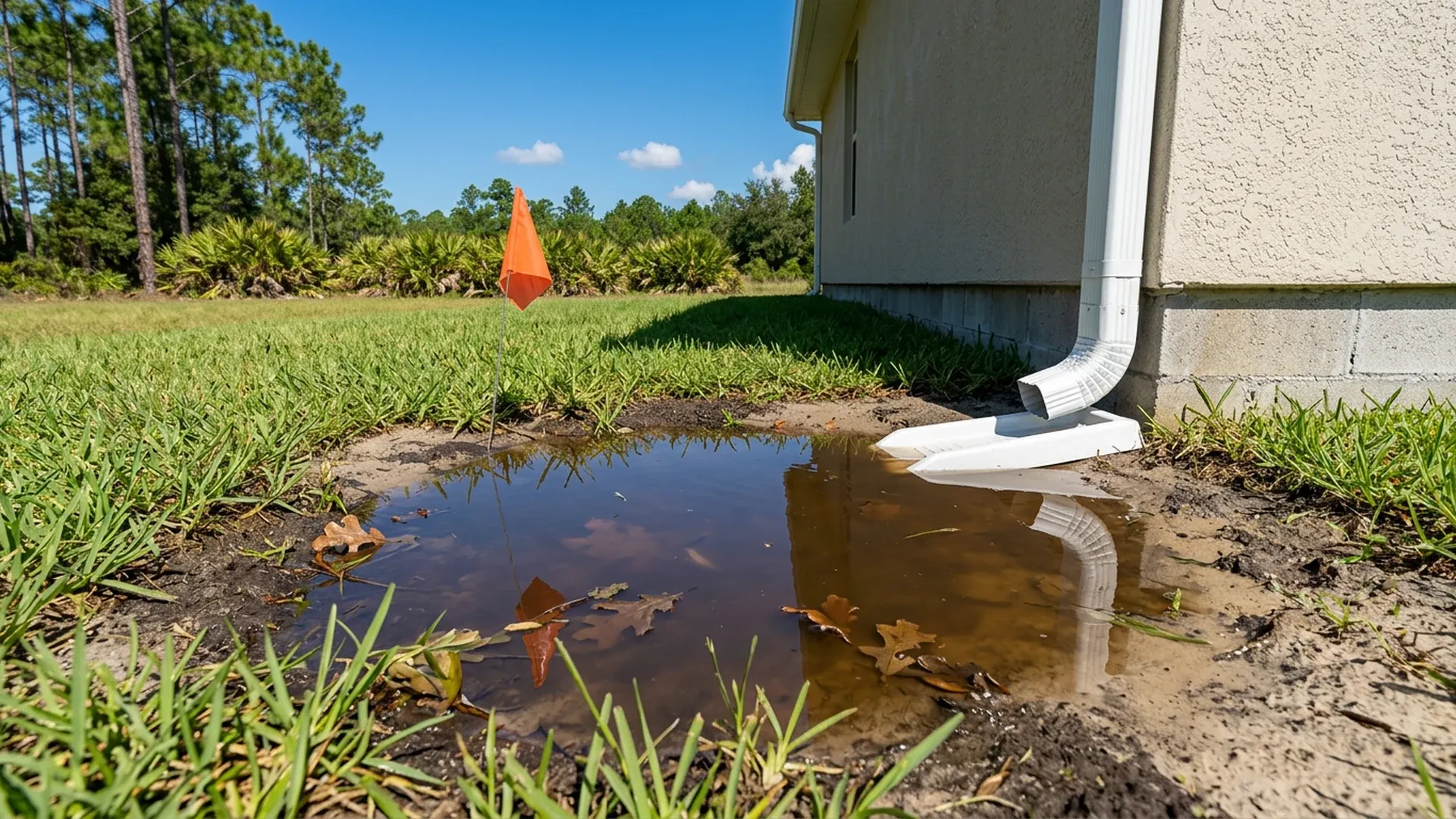
- A wet strip runs along the house: the ground may slope toward the wall, or downspouts dump too close.
- The whole yard stays soggy with no clear puddle: a high water table or a restrictive soil layer is likely.
- Water arrives from a neighbor's lot, the street or a ditch: runoff is coming in from outside.
2023 Florida Building Code, Residential, section R401.3 sets the benchmark near a house: lots shall be graded to drain surface water away from foundation walls, with a fall of at least 6 inches within the first 10 feet. More warning signs are in our list of drainage issues in Florida.
Which Fixes Can You Try Before Calling a Contractor?
Start with the simple fixes that remove water sources, because they cost little and sometimes solve the whole problem. Extend downspouts so roof water lands well away from the foundation. Clear leaves, silt and sod buildup from any existing swale, ditch or drain inlet so the path the original design intended can work again.
Fill small, shallow dips with clean fill soil instead of mulch or compost, which break down and bring the dip back. If water still collects after these steps, the problem is bigger than maintenance. Do not dig a trench or build a berm without knowing where the water will end up, because moving a flooding problem onto a neighbor can create a code issue and a bigger repair.
When Does Regrading Fix a Yard That Floods?
Regrading fixes a yard that floods when water sits on the surface because the slope is wrong, not because the ground below is full. Regrading means cutting high spots, filling low ones and reshaping the ground so water leaves the lot or reaches a designed channel. The code's 6 inches of fall in the first 10 feet works out to a 5 percent slope next to the house.
A swale is the usual partner: a shallow, gently sloped channel that guides surface water to a safe outlet. Our guide to residential swale grading explains how swales work and why yards lose their slope over time. Regrading needs a legal place for the water to go, so a contractor should measure elevations first. Our laser grading service uses laser-guided equipment to reach the slopes and elevations in the plan.
When Do You Need a French Drain or Catch Basin?
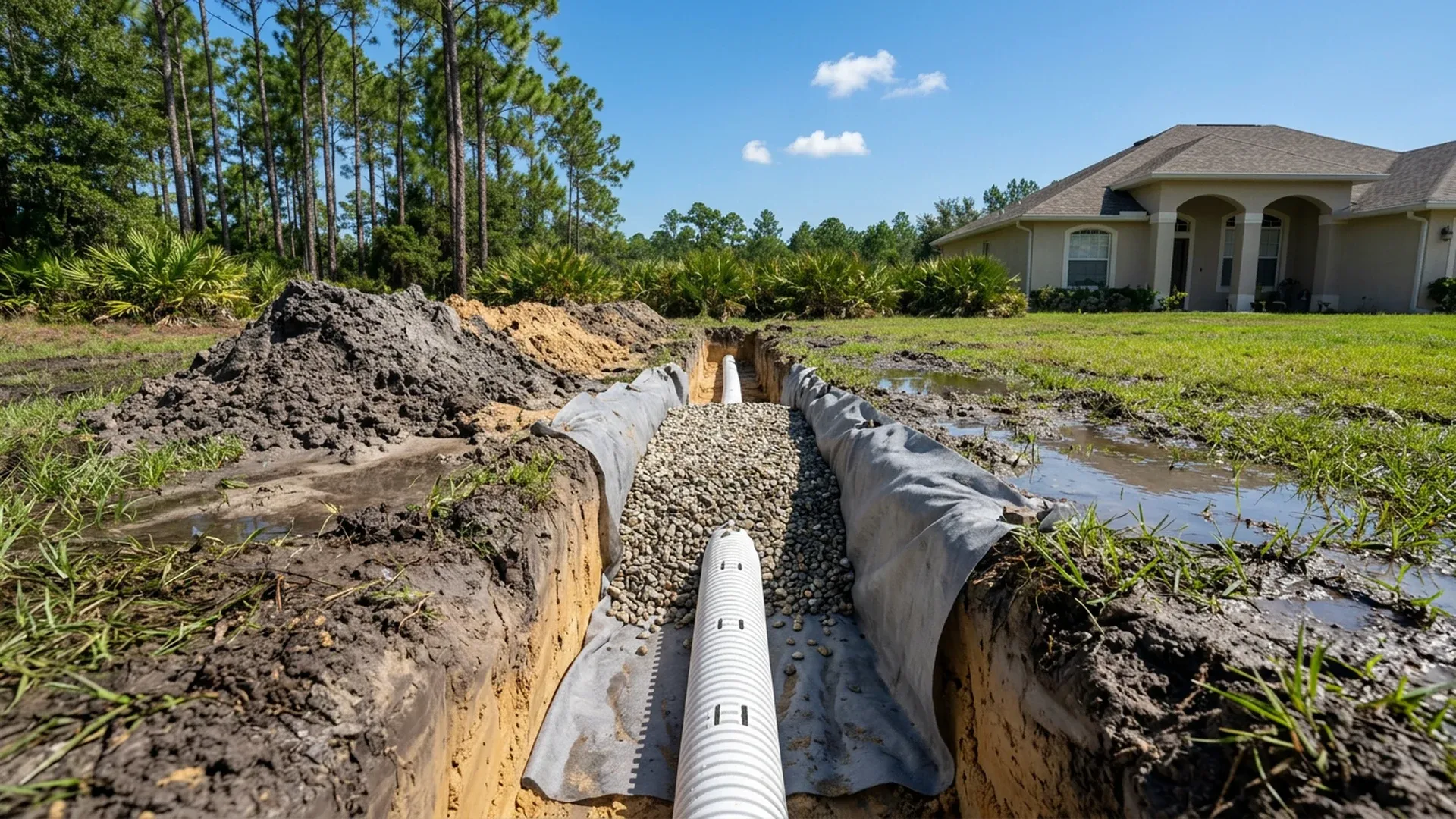
You need a French drain or catch basin when slope alone cannot move the water. A French drain is a gravel-filled trench with a perforated pipe that collects groundwater and carries it to an outlet. It suits chronically soggy ground and wet strips along a wall. A catch basin is a grated box set at a low point that collects surface water and sends it through buried pipe, which suits a spot that floods after every storm while the rest of the yard drains.
Both systems need a legal, lower place to discharge, and in flat Florida that outlet often decides the design. Read our guides to French drain installation in Florida and French drain vs catch basin, or see our French drains page.
How Do You Fix a Yard That Floods in Florida for the Long Term?
To fix a yard that floods in Florida for the long term, match the fix to the cause: surface problems get surface fixes, and groundwater problems get subsurface fixes. Confirm it with a site visit:
- One low spot or a reverse slope: regrade, or add a catch basin at the low point.
- Water running across the lot: build or restore a swale with a clear outlet.
- Soggy ground along a wall or fence: a French drain with a legal discharge point.
- Roof water at the foundation: extend downspouts or pipe them to an outlet.
- Several problems at once, or water with no obvious way out: an engineered system with several parts.
A drain with no outlet fills and fails, and a regrade that ignores saturated soil can leave the yard just as wet.
Do You Need a Permit to Fix Yard Flooding?
Sometimes, because changing the slope of your land can need a permit even when the goal is better drainage. Hillsborough County requires a natural resources permit for land alteration, which it defines as removing vegetation or changing the topography of the land by grubbing, tree removal, clearing, grading, filling or excavating, except for work that maintains existing grounds.
Rules differ in Polk and Pasco counties and in cities such as Plant City, Tampa and Lakeland, and work that connects to a road, ditch or storm sewer can add requirements. Check with your county or city before work starts, and ask your contractor what applies to your parcel. Our guide to land grading permits in Florida goes deeper.
How Do You Choose a Drainage Contractor?
Choose a drainage contractor who diagnoses before selling a system, can explain where the water will go once it is collected, and puts the scope in writing. Ask to see the license and insurance certificate. Ask who handles permits, how the surface will be restored and what the written warranty covers.
Be careful with anyone who recommends the same system for every wet yard without checking the grade and the outlet. Level One Grading is licensed and insured, with an industry-leading 2% warranty claim rate annually. If your yard needs more than one fix, our advanced drainage systems page shows what we install.
Yard Flooding FAQ
Can I fix a yard that floods in Florida myself?
Small fixes are reasonable DIY work: extending downspouts, clearing swales and inlets, and filling shallow dips with clean fill soil. Anything that changes the slope across the lot, needs a trench or connects to a street, ditch or neighbor's land should be planned by a contractor, because a wrong slope makes flooding worse.
Will a French drain fix a yard that floods?
Only when the water is below the surface or the soil stays saturated, and only if the drain has a legal outlet. A French drain will not fix a yard that floods because the surface slopes the wrong way. A site visit shows whether you need a drain, a regrade or both.
Can a flooded yard damage a foundation?
Yes, it can. Water that collects against a foundation wall is the reason the building code calls for ground that slopes away from the house. Watch for pooling along the wall, white chalky stains and soil pulling away from the foundation, and have the grade checked before the damage grows.
What areas do you serve?
We provide drainage solutions in Central Florida from our Plant City office, covering Hillsborough, Polk and Pasco county communities, including Tampa, Lakeland, Riverview and Zephyrhills. If you do not see your city, call and we will confirm whether your property is in range.
Ready to Fix a Yard That Floods in Florida?
To fix a yard that floods in Florida, tell us where the water collects and when, and we will walk the property with you. Call Level One Grading at +1 813-842-4840, Monday to Saturday, 9AM to 5PM, or request a free drainage estimate today.
Checked against NOAA, UF/IFAS, Hillsborough County and the 2023 Florida Building Code R401.3 in October 2026.

About Miguel Orozco
Miguel Orozco is the President of Level One Grading, a trusted Central Florida grading and excavation company, delivering precise earthwork solutions and dependable results for residential and commercial projects since its founding.