
Hurricane Season Property Prep: Grading, Drainage and Tree Checks
Hurricane season property preparation for Central Florida owners: check grading, drainage and trees. Free estimate from Level One Grading, +1 813-842-4840.

Miguel Orozco

Hurricane season property preparation is a walk-through of your lot before a storm is in the forecast: where water goes, which swales and outlets are clear, which trees and limbs sit near the house, and what loose material could be moved. The Atlantic hurricane season runs from June 1 to November 30, according to the National Hurricane Center, so the season is not over yet. Level One Grading works on grading and drainage across Hillsborough, Polk and Pasco counties. This checklist covers what an owner can check alone and what to hand to a licensed professional.
What Does Hurricane Season Property Preparation Include?
Hurricane season property preparation includes five checks: grading and drainage, swales and outlets, trees near the house, loose material and debris, and a record of how the property looks today. None of them needs special tools, and all of them are easier on a dry day than with a warning on the radio.
The National Hurricane Center says an average Atlantic season has 14 named storms, 7 hurricanes and 3 major hurricanes, measured over 1991 to 2020. Any single season can differ from those averages. NOAA also asks owners to begin pre-season preparations early and to know their risk from both water and wind.
This guide covers the property side of that list. It does not replace evacuation plans, insurance review or supplies, which your county emergency managers explain. Our storm recovery guide explains what happens after a storm passes.
How Do You Check Grading and Drainage Before Hurricane Season?
Check grading and drainage before hurricane season by watching where water goes during or right after a normal rain. Stand at each corner of the house and note whether water runs away from the walls, pools in a low spot or flows toward the slab.
The Florida Residential Code, 2023 8th edition, section R401.3 says lots shall be graded to drain surface water away from foundation walls, with a fall of at least 6 inches within the first 10 feet. It also allows drains or swales where lot lines, walls or slopes prevent that fall. Your older lot may not match the code, so treat it as a yardstick, not a verdict.
Write down low spots, bare soil, ruts and any place where the ground has settled against the house. Our guide to fixing a yard that floods in Florida explains what each pattern usually points to.
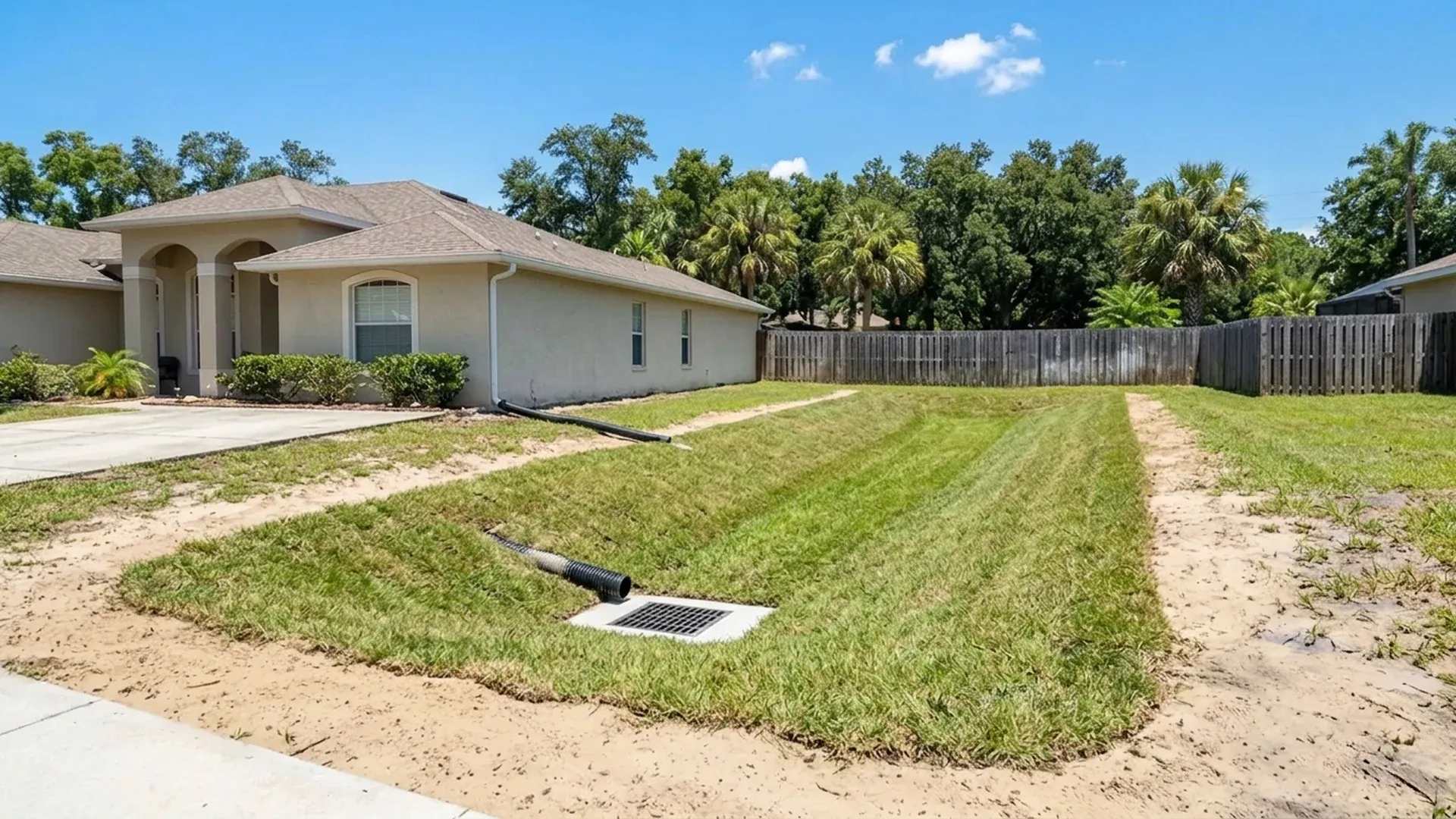
Are Your Swales and Outlets Clear Before a Storm?
Swales and outlets are clear when water can enter at the high end and leave at a legal point without stopping on the way. A swale is a shallow, gently sloped channel, and an outlet is the place the water ends up, such as a ditch, culvert inlet or storm drain.
Walk each channel and remove leaves, silt, sod buildup and trash that would block flow. Check culvert ends under driveways for sediment. Clear gutters of debris, as UF/IFAS Extension advises in its landscape preparation tips, and extend downspouts so roof water lands well away from the foundation.
Do not dig a new trench or build a berm on a guess, because you can send water to a neighbor and create a bigger problem. Our guides to residential swale grading and driveway culvert washouts show how these pieces work together.
How Do You Check Trees Near the House Before a Storm?
Check trees near the house by looking, from the ground, for dead or broken branches, breaks, bulges or wounds in the trunk, and soil that looks like it is sinking or rising around the base. UF/IFAS Extension lists these same signs, plus mushrooms at the base of a tree, which can point to a fungal problem.
Pay extra attention to limbs that hang over the roofline, a carport or a fence. Take dated photos so you can compare later, and note any tree you are worried about.
We are an excavation and grading company, not arborists. UF/IFAS recommends that owners have large trees evaluated by an ISA certified arborist for defects that are not visible from the ground, and that trees over about 15 feet be pruned by a professional before the season. You can find one through the ISA's Find an Arborist tool.
What Loose Material and Debris Should You Move?
Hurricane season property preparation means moving anything that wind can throw or water can carry: patio furniture, planters, bird feeders, tools, stacked lumber and loose bags of material. UF/IFAS Extension also suggests securing plants and yard items and bringing furniture inside before a storm.
Then look at what water can carry. Piles of fill dirt, sand, mulch or brush left near a drain inlet, ditch or property line can wash into the very paths you just cleared. Move them uphill and away from outlets, or cover bare piles until you can use them.
Bare soil from a recent project is another weak spot. Exposed ground washes out quickly, so ask whoever did the work about stabilizing it with sod or a sediment barrier. Our erosion control guide for hurricane season covers that step, and our water and erosion control service handles the on-site work.
What Should You Document Before Hurricane Season Peaks?
Document the property while it is calm: photographs of every side of the house, the driveway, the swales, the drain outlets, the larger trees and the fence line, all taken in daylight and saved with the date.
These records show what the lot looked like before a storm, which helps you describe damage later to a contractor, an adjuster or your county. Note bare patches, ruts and any area that already erodes. Also write down who manages shared drainage, such as an HOA or a road department, so you know whom to call.
If hurricane season property preparation leads you to regrade, add a drain or change a culvert, check permits first. Rules differ by county and city, so confirm what applies to your parcel. Our guide to land grading permits in Florida explains the questions to ask.
What Can Grading and Drainage Work Not Do?
Grading and drainage work can help rain leave your lot instead of settling around the house, but it cannot promise a dry property in every storm. A hurricane can bring more water than any lot, swale or pipe can move, and storm surge or river flooding is a different problem from yard drainage.
Good grading also does nothing for wind damage, a weak tree or a structural problem in a foundation. Cracks, doors that stick or walls that move are questions for a licensed structural engineer, not a grading crew. Tree concerns go to a certified arborist, and pipe or electric problems go to a licensed plumber or electrician.
What grading can do is remove the avoidable problems: wrong slopes, blocked channels, bare soil and low spots that collect water week after week. Good hurricane season property preparation fixes those first. A site visit shows which apply to your lot.
Hurricane Season Property Prep FAQ
When should I start hurricane season property preparation?
Start before the season, but if it has already begun, start now. The Atlantic season runs June 1 to November 30, and each check here takes a dry afternoon. Fixing a blocked swale or removing a loose pile is much easier with no storm in the forecast.
Can regrading my yard prevent flooding in a hurricane?
No contractor can promise that. Regrading helps normal rain move away from the house, but a hurricane can deliver more water than a yard can handle. It is worth doing for everyday drainage problems, and it never replaces flood insurance or evacuation planning.
Who should check a tree I am worried about?
An ISA certified arborist, not a grading contractor and not a neighbor with a chainsaw. UF/IFAS Extension recommends a certified arborist to assess large trees and defects you cannot see from the ground. We can clear a site afterward, but the tree decision belongs to the arborist.
Do I need a permit to fix grading before a storm?
It depends on the work and the location. Rules differ by county and city, and work that touches a road, ditch or storm sewer can add requirements. Check with your county or city before work starts, and ask your contractor what applies to your parcel.
Ready for Hurricane Season Property Preparation on Your Lot?
Tell us where the water collects, and we will walk the property with you for your hurricane season property preparation. Level One Grading is licensed and insured, Plant City based, and serves Hillsborough, Polk and Pasco counties. Call +1 813-842-4840, Monday to Saturday, 9AM to 5PM, or request a free estimate today.

About Miguel Orozco
Miguel Orozco is the President of Level One Grading, a trusted Central Florida grading and excavation company, delivering precise earthwork solutions and dependable results for residential and commercial projects since its founding.