
Ditch Digging, Cleaning and Reshaping on Residential Property
Ditch digging cleaning on your own Florida lot: signs, order of work and who owns the ditch. Call Level One Grading, +1 813-842-4840.

Miguel Orozco

Ditch digging cleaning is the work of clearing silt, grass and debris out of a drainage ditch on your own lot and, when needed, digging it back to a shape that carries water again. In Central Florida, a ditch that stops working shows up as water standing after rain, soggy ground along the property line and a driveway that washes out. Level One Grading works out of Plant City, and homeowners in Hillsborough, Polk and Pasco call us when a ditch quits draining. This guide explains why ditches fill, how to tell cleaning from reshaping, who owns the ditch and the order the work follows. Our excavation services guide shows where ditch work fits among the other dig jobs we do.
What Does Ditch Digging Cleaning Mean on a Residential Lot?
Ditch digging cleaning means removing what has built up in a ditch and restoring its shape so water moves along the flow line to an outlet. A working ditch does one job: it collects runoff from a yard or driveway and carries it downhill to somewhere safe, such as a pond, a larger drainage way or a culvert. When the channel is packed with soil and growth, water slows, spreads and sits. Cleaning takes the material out. To reshape a drainage ditch, the work goes further and recuts the sides and bottom so the water has a clear path again. A residential drainage ditch on private land is ordinary earthwork, and we excavate, shape swales and dig trench drainage passages that route water from a problem area to an outlet.
Why Do Residential Ditches Fill Up?
Ditches fill because moving water drops what it carries and plants take hold where the flow is slow. Every rain pushes sand and silt off bare ground, lawn edges and driveway shoulders, and the ditch is where it settles. Grass and weeds root in the soft bottom and catch still more silt. Roots from nearby trees push into the sides, and leaves, palm fronds and storm debris pile up at the slowest point. If bare soil upstream keeps feeding the ditch, cleaning only buys time, so look at where the soil comes from as well. Our guide to why Florida yards stay wet covers the water side of the problem.
How Do You Know If a Ditch Needs Cleaning, Reshaping or Something Else?
Watch the ditch after a rain. Water still sitting days later, a bottom hidden under grass and silt, or water spilling over the edge usually mean you need to clean out a drainage ditch, not rebuild it. Sides that have slumped in, a flow line that dips and holds pools, or a channel that has drifted away from where the water wants to go point to reshaping. If the ditch has no outlet at all, no amount of digging fixes it, and a different structure such as a swale, French drain or dry well may fit better. Walk the full length, from where water enters to the ditch outlet, because the trouble is often at the end rather than in the middle.
Whose Ditch Is It: Yours or the County's?
Ownership decides what you are allowed to touch. A ditch that sits wholly on your lot, serves your lot and drains to an outlet you can reach is yours to look after. A ditch along the road is a different matter. Polk County's roadway maintenance page lists drainage outfalls and ditch maintenance among its work and counts drainage ditches as part of the right-of-way. Hillsborough County says its stormwater program maintains public stormwater systems. Pasco County sets its own rules. A homeowners association or a recorded easement can also change the answer, so confirm with your county before you dig. We stay on your side of the property line.
Why Call 811 Before Digging a Ditch?
Florida law asks for notice first. The statute, section 556.105 in the 2026 edition, tells an excavator to notify the Sunshine 811 system at least 2 full business days ahead of any excavation that is not beneath the waters of the state. Buried water, power, gas and communication lines cross yards and run beside driveways, and a ditch bucket does not know where they are. When a machine will recut a ditch, plan on making that notice before the bucket touches the ground, wait for the marks and dig around them. If you are unsure whether your job counts, ask Sunshine 811 rather than guess.
In What Order Is a Ditch Cleaned and Reshaped?
Ditch digging cleaning follows the water: outlet first, then the flow line, then the sides. A sensible order looks like this:
- Call 811 and wait for the utility marks.
- Walk the ditch and find the outlet. If it is blocked, open it first, because everything upstream drains through it.
- Set the flow line so water runs one way with no dips that hold pools. We use laser and GPS guidance to hold the grade.
- Cut the sides to a smooth slope that stays put.
- Move the spoil well back from the edge.
- Protect bare soil with vegetation or erosion control before the next storm.
Fresh soil moves easily in a hard rain, so we install silt fences, erosion control blankets and vegetation as part of our erosion control work.
What Happens Where a Ditch Meets a Driveway Culvert?
A culvert is where a ditch passes under a driveway, and it is the first place a silted ditch backs up. If the pipe is blocked or sits higher than the ditch bottom, water stops at the driveway, floods the yard side and can wash out the surface. Cleaning the ditch up to the pipe and reshaping the approach is often part of the same visit. Pipe sizing and driveway connections are a separate subject, and whether a permit applies depends on your county, so confirm with it first. We cover the details in our guides to driveway washouts and culverts and culvert permits and sizing.
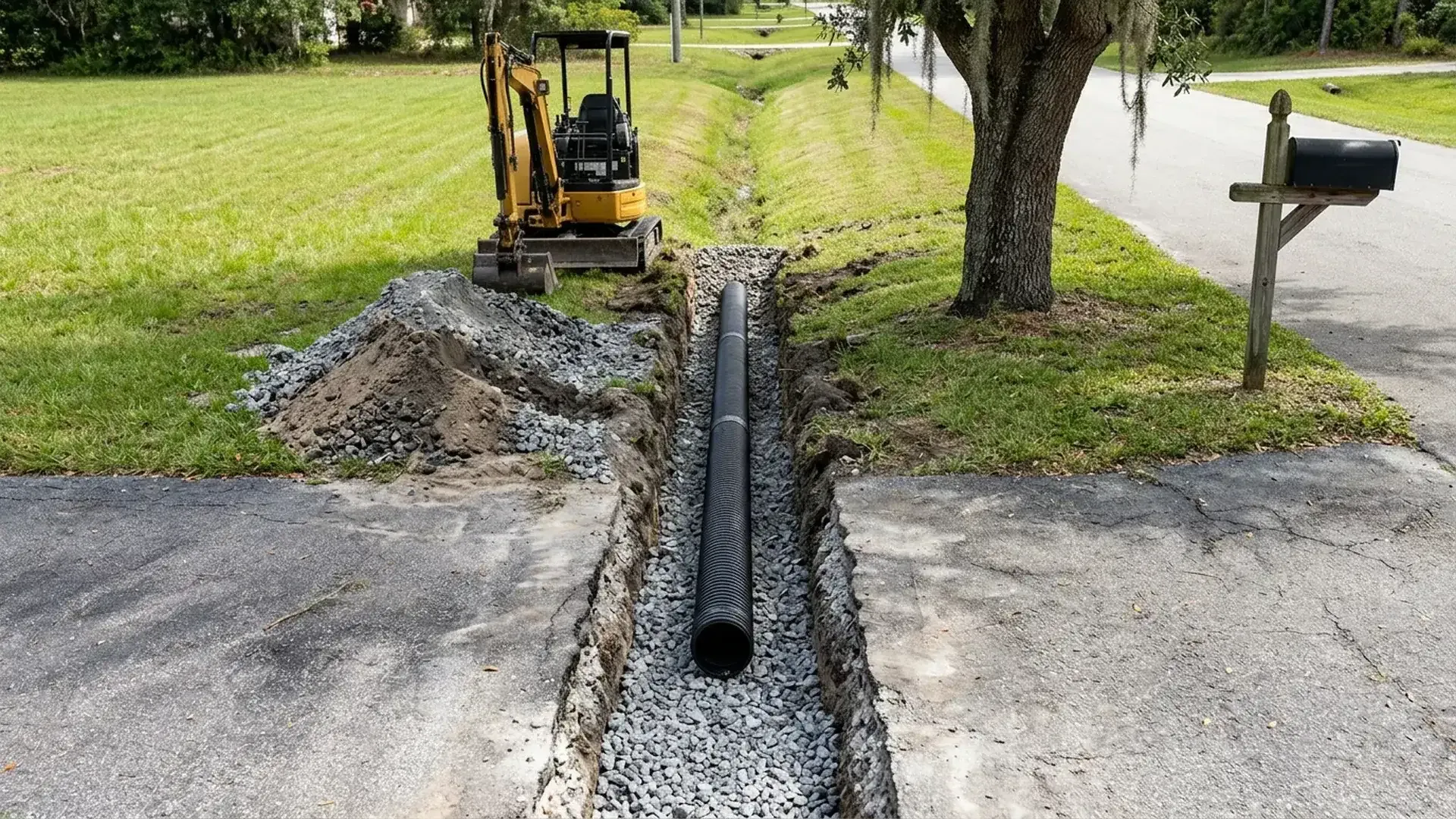
What Should You Ask Before Hiring Someone to Dig a Ditch?
Before anyone mobilizes a machine to your lot, get clear answers to each of these:
- Who places the 811 request, and can you see the ticket number?
- Does the whole ditch sit on my lot, and what did you check to confirm it?
- Where will the water go once the ditch is reshaped, and is that outlet clear?
- Where does the spoil go?
- How will bare sides be protected before the next storm?
Ask, too, whether a ditch is still the right tool. Some lots drain better with a swale or a retention pond, and a good contractor will say so.
Ditch Digging Cleaning FAQ
Can I clean a ditch myself?
Light work, such as clearing leaves and cutting small growth by hand, is a reasonable homeowner job on a ditch that is yours. Recutting the shape with a machine is earthwork and brings the 811 notice, outlet and spoil questions above. If the ditch is in a county right-of-way, leave it and call the county.
How often does a ditch need attention?
No schedule fits every lot. Look at the ditch after heavy storms and at the start of the wet season. If water still stands days after rain, or the bottom is hidden under growth and silt, it is due. A ditch fed by bare soil upstream will fill faster than one with a stable edge.
Will cleaning a ditch fix a flooded yard?
Only when the ditch was the problem. If silt or growth is blocking the flow, cleaning helps. If the lot is flat, the outlet is missing or the water comes from the ground, a ditch alone may not be enough. We look at the whole lot and the outlet first, and we do not promise a dry yard.
Does Level One Grading dig ditches?
We excavate and shape drainage on residential lots, including swales and trench drainage passages that lead water to an outlet, across Hillsborough, Polk and Pasco counties. Ditches in a county right-of-way belong to the county, so confirm with your county first. Call us and we will walk your property line and the outlet with you.
Need Ditch Digging Cleaning on Your Property?
If a ditch on your lot is full, slumped or holding water, tell us where it runs and where it drains, and we will walk it with you. Ditch digging cleaning starts with the outlet and the property line, so have your survey or plat handy if you own one, and bring photos of the ditch after a rain if you can. We are licensed and insured, and our warranty claim rate is 2% a year. Call +1 813-842-4840 or book a free estimate for your property.
Checked against Florida Statutes 556.105 (2026), the Polk County roadway maintenance page, the Hillsborough County stormwater program page and levelonegrading.com in November 2026.

About Miguel Orozco
Miguel Orozco is the President of Level One Grading, a trusted Central Florida grading and excavation company, delivering precise earthwork solutions and dependable results for residential and commercial projects since its founding.