
Culvert Installation Florida: Permits, Sizing & Cost Guide
Culvert installation in Florida means permits, pipe sizing, and real cost decisions. Get it right the first time. Call (813) 842-4840 today.

Miguel Orozco

Water doesn't ask permission before it floods your driveway. In Florida, where afternoon storms can dump an inch of rain in under an hour, a properly sized culvert is often the difference between a driveway that drains and one that turns into a small river. Culvert installation in Florida is a smaller, more overlooked piece of site work compared to grading or drainage, but getting it wrong causes some of the most persistent flooding and erosion problems we see on residential and commercial properties.
This guide covers what a culvert actually does, the permitting process most Florida counties require, how pipe size gets calculated, and what culvert installation in Florida typically costs from start to finish.

Driveway Culvert Permit Florida: What You Need Before Digging
Most Florida counties, including Hillsborough, Polk, Pasco, and Pinellas, require a driveway culvert permit in Florida before any pipe goes into a roadside ditch or right-of-way. This isn't bureaucratic red tape for no reason, the county needs to confirm your culvert won't restrict water flow to neighboring properties or the public drainage system.
The typical permitting steps include:
- Application through county public works or the county road department
- Site plan showing the ditch, proposed pipe location, and property lines
- Pipe size and material approval, based on the ditch's drainage capacity
- Inspection after installation, before the ditch is backfilled
Skipping the driveway culvert permit in Florida isn't just a compliance risk, an unpermitted or undersized culvert is one of the most common reasons a county forces a homeowner to dig it back up and redo the work at their own expense.
Culvert Pipe Sizing: Getting the Diameter Right
Culvert pipe sizing is where most DIY and unlicensed installs go wrong. A pipe that's too small for the ditch it sits in will back up water during heavy rain, no matter how well it's installed. A pipe that's oversized wastes money and sometimes still won't meet permit requirements if it doesn't match the drainage engineering for that road.
Sizing depends on a few core variables:
| Factor | Why It Matters |
|---|---|
| Ditch width and depth | Determines how much water volume the culvert needs to handle |
| Watershed area | More upstream drainage area means more water passing through during storms |
| Pipe material | Corrugated metal, HDPE, and concrete each have different flow characteristics |
| Road/county standards | Many jurisdictions mandate a minimum diameter, often 15" or 18", regardless of ditch size |
Getting culvert pipe sizing wrong is rarely obvious right away, it usually shows up during the first serious storm, when water that should be flowing through the pipe instead pools in the ditch and spreads onto the driveway or yard. This is a common contributor to the kind of standing water we cover in our guide to best drainage solutions for Florida properties.
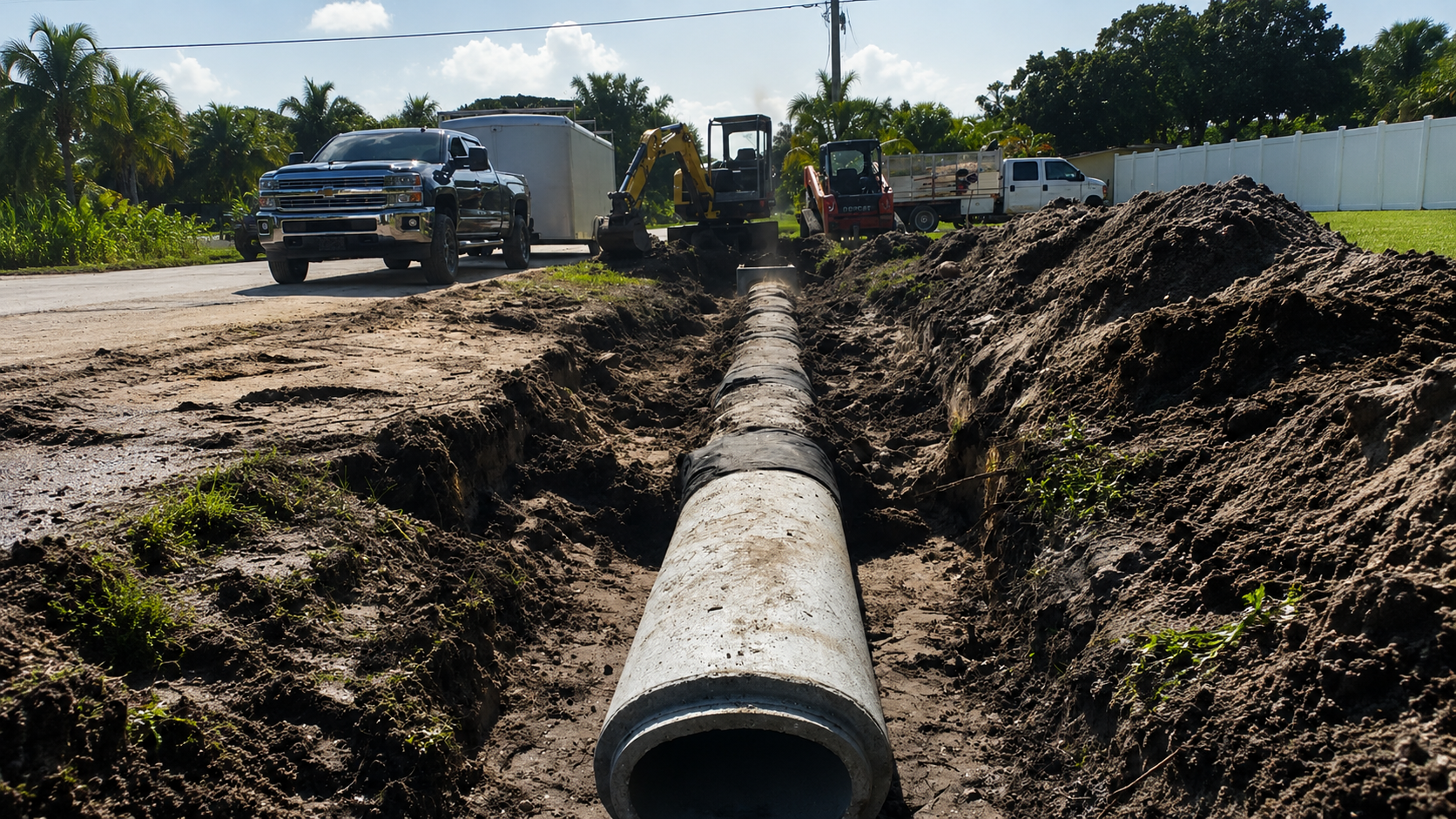
Culvert Installation Cost in Florida: What Affects the Price
Culvert installation cost in Florida typically depends on pipe length, diameter, material, and how much excavation and grading the site needs around the ditch.
Key cost drivers include:
- Pipe length: wider driveways need longer culverts, increasing material cost
- Pipe material: HDPE is generally the most cost-effective, while reinforced concrete costs more but lasts longer under heavy vehicle loads
- Excavation depth and ditch condition: a collapsed, overgrown, or poorly graded ditch adds labor before the pipe ever goes in
- Permit and inspection fees: vary by county but are a fixed cost on top of labor and materials
- End treatments: headwalls or mitered ends that prevent erosion at the pipe's inlet and outlet
Because culvert installation cost in Florida is so tied to site conditions, two driveways of the same length can have very different price tags depending on ditch depth and existing drainage patterns.
Signs You Need a New Culvert
Culverts don't fail overnight, they degrade gradually, and property owners often live with the symptoms for years before connecting them to the pipe itself. Watch for these signs you need a new culvert:
- Water pooling at the end of your driveway even during moderate rain
- Visible rust holes, cracks, or collapsed sections in an older metal pipe
- Sediment or debris buildup that never fully clears out of the pipe
- A sinking or dipping driveway surface directly above the culvert
- Standing water in the roadside ditch that doesn't drain within a day or two after rain
If you're seeing more than one of these signs you need a new culvert, the fix is rarely just clearing debris, it usually points to an undersized, damaged, or improperly graded pipe that needs replacement.

Frequently Asked Questions
Do I need a permit to install a culvert in Florida?
In most counties, yes. Any culvert placed in a roadside ditch or drainage right-of-way typically requires a permit and inspection from the county public works or road department before and after installation.
How long does culvert installation take?
A standard residential driveway culvert usually takes one to two days, including excavation, pipe placement, backfill, and grading, though permit approval timelines can add several weeks before work begins.
What's the difference between a culvert and a French drain?
A culvert channels surface water under a driveway or road through a ditch system, while a French drain collects and redirects groundwater or subsurface water using a perforated pipe and gravel trench. Many properties need both; see our comparison of french drains vs. catch basins in Florida for more on which system fits which problem.
Can I install a culvert myself?
Technically yes on private property without a right-of-way, but permitted culverts tied to county ditches almost always require professional grading and proper pipe sizing to pass inspection and function correctly during heavy rain.
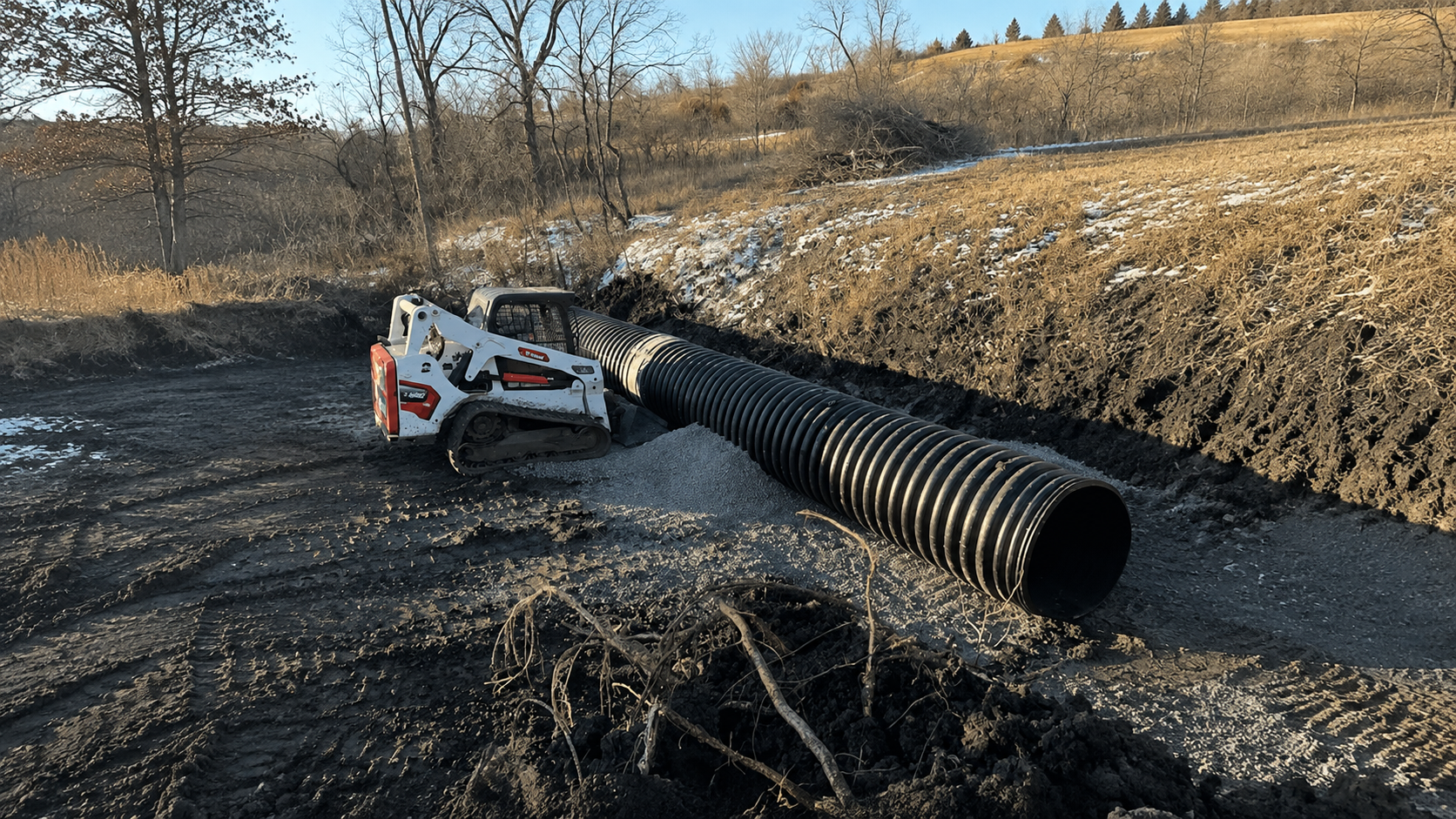
Get Your Culvert Sized, Permitted, and Installed Right
Culvert installation in Florida is one of those jobs that looks simple until the first real storm exposes an undersized pipe or a permit problem. Level One Grading handles the full process, sizing, grading, excavation, and permit coordination, so your driveway stays dry and your county inspection passes the first time.
Contact Level One Grading at (813) 842-4840 for a free culvert installation estimate and stop guessing at pipe size before the rainy season tests it for you.

About Miguel Orozco
Miguel Orozco is the President of Level One Grading, a trusted Central Florida grading and excavation company, delivering precise earthwork solutions and dependable results for residential and commercial projects since its founding.