
Why Central Florida Soil Requires Specialized Florida Grading
Florida grading requires specialized knowledge of local soil, drainage, and seasonal conditions. Contact Level One Grading to prepare your property right.

Miguel Orozco

Pick up a handful of soil almost anywhere in Central Florida and you'll notice something immediately: it doesn't behave the way soil in most other parts of the country does. It's loose. It drains fast in dry conditions and holds very little structural stability when wet. It can shift under load and settle unevenly in ways that Northern soils simply don't.
This is why Florida grading is not the same as grading anywhere else. The combination of sandy and organic soils, a shallow water table, dramatic seasonal rainfall, and flat terrain across much of the region creates conditions that require expertise, equipment, and methods specifically calibrated for Florida. Generic grading approaches used in other states frequently produce inadequate results here, leading to drainage failures, erosion, and structural problems that could have been avoided.
In this article, you'll understand why Florida grading requires a specialized approach, what makes Central Florida soil so challenging to work with, and how the right team prepares your land to perform over the long term.
Why You Need a Drainage Contractor in Florida Who Knows Local Conditions
One of the most common mistakes property owners make when planning a construction or development project is hiring a drainage contractor in Florida without verifying that contractor's specific knowledge of local soil profiles, drainage regulations, and Florida-specific engineering requirements.
A drainage contractor in Florida needs to understand several conditions that don't exist in most other markets:
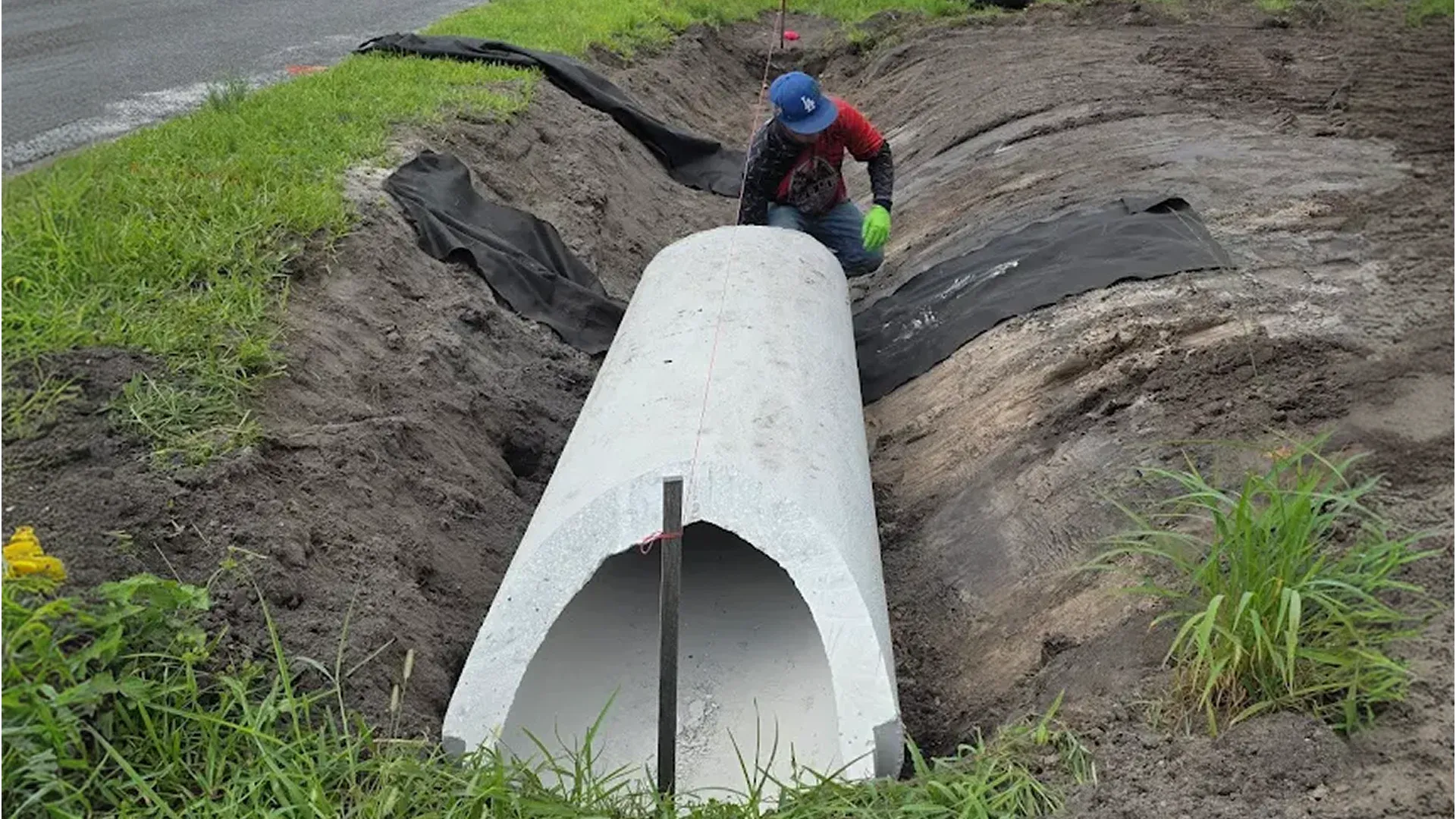
The Flatness Problem. Much of Central Florida sits at very low elevation with minimal natural slope. When natural grade change is minimal, water has almost no force moving it away from structures. A drainage contractor in Florida must design and engineer grade changes into every site, they rarely exist naturally.
Florida's Aquifer System. Florida sits on top of the Floridan Aquifer System, one of the most productive aquifer systems in the world. This means the water table in many parts of Central Florida is extremely shallow, sometimes only 2 to 4 feet below ground surface. A drainage contractor in Florida must account for this in every grading plan, ensuring that drainage systems move surface water away from structures before it can interact with the near-surface water table.
Regulatory Complexity. Florida drainage regulations vary significantly by county. Water management districts, including the South Florida Water Management District, the St. Johns River Water Management District, and the Southwest Florida Water Management District, each impose different requirements for stormwater management, retention, and drainage. A drainage contractor in Florida who works across county lines must be familiar with all applicable rules and permitting processes.
Seasonal Timing. Florida grading projects that begin just before or during the rainy season (June through September) face significantly different conditions than those completed in the dry season. A drainage contractor in Florida must plan around seasonal conditions or risk having completed work undermined by the first major rainstorm.
Hiring a drainage contractor in Florida without this specific local knowledge is a significant risk. Florida grading done by a team without regional expertise routinely results in drainage systems that underperform from the moment construction is complete.
Erosion Control for Florida Grading Projects
Erosion control is a critical and often underestimated component of Florida grading. Once existing vegetation is cleared from a site and the soil is exposed, erosion begins and in Florida's intense rain events, it begins very quickly.
Without proper erosion control measures integrated into a Florida grading plan, the following problems occur:
Topsoil loss. Florida's sandy topsoil layers are highly erodible when exposed. Rain events strip these layers rapidly, leaving compacted, nutrient-depleted subsoil that's harder to stabilize and less suitable for future landscaping.
Sediment migration. Eroded soil doesn't stay on your property, it moves into storm drains, retention ponds, neighboring lots, and waterways. Florida environmental regulations prohibit uncontrolled sediment runoff from active construction sites, and violations carry significant penalties.
Grade changes. When soil erodes in uncontrolled patterns during a Florida grading project, the carefully engineered grades that were cut into the site are altered. Drainage patterns change, low points shift, and the system that was designed to move water correctly no longer functions as intended.
Effective erosion control for Florida grading projects includes several complementary techniques:
- Silt fencing: Temporary barriers installed at the perimeter of a graded site to capture migrating sediment before it leaves the property.
- Straw wattles and erosion blankets: Applied to slopes and disturbed areas to slow water velocity and hold topsoil in place while vegetation establishes.
- Seeding and mulching: Rapid establishment of ground cover after Florida grading is complete to stabilize exposed soil with roots before the next rain event.
- Inlet protection: Covers and barriers installed over storm drain inlets to prevent sediment from entering the drainage system during active Florida grading work.
- Retention pond management: On larger Florida grading projects, temporary sediment basins capture and settle eroded particles before water exits the site.
At Level One Grading, erosion control is built into every Florida grading plan, not added as an afterthought. Florida's regulatory environment and environmental sensitivity make proactive erosion management both a legal requirement and a professional standard.
How Florida's Rainy Season Affects Grading Projects
Florida grading is significantly influenced by the state's distinct wet and dry seasons. Understanding how seasonal weather patterns affect your project is essential to planning a grading timeline that delivers reliable results.
The Rainy Season (June–September)
Florida's rainy season brings an average of 6 to 8 inches of rain per month in Central Florida, with much of that falling in concentrated afternoon thunderstorms. For Florida grading projects underway during this period:
- Active sites require more intensive erosion control because rain events are frequent and intense.
- Grading work may be paused during and after significant rain events to avoid working wet soil, which compacts poorly and loses structural integrity when disturbed.
- Soil stabilization, the addition of lime or other stabilizing agents, may be necessary to improve bearing capacity in persistently wet conditions.
- Drainage systems installed during the rainy season are immediately tested by real weather conditions, which can reveal design shortcomings quickly.
The Dry Season (October–May)
The dry season is generally preferred for Florida grading projects, particularly for residential lots and smaller commercial sites. Dry conditions allow for:
- More consistent equipment access across the site without concerns about soil displacement or compaction loss.
- Faster completion of grading phases, since work isn't interrupted by afternoon storm systems.
- Better erosion control outcomes, with less rainfall acting on exposed soil between construction phases.
- More reliable compaction testing results, since moisture content in the soil can be controlled more precisely.
When scheduling Florida grading work isn't flexible around seasons, an experienced team adjusts their methods and erosion control protocols to work effectively regardless of the time of year.
Frequently Asked Questions About Florida Grading
What makes Central Florida soil different from other states?
Central Florida's soil is primarily composed of sandy mineral soils with significant organic layers in lower-elevation areas. These soils have very low cohesion, meaning they don't bond well when compressed and can shift significantly under structural loads when wet. The shallow water table across much of Central Florida means that saturated soil conditions, where soil loses most of its load-bearing capacity, can occur very close to the surface after significant rainfall. This is why Florida grading requires specialized soil evaluation, proper compaction techniques, and drainage systems engineered specifically for local conditions.
Do I need a permit for Florida grading?
In most Florida counties, any grading or land alteration that affects drainage patterns or involves soil disturbance beyond a certain threshold requires a permit. Permit requirements vary by county and by the scale of the project. Most Florida grading projects also fall under the jurisdiction of one of the state's five water management districts, which have their own permitting requirements for stormwater management. Working with a drainage contractor in Florida who is familiar with local permitting processes ensures your project meets all requirements before work begins.
When is the best time of year to do Florida grading work?
The dry season, typically October through May, is generally the preferred window for Florida grading, especially for residential lots and smaller commercial projects. Dry conditions allow for more consistent soil compaction, faster progress, and simpler erosion control. That said, experienced Florida grading contractors can work effectively year-round by adjusting their erosion control methods and construction sequencing to account for rainy season conditions. The key is working with a team that has genuine experience managing Florida grading in both seasonal contexts.
Conclusion: Florida Grading Requires Local Expertise
Central Florida's unique soil composition, flat terrain, shallow water table, and intense seasonal rainfall make Florida grading a specialty, not a commodity. The same approach that works on a construction site in Georgia or Tennessee will not produce the same results on a lot in Orange, Osceola, or Polk County.
Working with a drainage contractor in Florida who understands the local conditions and who integrates proper erosion control into every grading plan from day one, is the difference between a site that performs correctly for decades and one that creates expensive problems before construction is even complete.
At Level One Grading, our entire operation is built around the specific demands of Florida grading. We understand the soil, the regulations, the seasons, and the drainage requirements that make this region unique and we bring that knowledge to every project we take on.
Prepare your property for Florida weather conditions. Contact Level One Grading to schedule your site evaluation: (813) 842-4840!

About Miguel Orozco
Miguel Orozco is the President of Level One Grading, a trusted Central Florida grading and excavation company, delivering precise earthwork solutions and dependable results for residential and commercial projects since its founding.