
Site Prep for Pavers and Driveways: Why the Ground Work Matters
Site prep for driveway pavers in Florida: strip, grade, fill and compact the ground first. Call Level One Grading at +1 813-842-4840 for an estimate.

Miguel Orozco

Site prep for driveway pavers is the ground work done before the first paver is set: stripping the soft top layer, grading the area so water leaves it, filling low spots and compacting a stable base. It matters because pavers do not hold themselves up. The ground does. We are Level One Grading, based in Plant City, and we do earthwork for homes and lots across Hillsborough, Polk and Pasco. We prepare the ground and the base for paving, and a separate installer lays the pavers. This guide explains what the ground work decides, what our part covers in the order it happens, and what to confirm with your installer. For the full process on a lot, see our site preparation services guide.
Why Does Site Prep for Driveway Pavers Matter?
A paver driveway is a stack of layers, and the soil is the bottom one. The Concrete Masonry & Hardscapes Association (CMHA) says in its application guide that interlocking concrete pavements are typically designed and constructed as flexible pavements on a compacted soil subgrade and compacted aggregate base. The same guide explains that the joint sand lets loads spread out, which reduces the stress on the base and the subgrade. So a weak spot underneath does not stay hidden. It travels up through the layers and shows on the surface. Good site prep for driveway pavers hands the installer ground that is clean, drains and does not move. CMHA also notes that base thickness depends on the strength of the soil, drainage, climate and traffic loads, so the answer for your driveway comes from your site, not from a rule of thumb. Our site preparation steps guide shows where driveway work fits in a build.
What Goes Wrong When the Ground Work Is Skipped?
Four problems show up again and again on paving that sits on poor ground:
- Settling: soft, organic or loose material compresses under weight, and the surface dips where it was.
- Ruts: a weak base gives way under wheel loads, and the ruts follow the tire paths.
- Water under the surface: poor grading lets rain collect at the edges or soak the layers below.
- Drifting edges: the ground beside the paving moves or washes out, and the edge follows it.
CMHA warns against using bedding sand to fill depressions in the base, because those depressions eventually reflect in the finished surface. CMHA also calls edge restraints essential, and your installer sets those, but they need firm ground to hold against. Washouts beside a driveway are a related problem we cover in our driveway washout and culvert guide.
What Does Site Prep for Driveway Pavers Start With?
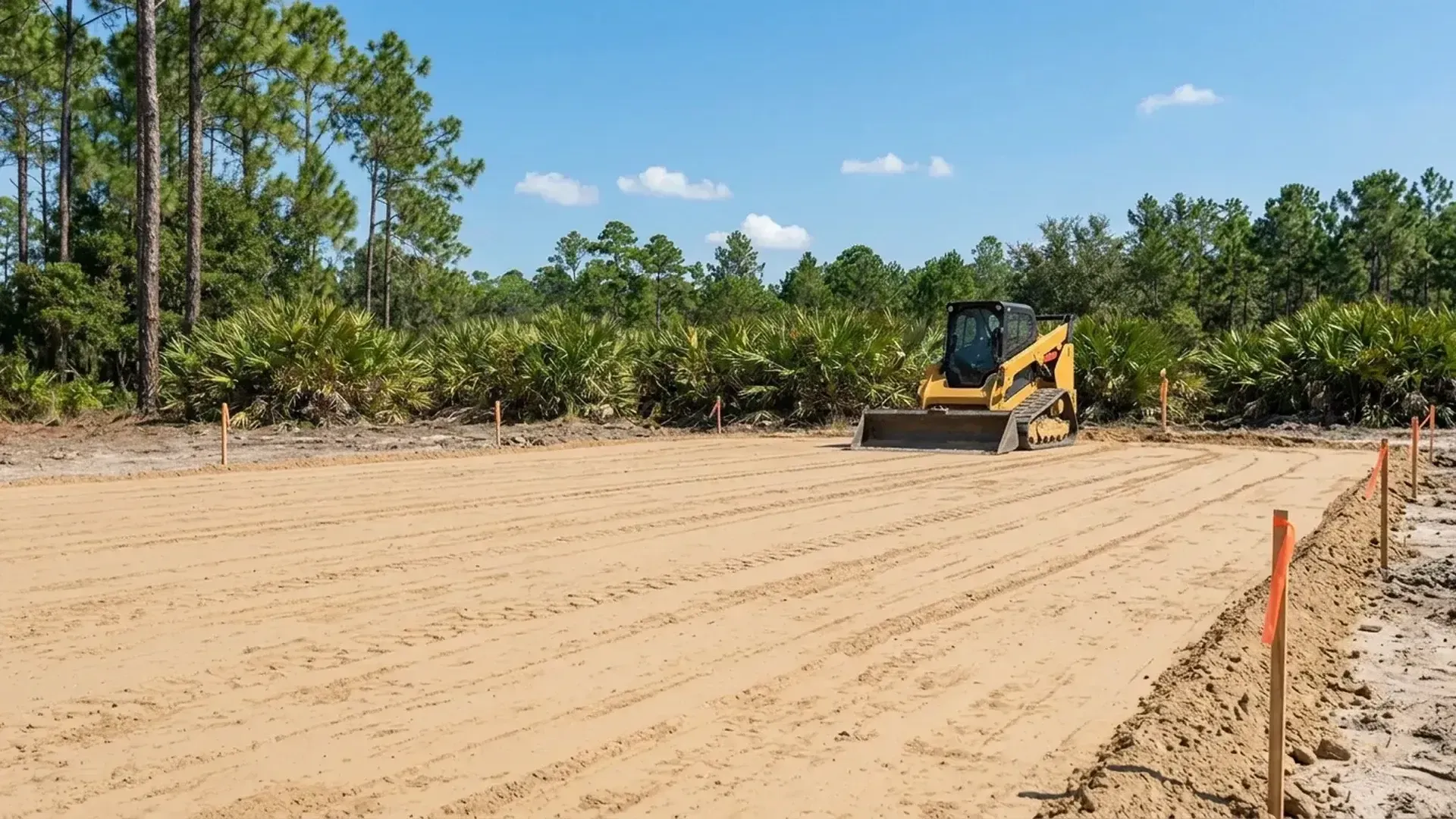
It starts with a call before any digging. Under Florida Statutes 556.105, an excavator must give notice through the statewide one-call system, Sunshine 811, not less than 2 full business days before beginning excavation. Then we scrape the footprint. Our site prep service removes grass, roots and organic matter down to stable mineral earth, because soft, compressible material would shift under load. Next comes driveway grading before pavers. We provide precise laser grading for driveways, so the footprint has proper drainage and a stable base for paving materials. The result is bare, firm ground at the right shape and slope, ready for fill where it is needed.
How Do You Keep Water Off and Out From Under the Paving?
Paver driveway drainage depends mostly on the shape of the ground, and site prep for driveway pavers is where that shape gets set. CMHA says surface and subsurface drainage systems, as well as pavement grades, should follow the same practice as any other flexible pavement. That means the driveway needs a clear path for water to leave, whether that is to a lawn, a swale or an approved outlet. For bases that carry constant vehicle traffic, CMHA adds that soils with low bearing capacity or constant wetness may need stabilizing or designed drainage. We install swales, French drains and culverts where a site calls for them. A driveway beside the house also has to respect the grade rules covered in our yard slope guide. Where the driveway meets a road or a county ditch, confirm the connection rules with your county before work starts.
When Does the Driveway Need Fill, and What Kind?
Low spots and soft areas need fill. We deliver fill dirt and road base. Fill dirt raises grades and fills low spots, and road base is a compacted blend of crushed rock and fines used as a structural base layer beneath driveways, roads and parking areas. What matters is how it goes in. Fill that is only dumped and spread can settle later and take the paving with it, so fill is placed and compacted until the grade holds. Soft spots are not covered over and left for the sand layer to hide. Our guide on what to know before ordering fill dirt covers the buying side.
How Is the Base Compacted and Handed Off?
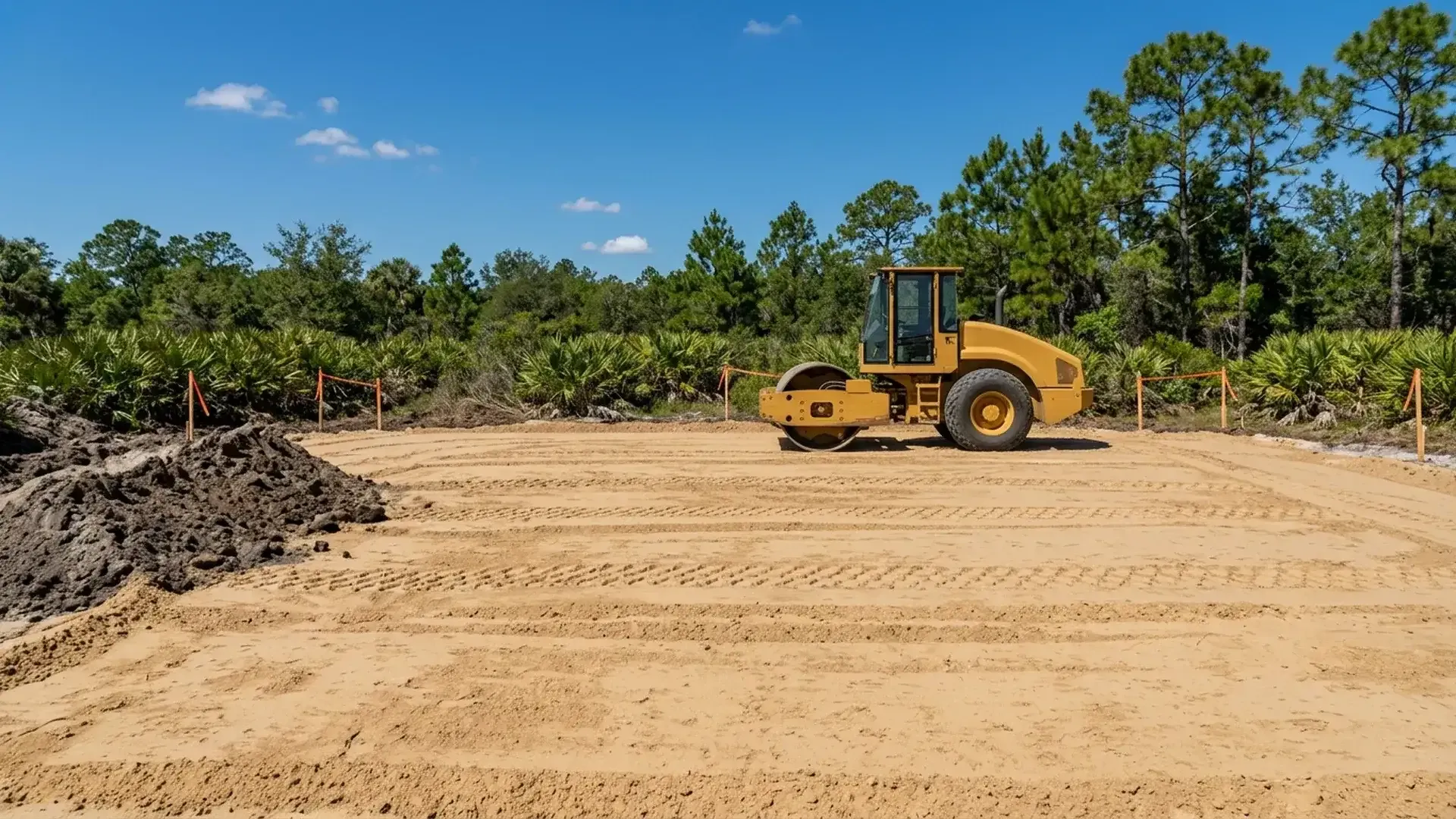
Compaction turns loose ground into a compacted base for pavers that carries weight. UF/IFAS Extension explains that compaction increases the load bearing strength of soils by pressing the particles into a denser structure. CMHA says the soil subgrade should be compacted before the aggregate base is placed, and recommends site inspection and testing of the compacted soil and base. We handle fill and compaction on site, and we work with certified testing companies to provide compaction testing and certification as engineers and building departments require. Then we hand off a smooth, stable base at the grade the plans call for. Paver base preparation ends at that handoff. Your installer sets the edge restraints, bedding sand and pavers from there.
What Should You Confirm With Your Paver Installer?
Settle the handoff in writing before either crew mobilizes. These questions keep the ground work and the paving work from blaming each other later:
- Who sets the base material and thickness: the plans, an engineer or the installer?
- Who orders compaction testing, and who receives the report?
- What final grade and drainage direction does the installer expect from us?
- Who installs and secures the edge restraints?
- Who handles utility locates and any permit?
- How is the handoff date reset if a storm soaks the prepared base?
Ask the same questions of every bidder so the quotes compare like for like. If the driveway is part of a larger build, the pre-construction checklist shows what else to line up first.
Site Prep for Driveway Pavers FAQ
Can pavers go straight over existing grass or dirt?
No. Grass, roots and organic matter are soft and compress under load, so they get stripped first. The pavers then sit on a compacted subgrade and base, as CMHA describes. Laying them over untouched ground tends to show up as dips and ruts. Your installer and engineer confirm the exact build for your driveway.
Does Level One Grading lay the pavers?
No. We strip, grade, fill and compact the ground, and we can deliver fill dirt and road base. A separate paving installer sets the edge restraints, bedding sand and pavers. Share the grade your installer needs and we prepare the ground to the plan. We do not pour concrete or lay pavers.
Who decides how thick the base should be?
That is a design call, not ours. CMHA says base thickness depends on the strength of the soil, drainage, climate and traffic loads, and mentions review by a qualified design professional. Ask your installer or engineer to state it in the plan, and we will prepare the ground to that plan.
Do I need a permit for driveway site prep?
It depends on your lot, city and county. Excavation needs a locate request first, and connecting a driveway to a road or changing drainage can bring local rules. Confirm with your county and city before work starts, and ask your water management district if the site is near wetlands or a water body.
Planning Site Prep for Driveway Pavers?
If a paver driveway is coming, tell us where it goes and who is laying it, and we will give you a free estimate for the ground work. Planning site prep for driveway pavers early lets the grade, the drainage and the base be set before the installer arrives. Call us at +1 813-842-4840 (Monday to Saturday, 9AM to 5PM) or use the site prep page to schedule the estimate.
Checked against the CMHA application guide PAV-TEC-010 (revised 2022), UF/IFAS Extension SS529, Florida Statutes section 556.105 (2026) and levelonegrading.com in November 2026.

About Miguel Orozco
Miguel Orozco is the President of Level One Grading, a trusted Central Florida grading and excavation company, delivering precise earthwork solutions and dependable results for residential and commercial projects since its founding.