
Site Prep Steps Before Building: From Survey to Finished Pad
Site preparation steps before building, from survey and permits to rough grade and a finished pad. Call Level One Grading at +1 813-842-4840.

Miguel Orozco

The site preparation steps before building run in a set order: survey and plans, permits and utility locates, clearing and protection, stripping and rough grading, fill and compaction, trenching, and final grade with inspection. Skip or reorder a step and the problem usually shows up later, under the slab.
Level One Grading describes site prep as the first phase of every project: clearing the land, protecting what stays, managing water and debris, and establishing access. This guide walks through the site preparation steps in the order the work happens, from survey to finished pad. For the service overview, read our site preparation guide.
Step 1: What Do Survey and Planning Involve?
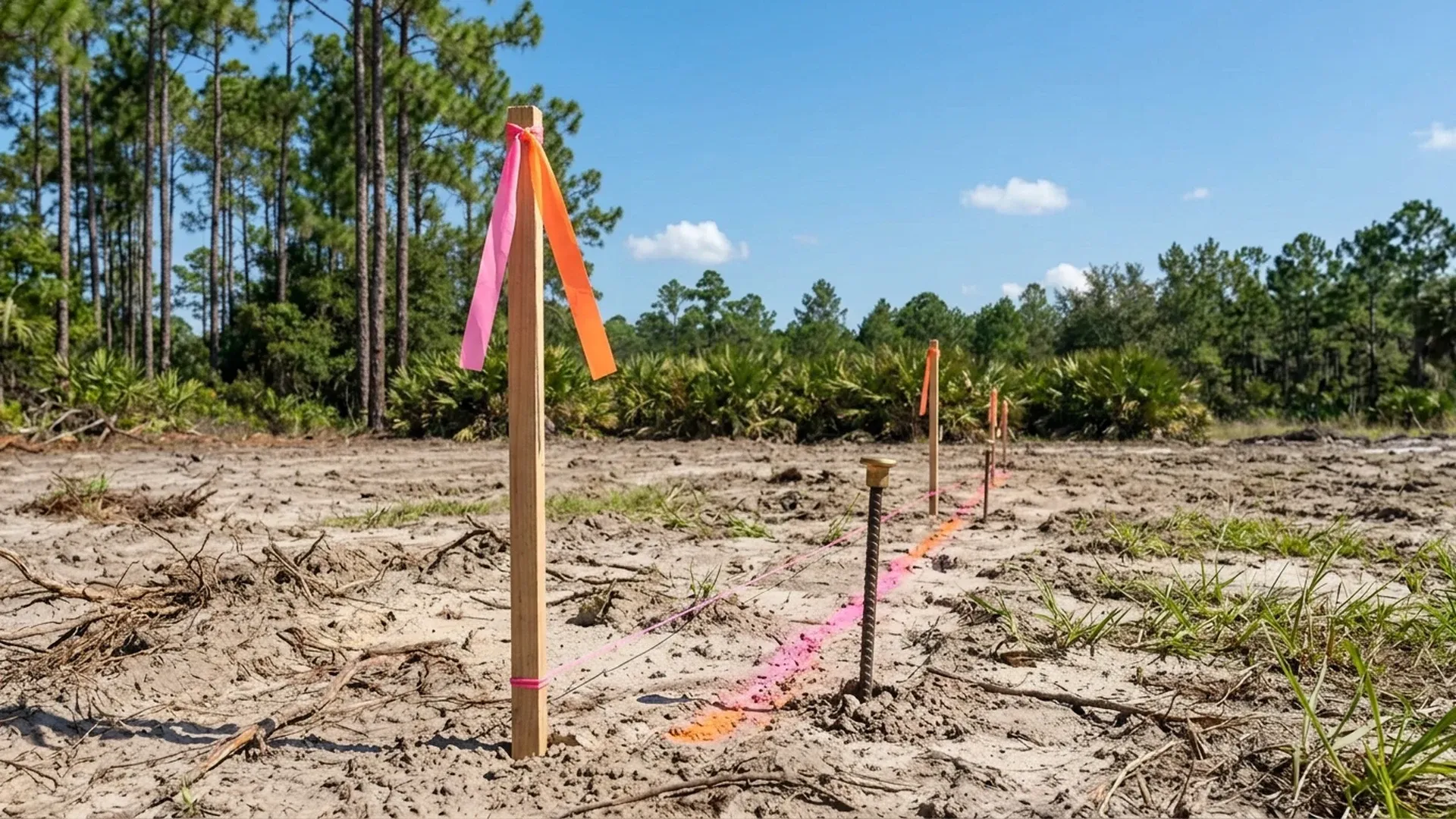
The first of the site preparation steps is knowing exactly what you own and what you plan to build. A boundary and topographic survey shows property lines, elevations, easements and setbacks, and your plans show where the building, driveway and drainage will sit.
Soil is part of planning. Florida Building Code, Residential, section R401.4 says that where soil science data point to expansive, compressible or shifting soil, the building official decides whether a soil test is required, done by an approved agency. Your builder or engineer usually decides what testing and design your lot needs. Everything after this step depends on those numbers.
Steps 2 and 3: How Do Permits and Utility Locates Fit In?
Permits and utility locates come before any equipment moves earth. Florida law, section 556.105 of the Florida Statutes, requires an excavator to give notice through the 811 system at least 2 full business days before beginning excavation not beneath state waters. Request locates through Sunshine 811 so member utilities can mark their lines.
Permits depend on where the lot sits and what the work involves. Counties can require approval for clearing, grading, filling and excavating, and projects that disturb one acre or more may need coverage under the Florida DEP stormwater construction permit. Read our guide to land grading permits in Florida, and check with your county or city early.
Step 4: How Do You Clear the Site and Protect What Stays?
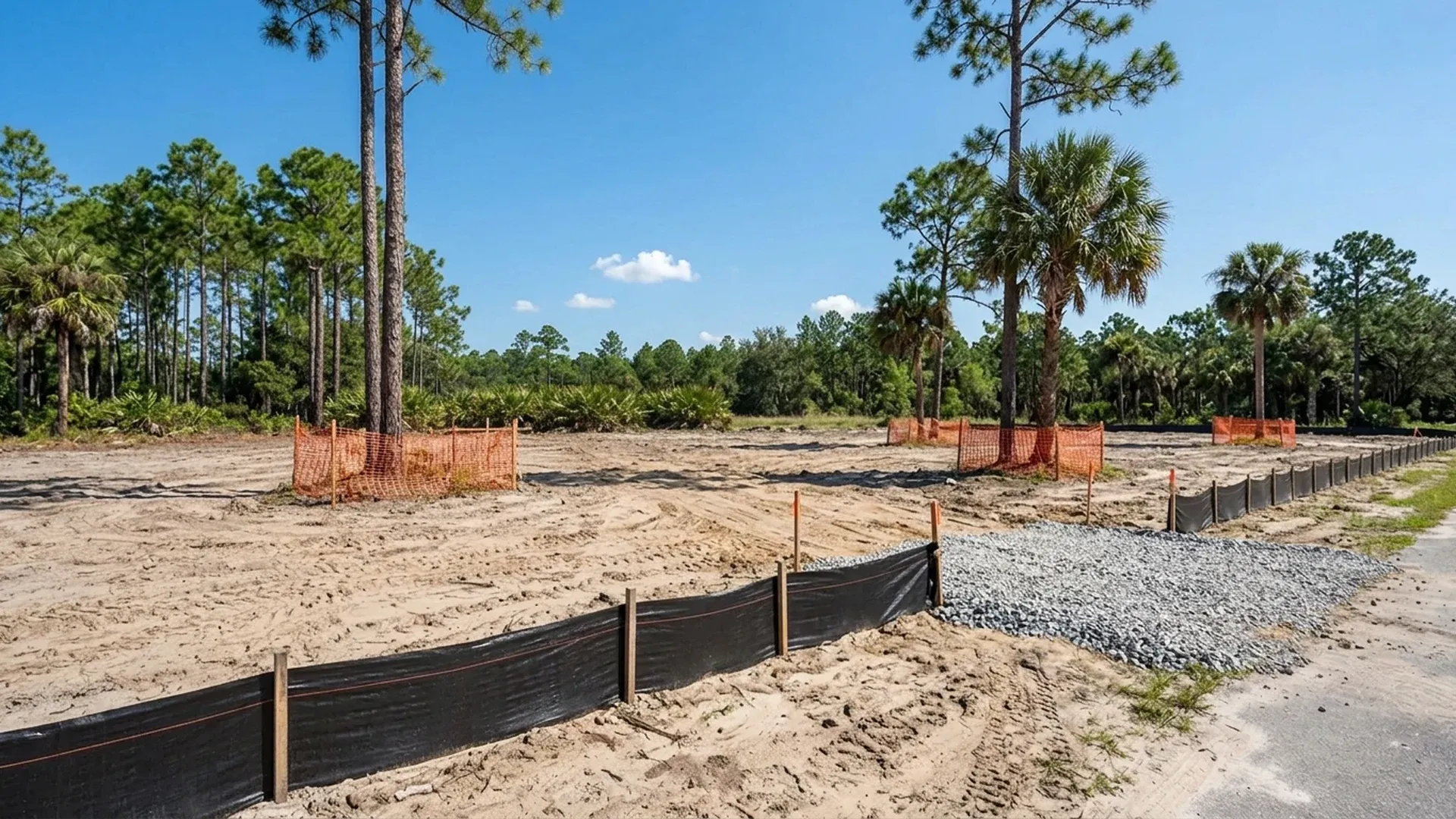
Clearing removes trees, brush, stumps and debris from the build area, and protection keeps the rest of the lot intact. Decide which trees stay, mark them, and keep equipment away from their roots. Hillsborough County's single-family permit page, for example, says you must barricade any existing trees that will remain on the site, and that its permit goes in with the building permit application.
Install sediment control at the same time, because bare soil washes away in the first heavy rain. A silt fence along the downslope edge keeps sediment out of stormwater, neighboring lots and protected areas. See our land clearing services guide, and our sediment fences service for erosion control.
Step 5: Why Do Stripping and Rough Grading Come Next?
Among the site preparation steps, stripping and rough grading come next because the ground must be clean, mineral soil before it can carry load. Stripping removes grass, roots and organic matter down to stable earth. Organic material left under a pad can decompose and let the surface settle, so it is removed, not buried.
Rough grading then moves large volumes of earth to bring the site close to its final elevation and sets the overall slope before utilities go in. A precise final grade cannot fix a poor rough grade, so the order matters. Our laser grading service uses laser-guided equipment to reach the elevations in your plans, and our land grading guide explains the passes.
Step 6: How Do Fill and Compaction Build the Pad?
Fill and compaction are the site preparation steps that raise and stabilize the ground so the building pad can carry the structure. Fill dirt is bulk soil that raises elevation or fills low areas. It is placed and compacted in controlled layers, because loose material settles. The density and elevation come from your engineer or plans, not from a rule of thumb.
Topsoil belongs on finished surfaces for grass, not under the pad, so the right material matters. Because fill settles when compacted, order a margin above the volume you calculate. Level One Grading supplies fill through material deliveries, and our guide on ordering fill dirt explains the math.
Step 7: What Happens at Footer and Utility Trenches?
Once the pad is built, crews cut the footer trenches and utility trenches. This is the hand-off from site preparation steps to foundation work: footer trenches are dug to the depths and widths on your engineered plans, and utility lines go in before the final grade so nobody trenches through a finished surface.
Trench work carries safety rules, and the dig depends on soil, water and plans. Our guide to foundation excavation and trenching covers what to expect, and our excavation services guide shows the full scope. Our foundation work page lists footer trenching, stem wall preparation and pad pouring.
Step 8: How Does Final Grade and Inspection Finish the Job?
Final grading is the last, precise pass, done after underground work is complete, and it sets the surface for slabs, driveways and sod. It is also where drainage is confirmed: 2023 Florida Building Code, Residential, section R401.3 requires lots to be graded to drain surface water away from foundation walls, with a fall of at least 6 inches within the first 10 feet.
Inspections follow your local building department's schedule. Florida Building Code, Building, 2023 edition, section 110.3 calls for the foundation inspection after trenches are excavated and forms erected, and it covers stem walls, monolithic slabs and footers. Finish the site preparation steps by confirming drainage, access and any pending inspections before the builder arrives.
What Slows Down the Site Preparation Steps?
Weather, approvals and surprises in the ground slow down the site preparation steps more than the work itself. Heavy rain can pause grading and compaction, and standing water on a pad has to drain before the next layer goes in. Permits and inspections run on your county or city's schedule, so ask early what each approval needs.
Hidden conditions cause the other delays: buried utilities, roots under the surface, soft spots or a high water table. A site visit before work starts catches most of them. We do not publish a schedule or price here because two lots almost never need the same work, and a written scope that lists each step is the best way to compare quotes. Our site preparation checklist lists what to gather before you call.
Site Preparation Steps FAQ
What is the first of the site preparation steps?
The first step is a survey and a set of plans that show boundaries, elevations, easements and the planned footprint. Utility locates and permits follow, and no machine should move earth until both are in place, so plan those before you book a start date.
How long do the site preparation steps take?
It depends on the lot, not a fixed number. Acreage, vegetation, fill needs, soil and water conditions, access, weather, permits and inspections all change the schedule. The fastest way to a realistic timeline is a site visit with your plans in hand.
Do I need a soil test before the site preparation steps begin?
Not always. The Florida Building Code lets the building official decide whether a soil test is required where questionable soil is likely. Your builder or engineer may require testing anyway, so ask early, because the results can change the fill, compaction and foundation plan.
Where does Level One Grading work?
We are based in Plant City and serve Hillsborough, Polk, Pasco and Pinellas counties, including Tampa, Lakeland, Riverview and St. Pete. If you do not see your city, call us and we will confirm whether your property is in range.
Ready to Start Your Site Preparation?
Tell us the address, what you plan to build and your target start date, and we will tell you which site preparation steps the ground needs first. Call Level One Grading at +1 813-842-4840, Monday to Saturday, 9AM to 5PM, or request a free estimate today.
Checked against the 2023 Florida Building Code (Residential and Building), the Florida Statutes, Florida DEP, Hillsborough County and levelonegrading.com in October 2026.

About Miguel Orozco
Miguel Orozco is the President of Level One Grading, a trusted Central Florida grading and excavation company, delivering precise earthwork solutions and dependable results for residential and commercial projects since its founding.