
How to Clear Fallen Trees and Debris From Your Property After a Hurricane
Hurricane debris cleanup: property owners get a safe order for fallen trees and debris. Free estimate from Level One Grading, +1 813-842-4840.

Miguel Orozco

Hurricane debris cleanup: property owners get through it fastest by following a fixed order: stay safe, document the damage, clear access, deal with fallen trees, sort the debris, and then repair the ground. The Atlantic hurricane season runs through November 30, according to Ready.gov, so this guide is useful now and after any storm that reaches your lot. Level One Grading works across Hillsborough, Polk and Pasco counties. This article covers what an owner can safely do alone, what to hand to a professional, and what to fix in the ground afterward. To get ahead of the next storm, read our hurricane season property preparation checklist.
What Does Hurricane Debris Cleanup Involve on Your Property?
For hurricane debris cleanup, property owners move two kinds of material: vegetative debris such as fallen trees, limbs and brush, and construction and demolition debris such as fencing, roofing, siding and pieces of outbuildings. FEMA's guidance for private property lists both, plus sand, mud, silt, gravel, rocks and white goods such as refrigerators and washing machines.
The work goes best in a set order. First make the site safe, then document it, then open access to the house and driveway, then handle the trees, then sort and haul the rest, and last repair the ground the storm and the equipment disturbed. Skipping ahead is how owners get hurt or lose evidence for an insurance claim. Our storm recovery guide explains the full sequence, including demolition and drainage repair.
What Should You Do Before You Touch Any Debris?
Before any hurricane debris cleanup, property owners should look for hazards and photograph everything. Hillsborough County's storm safety page says to assume downed power lines are live, and FEMA says that if you see cables while clearing debris, you should wait for professionals to handle them.
Then document the damage. Ready.gov advises photographing property damage and contacting your insurance company. The Florida Department of Financial Services' hurricane resource page tells policyholders to report damage right away, take photos or video, and keep damaged items for the adjuster when it is safe to do so. If something is unsafe to keep, photograph it before you discard it. The same page says to make emergency repairs that prevent further damage and to keep the receipts.
Take wide shots and close-ups of each tree, the debris piles and any damage to fences, roofs and the ground. Do this before anything is moved.
How Do You Handle Fallen Trees Safely?
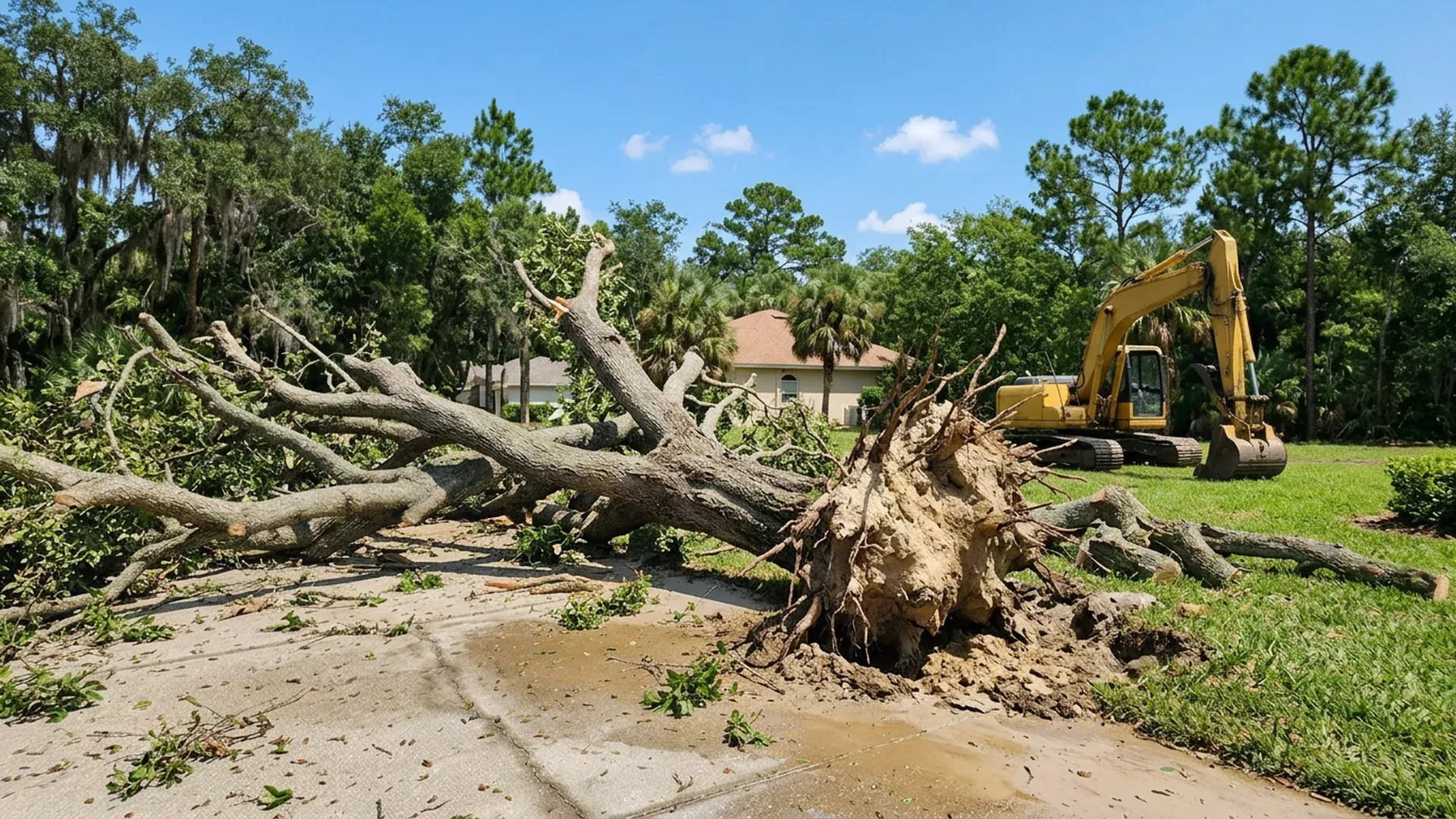
Handle fallen trees by first checking what they touch: a roof, a power line, a fence or another tree under tension. The CDC says about 36,000 people are treated in hospital emergency departments each year for chain saw injuries, and that the risk rises after hurricanes. UF/IFAS Extension advises owners not to use a chain saw without experience and never to fell trees, climb or use ropes.
The CDC's chain saw safety page warns that a bent or pinned branch released from tension can strike with serious force, even at about 2 inches in diameter, and says bystanders should stay at least 30 feet from anyone cutting a fallen tree.
For fallen tree removal, Level One Grading's emergency storm recovery service covers storm-downed and uprooted trees, including those blocking driveways or resting on rooftops, and prioritizes calls by structural damage, blocked access and safety hazards. For a stump or root ball, see our stump removal service.
How Do You Sort and Dispose of Hurricane Debris?
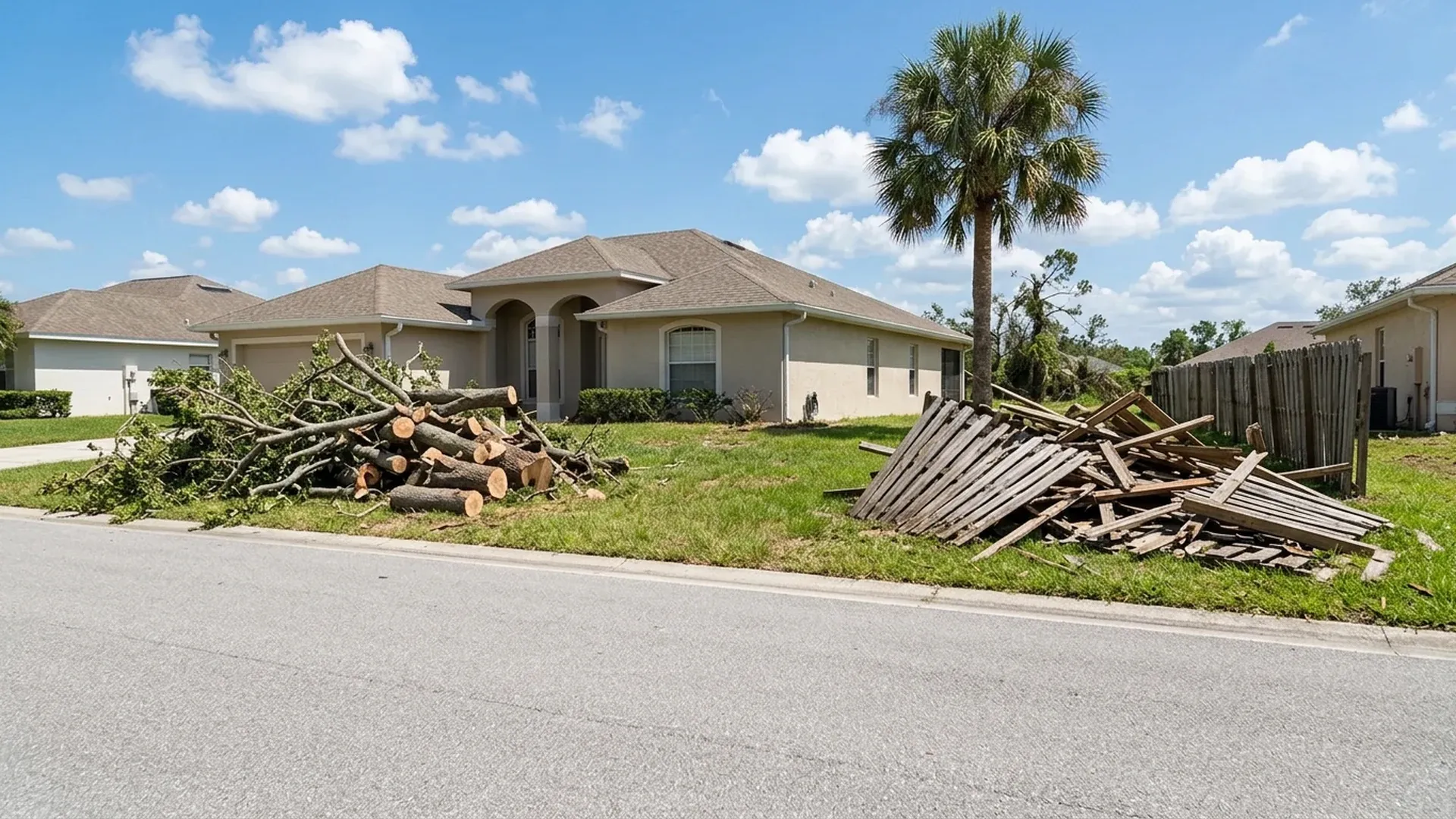
Sort hurricane debris into vegetative debris (logs, limbs, brush) and construction and demolition debris (fencing, roofing, drywall, lumber), and keep both apart from normal household trash. Local programs differ by county, city and storm, so check with local officials before you place anything at the curb, as FEMA advises.
FEMA also says to place storm debris away from trees, poles, fire hydrants and meters, and never to block a roadway. Hillsborough County says tree limbs and other storm-related debris can go out for yard waste pickup on your scheduled day. In Polk or Pasco County, confirm the current rules with your county's solid waste or emergency management office.
FEMA warns against burning debris you suspect may be toxic. For a larger load, Level One Grading offers roll-off dumpsters in three sizes within a 25-mile radius of Plant City. Concrete, soil and block reach a container's weight limit before they fill its volume.
What Happens to the Ground After the Trees and Debris Are Gone?
Once the trees and debris are gone, the ground needs a second look, because lifted root balls leave holes, heavy machinery leaves ruts, and washed-out soil changes where water goes. Walk the lot after the next rain and note new low spots, blocked swales and culvert ends choked with silt or limbs.
Holes from lifted roots should be filled and compacted, not just covered, or they settle and collect water. If you plan to dig, notify Sunshine 811 first: section 556.105 of the Florida Statutes requires an excavator to give notice through the system not less than 2 full business days before beginning excavation or demolition.
The last step of hurricane debris cleanup, property repair, is the one owners skip. Level One Grading is an excavation and grading company, so regrading and filling is the part we handle. Our guides to residential swale grading and driveway culvert washouts cover the common post-storm cases.
How Do You Choose Help for Hurricane Debris Cleanup?
Choose a licensed and insured company, get the scope in writing, and be wary of anyone who knocks on your door asking for cash first. The Florida Department of Financial Services warns that scammers visit neighborhoods after storms offering services such as tree debris removal for a fee, and that some leave after payment without finishing the work. The state's Disaster Contractors Network lists Florida-licensed contractors by county, and you can verify any license through MyFloridaLicense.
Ask who handles trees, debris hauling and regrading, and whether that is one company or several. For hurricane debris cleanup, property owners should ask for proof of license and insurance, and for a written estimate that lists each part of the job separately. Level One Grading is licensed and insured, with an industry-leading 2% warranty claim rate annually. For a Tampa Bay example, read our guide to storm damage cleanup in Tampa.
Hurricane Debris Cleanup FAQ
Who is responsible for hurricane debris cleanup, the property owner or the county?
You are responsible for getting debris to the curb or hiring help. FEMA says local governments often dispose of disaster debris that owners place at the curb for pickup on a scheduled date. Schedules and rules differ by county, city and storm, so check with your local officials first.
Should I call my insurance company before I clear a fallen tree?
Yes. The Florida Department of Financial Services says to report damage right away and to document it with photos or video. Photograph the tree and the damage before anything is moved, keep receipts for emergency repairs, and ask your insurer what your policy requires before permanent work begins.
Can I cut up a fallen tree myself?
Only if you have chain saw experience and the tree is resting on the ground. UF/IFAS Extension says not to use a chain saw without experience and to leave felling, climbing and rope work to professionals. A tree touching a roof, a power line or another tree under tension needs a professional plan.
Does hurricane debris cleanup include drainage repair?
It can. Debris removal opens the property, and grading and drainage repair then fix what rain, silt and equipment disturbed. Tell the company about washed-out areas, low spots and blocked swales on the first call, so the whole job is planned together instead of in separate visits.
Ready for Hurricane Debris Cleanup on Your Property?
For hurricane debris cleanup, property owners across Hillsborough, Polk and Pasco counties can call Level One Grading at +1 813-842-4840, Monday to Saturday, 9AM to 5PM, or request a free estimate today. Level One Grading is licensed and insured and based in Plant City. Tell us what the storm left behind, and we will recommend the order of work.

About Miguel Orozco
Miguel Orozco is the President of Level One Grading, a trusted Central Florida grading and excavation company, delivering precise earthwork solutions and dependable results for residential and commercial projects since its founding.