
Grading for Driveways and Private Roads
Driveway grading in Florida: how to shape a driveway or private road so it sheds water and holds up to ruts. Call Level One Grading, +1 813-842-4840.

Miguel Orozco

Driveway grading is the shaping of a driveway surface and its edges so rain runs off instead of sitting on it. A drive or private road that is flat, dished or boxed in by high shoulders holds water, and water is what makes the ruts, soft spots and washouts people keep patching. Level One Grading is a Plant City company that grades driveways and private roads in Hillsborough, Polk and Pasco counties. This guide explains how driveway grading shapes the surface, where the water goes next, why ruts and washboarding return, what the surface material changes and who owns the road. Our land grading services guide covers every type of grading job.
What Is Driveway Grading on a Florida Property?
Driveway grading means cutting, filling and shaping the ground so a driveway or private road drains and stays firm under traffic. It is not the same job as dumping another load of stone into a rut. Our laser grading for driveways is precise work that gives the surface proper drainage and leaves a stable base for paving materials. That covers the ground and the base, which is where most driveway trouble starts. A separate installer lays pavers, concrete or asphalt on top, and that work is not ours. On a flat Central Florida lot the shaping matters even more, because the land gives a drive little natural fall to carry water off. Our laser grading service is how we set that shape before any surface goes down.
How Should a Driveway Be Shaped to Shed Water?
Driveway grading sheds water by giving the surface a fall toward at least one side and a place for the water to go. A crown, with the center a little higher than the edges, sends rain to both sides. A single cross slope tilts the whole surface to one side instead. EPA's gravel roads manual names three basic items for a gravel road: a crowned driving surface, a shoulder that slopes directly away from the edge, and a ditch. It also warns that too much crown makes drivers feel the vehicle wants to slide toward the shoulder. We hold the shape with laser and GPS guidance, so the fall stays even from the street to the garage. Our guide to rough grading vs finish grading explains the two passes.
Where Does the Water Go After It Leaves the Driveway?
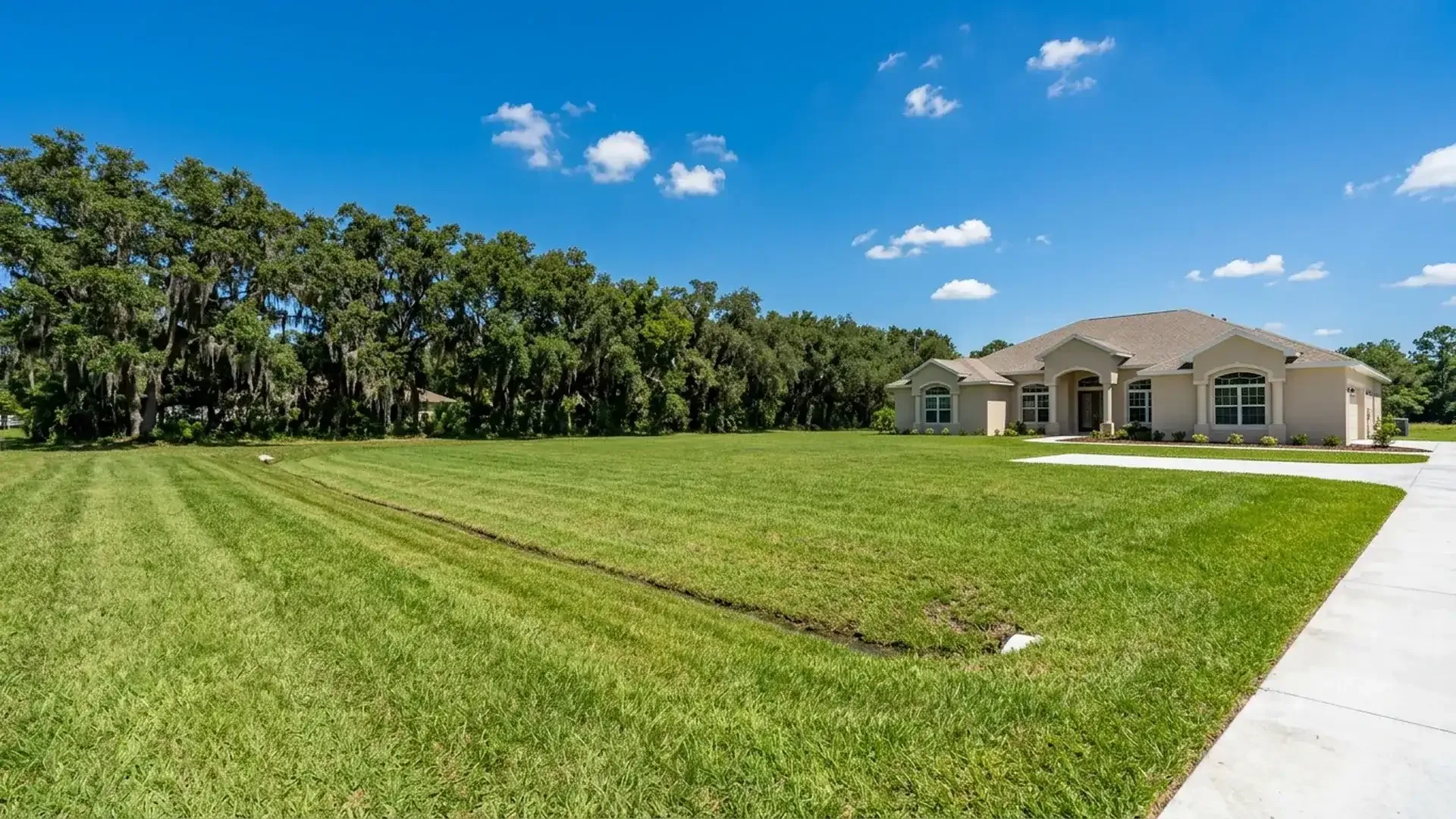
Every driveway grading plan needs an outlet, because tilting a surface toward a spot that cannot drain only moves the puddle. Good driveway drainage sends water onto a lawn that falls away, into a swale or ditch on your own property, or to a culvert where the drive crosses a roadside ditch. EPA's manual says standing water anywhere in the cross section, the ditch included, is one of the major reasons a gravel road distresses and fails. On a flat lot we can shape a shallow swale beside the drive so the water has a path. How a swale does that job is covered in our residential swale grading guide, and the pipe at the street has its own driveway culvert guide. Keep the runoff away from the house, as our yard slope guide explains.
How Do You Spot Soft Spots and Low Sections?
Soft spots and low sections are driveway grading problems that show up after rain, so check the drive while it is wet. Look for puddles that last long after the rain stops, wheel tracks that sink deeper in one stretch, mud at the edges, and sand or stone pushed out onto the shoulder. Each one points to water that cannot leave. EPA's manual describes what follows when a surface has no crown: water collects on it and softens the crust, which leads to rutting, and traffic then pounds out small depressions that become potholes. Adding material to a low section helps for a while, but if the shape still holds water the spot fails again. A soft spot that keeps returning can also mean wet ground below the surface, so have it looked at on site first.
Why Do Ruts, Washboarding and Washouts Keep Coming Back?
They come back when the cause is still there. EPA's manual says gravel roads tend to rut more easily in wet weather, and that dry weather lets traffic push gravel off the surface onto the shoulder and into the ditch. For gravel driveway washboarding, the ridges across the surface, it names three primary causes: driving habits, lack of moisture and poor quality gravel. Hard acceleration and braking near curves, hills and sometimes driveways make it worse. The manual adds that even with the best maintenance, washboarding can never be completely eliminated. A washout is a different failure, because it comes from water running down the surface or over the edge. Driveway grading that sends water off the surface early, with a shoulder that carries it away, is what stops one.
Does the Surface Material Change Driveway Grading?
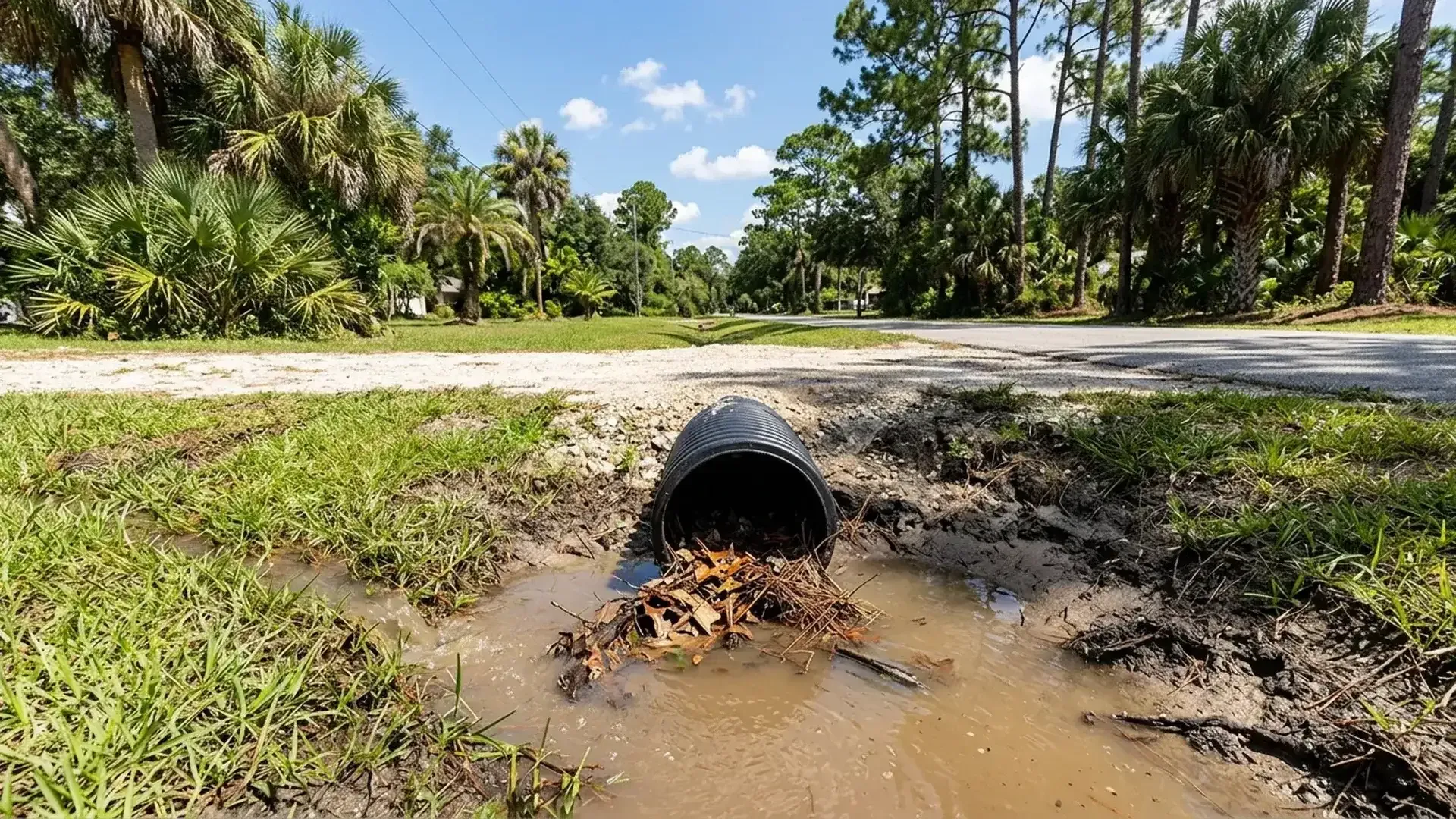
The material changes how the surface behaves, not the need for a shaped base that drains. Gravel and crushed material stay loose, so traffic moves them and the shape has to be rebuilt from time to time. EPA's manual notes that once paving is finished, a road keeps its shape for an indefinite period, so the shape under a paved drive has to be right the first time because a mistake gets covered. Either way, the ground comes first. We strip, grade and prepare the ground and the base, and we do not recommend a product or a thickness here. If you plan to pave, tell your installer how the base will be built. Our site prep service covers the ground work, and our concrete driveway guide looks at that surface.
Who Owns the Road Before Driveway Grading Starts?
Private road grading is the owner's decision, because a private road belongs to its owners. A county or HOA road is not ours to grade, so confirm who is responsible before anyone calls us. Polk County's Roads and Drainage Division says it maintains existing county-owned roadway and drainage infrastructure. Where your driveway meets a county road, the connection can need a permit. Hillsborough County lists a driveway access permit for residential site access and driveway connections, open to homeowners and contractors, but it does not issue permits inside Tampa, Plant City or Temple Terrace. Never dig in a county right-of-way ditch yourself. Florida law also requires notice through the state system not less than 2 full business days before an excavator digs. Rules differ by county, so confirm with yours.
Driveway Grading FAQ
Can a gravel or dirt driveway be regraded without new stone?
Sometimes the existing material can be reshaped, but it depends on what is under it. Grading a dirt driveway starts with the surface, the soft spots and where the water is going. If the base has failed or the ground stays wet, reshaping alone will not last. A free estimate on site answers it.
How do I know if I need grading or a drain?
If water ponds on the surface and leaves slowly over the edge, better shaping may fix it. If the ground stays wet days after rain, or there is no lower place to send the water, the answer may include drainage such as a swale or a French drain. We install both, and we look at the site first.
Does Level One Grading pave driveways?
No. We grade driveways and private roads, prepare the base and set the shape. A separate installer lays pavers, concrete or asphalt. If you already know who will pave, tell us when you call, so the base work matches the surface they plan to put on top of it.
Is a permit needed to regrade a driveway?
On private property it depends on the work and on your county or city. Where the drive connects to a county road, a driveway access permit may apply, and larger earthwork can need approvals. Which of those applies is spelled out in our land grading permit guide. Check with your county before work begins.
Need Driveway Grading That Drains?
Tell us where the water sits and what the drive is made of, and we will walk it with you. Good driveway grading starts with the shape and the outlet, so bring photos of the ruts or puddles after a rain. If your road is private and the surface has gone soft, say so on the call, because that changes how we look at the base. Reach Level One Grading at +1 813-842-4840 between 9AM and 5PM, Monday through Saturday, or book a free estimate for your driveway or private road.
Checked against the EPA gravel roads manual, the Hillsborough County and Polk County pages, section 556.105 of the Florida Statutes and levelonegrading.com in November 2026.

About Miguel Orozco
Miguel Orozco is the President of Level One Grading, a trusted Central Florida grading and excavation company, delivering precise earthwork solutions and dependable results for residential and commercial projects since its founding.