
Dewatering and High Water Table Challenges When Digging in Florida
Dewatering excavation Florida guide: what a high water table does to a dig, pumping options and permits. Call Level One Grading, +1 813-842-4840.

Miguel Orozco

Dewatering excavation in Florida means pumping groundwater out of a dig so the crew can work in the dry, and on many lots it is the first problem a deep hole runs into. A trench or pit can start filling as soon as the bucket reaches wet sand. Level One Grading is a Plant City excavation company working in Hillsborough, Polk and Pasco. This guide explains what a high water table does to an excavation, how water is usually controlled, why a plan and permits come first, and what to ask before anyone breaks ground. For the wider picture, see our excavation services guide.
What Is Dewatering Excavation in Florida?
Dewatering excavation in Florida is the temporary lowering of the groundwater level so a hole can be dug and worked in. For its construction permit, the Florida Department of Environmental Protection defines dewatering as temporarily lowering the ground water level by mechanical pumping so construction and excavation can go on. The word temporary matters here. Dewatering is not drainage. A swale or a French drain is built to move water for years, while dewatering holds the water down only while the work is open. Once the pumps stop, the ground returns to its natural level. Pools, footings, utility trenches and ponds are the digs where it comes up most often.
How Does a High Water Table Change a Dig in Florida?
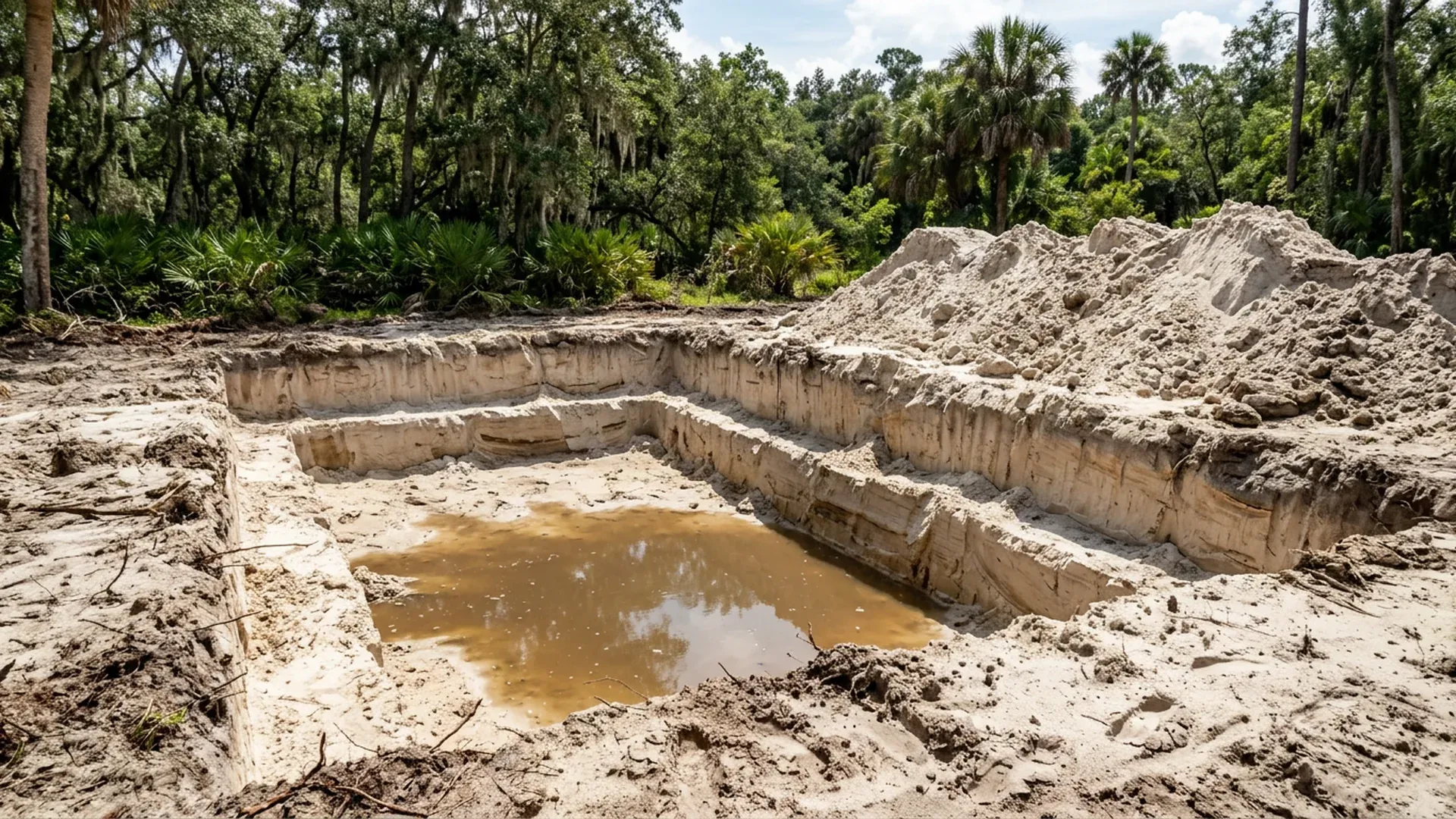
A high water table puts groundwater inside the hole you are digging. Florida's wetland rules define seasonal high water as the elevation to which the ground and surface water can be expected to rise due to a normal wet season. UF/IFAS Extension describes somewhat poorly drained soils as showing periodic wetness at a shallow depth because of a seasonally high water table, a restricting layer, seepage or high rainfall. In an excavation, that looks like a wet bottom, sandy walls that slump as they soak, soft ground under a future footing and a pit that refills after it is pumped. Our guide to why Central Florida soil needs specialized grading covers the soil side.
How Do You Know If Your Lot Has a High Water Table?
You find out before the dig, not during it. Ground that stays soft after rain and low spots that hold water are clues, but they are not a measurement. The reliable answer comes from a test pit or soil boring done by an engineer or a testing firm. We do not run those tests, and we do not design the plan that follows from them. Dewatering excavation in Florida is planned from that reading. Timing changes the reading, because a hole that stays dry in the dry season can fill in the wet season, so ask which season a reported water level represents. If the builder, pool company or engineer already has water table notes, hand them to your excavator before the job is bid.
What Are the Usual Dewatering Methods?
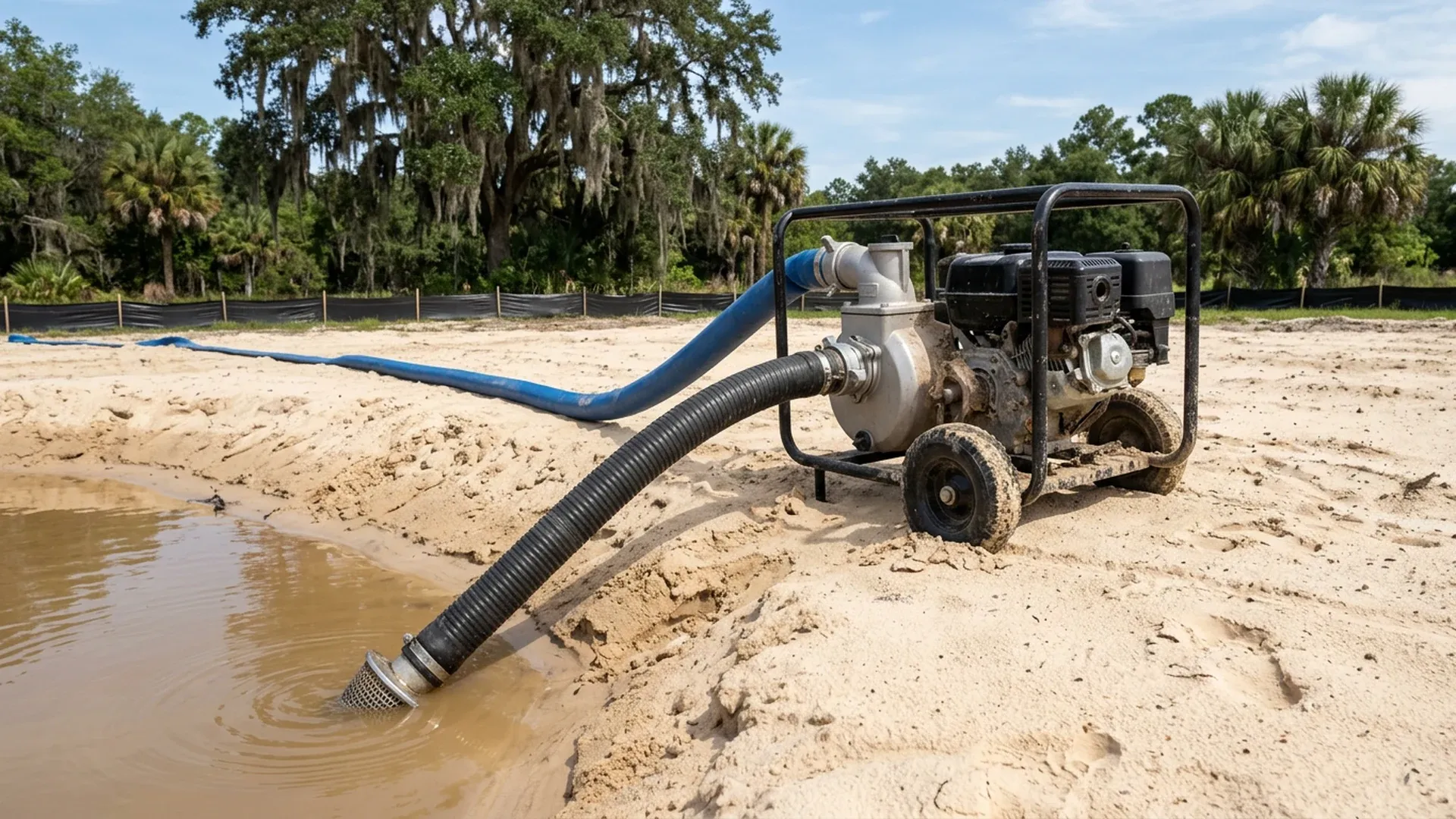
Dewatering excavation in Florida often comes down to two methods on small and mid-size digs. Sump pumping is the simple one: the crew digs a low pit at the edge or floor of the excavation, water collects there and a pump moves it out through a hose. Well points are small wells set around the dig and connected to a pump, so the groundwater is drawn down before the hole gets deep. Which method fits depends on the soil, the depth, how fast water arrives and where the discharge can go. That choice belongs to the engineer or the contractor who runs the pumps, not to the homeowner. Our pool excavation guide shows how it plays out in a backyard.
Does Dewatering Excavation in Florida Need a Permit?
Often a dewatering permit in Florida is needed, because pumped water has to go somewhere. DEP says dewatering discharge is regulated through an industrial wastewater permit, or through the construction generic permit when certain criteria are met. Its dewatering FAQ adds that the generic permit covers only uncontaminated groundwater and that discharge must stop if it causes a water quality violation. The Southwest Florida Water Management District lists mining or dewatering as a water use permit type and notes special rules in the Dover/Plant City Water Use Caution Area. Rules differ by site, county and city, so confirm the current text with DEP, the district and your local permit office before any pump runs.
What Do OSHA Rules Say About Water in a Trench?
For dewatering excavation in Florida, OSHA's excavation standard, 29 CFR 1926.651(h), says employees shall not work in an excavation with accumulated or accumulating water unless adequate precautions are taken. It gives special support or shield systems, water removal to control the level, and a safety harness with a lifeline as examples. When pumps are used, a competent person has to monitor the water removal equipment and its operation. The same section, in paragraph (k), calls for an inspection by a competent person after every rainstorm, and exposed workers come out of the hazard area until precautions are in place. Our utility trenching guide walks through the other trench safety rules.
When Is the Best Time for High Water Table Excavation in Florida?
Timing helps. Seasonal high water is a wet season condition, so the same lot usually gives less trouble outside the wet season, and pumps may have less to move. Rain still changes the picture, which is why the plan needs a way to keep surface water out of the hole. Where the work interrupts the natural drainage of surface water, OSHA 1926.651(h)(3) calls for diversion ditches, dikes or other suitable means to keep that water out of the excavation. For high water table excavation, set the dig window together with the builder, because pool shells, footings and pipe all go into a hole that has to be workable on the day. The one dig that wants water in it is a pond, covered in our pond excavation guide.
Which Questions Should You Ask Before a Wet Dig?
Put these to every contractor on the job before work starts, and get the answers in writing:
- Who owns the dewatering plan: the engineer, the pump contractor or the excavator?
- Where will the discharge go, and has the permit office or DEP confirmed it?
- What water level was assumed, and in which season was it measured?
- Who monitors the pumps and inspects the excavation after rain?
- What happens to the schedule if rain refills the hole?
Dewatering is not one of the services we list. Level One Grading digs, grades, clears and preps sites, is licensed and insured, and reports a 2 percent warranty claim rate annually. When a job needs pumping, the engineer, the pump contractor and the permit office set the plan, and we dig to it.
Dewatering Excavation FAQ
Does every Florida excavation need dewatering?
No. Dewatering is only needed where groundwater or heavy rain reaches the depth being dug. A shallow trench on higher ground may stay dry, while a pool or footing on a low lot may not. The engineer, the builder or a soil test tells you, and your excavator should ask before bidding.
Where can pumped water go?
That depends on the site and the permit. DEP rules limit what dewatering discharge may carry and require it to stop if it causes a water quality violation, and local stormwater rules can add limits. Do not point a hose at a neighbor's lot, a street or a storm drain without checking with the permit office first.
Is dewatering the same as a French drain?
No. Dewatering is temporary pumping that holds groundwater down while a hole is open. A French drain is a buried drain built to carry water away from a yard or foundation for years. Some projects need both, at different stages, and each one is planned and permitted on its own terms.
Does Level One Grading offer dewatering?
Dewatering is not listed among our services. We excavate, grade, clear and prepare sites in Hillsborough, Polk and Pasco counties. If your dig needs pumping, the engineer or builder sets the plan, the pump contractor runs it, and we can dig to that plan. Call to talk through your site.
Planning Dewatering Excavation in Florida?
If your lot is wet and a pool, footing or trench is coming, tell us what is being built and where, and we will walk the site with you and your builder. Planning dewatering excavation in Florida starts with the ground, so bring any soil report or water table notes you have. Call Level One Grading at +1 813-842-4840 (we answer Monday to Saturday, 9AM to 5PM) or book a free estimate for your site.
Checked against OSHA 29 CFR 1926.651, the Florida DEP stormwater pages, Fla. Admin. Code 62-340.200, UF/IFAS Extension MG458, the SWFWMD water use permit page and levelonegrading.com in November 2026.

About Miguel Orozco
Miguel Orozco is the President of Level One Grading, a trusted Central Florida grading and excavation company, delivering precise earthwork solutions and dependable results for residential and commercial projects since its founding.