
Utility Trenching for Water, Electric and Sewer Lines
Utility trenching for water, electric and sewer lines in Central Florida: route, 811, safety and backfill. Call Level One Grading: +1 813-842-4840.

Miguel Orozco

Utility trenching is the dig that opens a narrow, straight channel in the ground so water, electric and sewer lines can be buried on a lot. It sits between site prep and the pour, and a poorly planned trench can hold up every trade that follows. Level One Grading cuts trenches across Hillsborough, Polk and Pasco counties from our Plant City office. This guide explains how utility trenching is planned, what happens before the first scoop, which safety rules apply and who installs and inspects the lines. For every type of dig we handle, see our excavation guide.
What Is Utility Trenching for Water, Electric and Sewer Lines?
Utility trenching is the excavation of a narrow channel, to a set depth and width, so a utility line can be laid in the ground and covered again. On a home or build site that usually means three runs: water from the meter or well, electric or conduit from the power source, and sewer or septic leaving the building. Each run has its own requirements, so each gets its own route. Our excavation page describes our trenching as narrow, precise cuts for utilities, drainage pipes, irrigation lines and conduit, dug to your required depth and width with clean walls. We dig the trench. A licensed plumber, a licensed electrician or the utility lays the pipe and pulls the wire, because that work is not what we do.
How Do You Plan the Route for a Trench on a Lot?
You plan the route for utility trenching by working backward from where each line must end up, then choosing the shortest clear path that avoids trees, slabs, drain fields and existing lines. Start with the site plan or survey. Mark the water meter or tap, the electrical service point, the sewer connection or septic tank, and the building. Your builder, plumber, electrician or engineer sets how deep each line goes and how far apart the lines sit, and the utility may add its own rules, so get those requirements in writing before anyone digs. Then walk the route with your contractor. Turns and crossings are where plans change on the ground, so settle them first and check that the dig stays inside the limits you gave 811.
Do You Have to Call 811 Before Utility Trenching?
Yes. Under section 556.105 of the Florida Statutes, an excavator must give notice through the 811 system at least 2 full business days before starting an excavation that is not beneath state waters. Call 811 before digging, even for a short run. Member utilities then mark their buried lines to within 24 inches of either side, using the American Public Works Association color code, and the notice stays valid for 30 calendar days. Near a marked line, the same section calls for hand digging, soft digging, vacuum excavation or similar methods to find it. If a mark is scuffed or washed away, stop and have it marked again. 811 does not mark private lines such as irrigation or a feed to a shed, so locate those yourself. Sunshine 811 takes the request free of charge.

How Is a Utility Trench Dug on a Florida Lot?
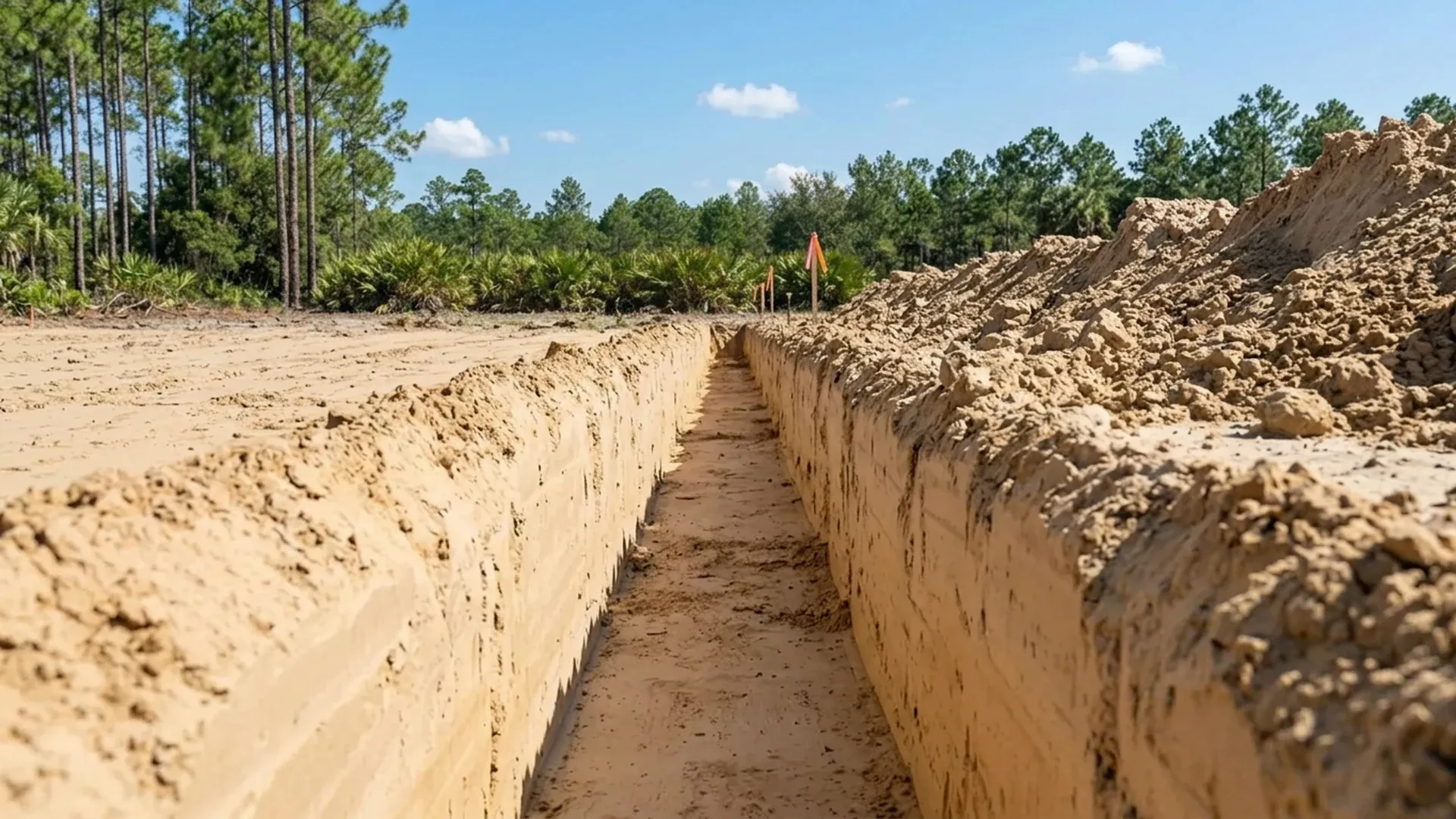
A utility trench is dug from a staked layout, working along the planned line to the depth and width the plans call for. The operator strips sod and roots on the route, cuts the trench in passes and keeps the walls clean so the pipe or conduit can rest on an even bed. Sandy Central Florida soil digs easily but does not hold a vertical wall on its own, and a high water table can send water into an open trench after heavy rain, so the walls and the water level get watched all day. Spoil goes on the side away from the work. Our excavation work uses GPS-guided equipment to dig to specified elevations. Depth and width come from your plans or the utility, never from a rule of thumb.
What OSHA Trench Safety Rules Apply to a Utility Trench?
OSHA treats cave-ins as the greatest risk in a trench and sets rules for every excavation. Under 29 CFR 1926.652, each employee in an excavation must be protected from cave-ins by an adequate protective system, with narrow exceptions such as stable rock. Under 29 CFR 1926.651, utility locations must be determined before the excavation opens, trenches 4 feet or deeper need a ladder, ramp or other safe exit within 25 feet of lateral travel, and a competent person must inspect the excavation daily and as needed through the shift. See OSHA's trenching and excavation page for the overview. Keep children and pets away from any open trench.
How Is Trench Backfill and Compaction Done After the Lines Go In?
A utility trench should be backfilled only after the line is in and any required inspection is done, then filled in controlled layers and compacted so the ground does not settle later. Bedding, cover material, layer thickness and compaction targets come from the plumber, electrician, utility or engineer, so ask for them in writing. The reason matters most under a future slab, driveway or walkway, where a soft trench shows up as a dip or a crack. Our foundation page says we work to exact elevations and compaction levels with GPS-guided equipment. Our guide to the site preparation steps shows where trenching fits, and our post on foundation excavation and trenching covers the footer side.
Who Installs the Lines and Who Inspects Them?
A licensed plumber installs water and sewer lines, a licensed electrician installs electrical conduit and wire, and the utility sets its own connection rules. We dig the trench to their specifications and do not lay pipe or pull wire. Inspections are set by your county, city or utility, and some can be required while the trench is still open, so ask each office what it needs to see before you backfill. Permits differ by location. Hillsborough County requires a natural resources permit for land alteration activities, and rules differ in Polk and Pasco counties and in each city, so confirm what applies to your parcel. Our guide to the grading and excavation permit in Seffner shows what to ask.
What Should You Ask a Contractor Before the Trench Is Dug?
Ask for proof and a written scope, not promises. These questions separate a careful trench from a rushed one:
- Can you show your license and insurance?
- Who places the 811 notice, and can I see the confirmation number?
- Who sets the route, depth and width, and where is that written down?
- What trench protection and exit do you use at depth?
- Who backfills and compacts, and to whose specification?
- Does the scope include hauling off extra spoil?
Level One Grading is licensed and insured, with an industry-leading 2% warranty claim rate annually. For a longer checklist, read our guide to hiring an excavation contractor.
Utility Trenching FAQ
Who calls 811 for utility trenching?
The statute puts the notice on the excavator, the person or company doing the dig. Ask your contractor to place it and show you the confirmation number, and call 811 yourself for any digging you do directly. The notice is due at least 2 full business days before the work starts.
Can water, electric and sewer lines share one trench?
Not by default. Each utility has its own spacing and separation rules, so the plumber, electrician, utility or engineer decides whether lines can share a trench and how far apart they sit. Get that answer in writing before the route is staked, because it changes how many trenches we dig.
Do you install the pipes and wires?
No. We dig the trench, then backfill and compact it to the instructions we are given. A licensed plumber lays water and sewer pipe, a licensed electrician pulls wire and sets conduit, and the utility handles its own connections. Ask each of them for their requirements before we dig.
Can I do utility trenching myself?
You can dig a shallow trench, but the 811 notice, the permit questions and the cave-in risk still apply to you. A trench deep enough to climb into can collapse without warning, so hire a licensed contractor for anything beyond a small run.
Ready to Plan Your Utility Trenching?
Utility trenching goes smoother when the route, the 811 notice and the plans are ready before the machine arrives. Call Level One Grading at +1 813-842-4840, Monday to Saturday, 9AM to 5PM, or request a free estimate for utility trenching on your lot today.
Checked against Florida Statutes section 556.105, OSHA 29 CFR 1926.651 and 1926.652, and levelonegrading.com in October 2026.

About Miguel Orozco
Miguel Orozco is the President of Level One Grading, a trusted Central Florida grading and excavation company, delivering precise earthwork solutions and dependable results for residential and commercial projects since its founding.