
What Central Florida Homeowners Must Know Before Inground Pool Excavation Begins
Planning a pool in Central Florida? Discover access requirements, water table dewatering, and dirt hauling tips. Call Level One Grading today!

Miguel Orozco

Installing an inground swimming pool is one of the most rewarding home improvements in the Sunshine State. But before gunite is shot, rebar is tied, and crystal-clear water fills the basin, a massive civil earthwork operation must take place in your backyard: pool excavation.
Excavating a pool in Central Florida is not simply digging a hole in the dirt. Between tight residential lot lines, hidden underground utilities, towering live oak roots, and Florida's notorious high water tables, excavation is the most demanding and risk-intensive phase of any pool construction project.
Whether you are contracting the project yourself or working with a custom pool builder, here is everything you need to know about pool excavation in Hillsborough, Polk, and Pasco counties.
1. Access Requirements: Getting Heavy Iron Into the Backyard
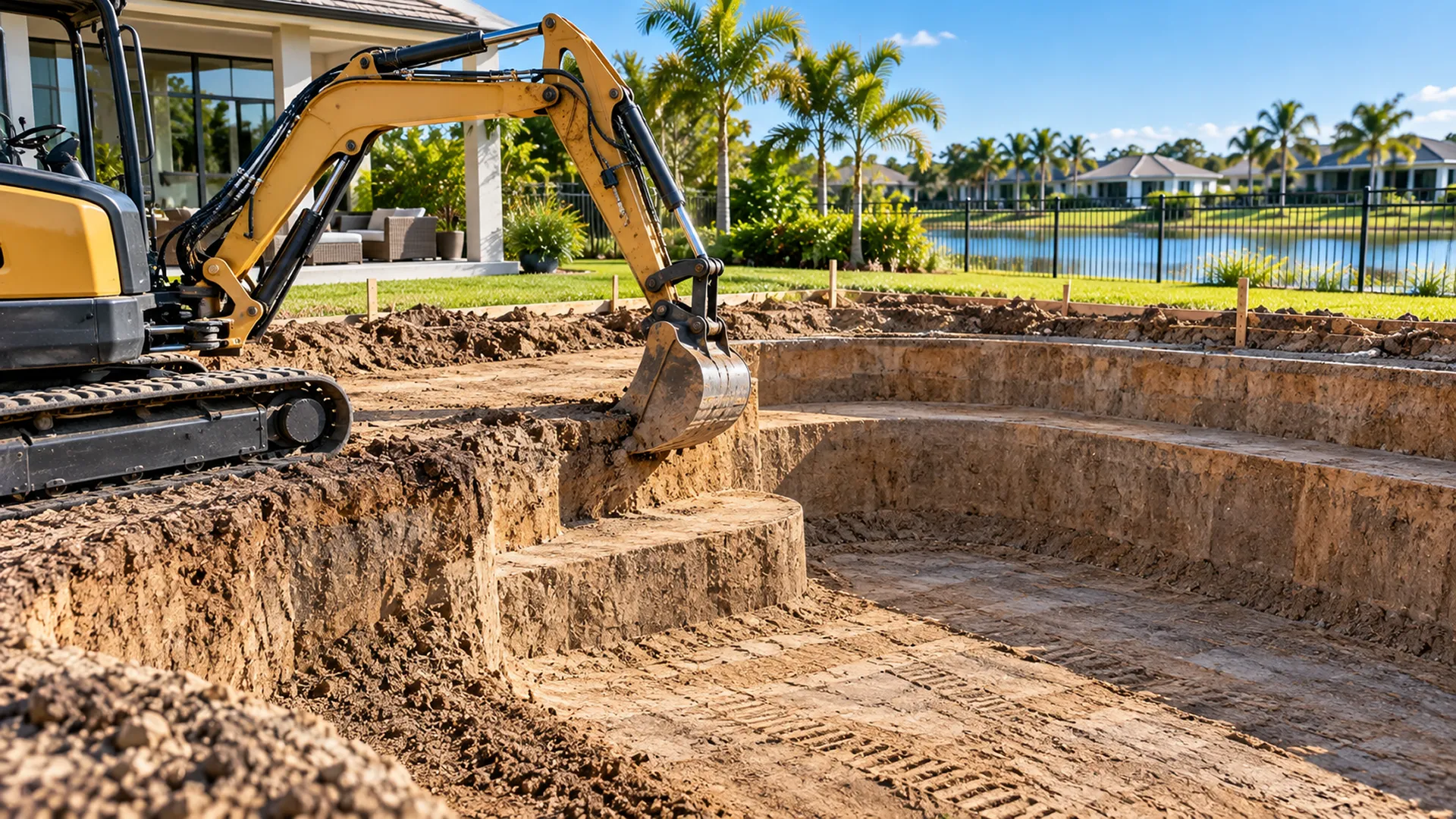
The biggest surprise for many Florida homeowners is the sheer physical scale of the equipment required to excavate a pool in a timely manner. Digging a standard 15x30-foot pool with a deep end means removing between 100 and 180 cubic yards of earth -- the equivalent of 10 to 18 full-size commercial dump truck loads.
Machine Clearance and Path Preparation
A mini-excavator can take three to four days to dig a pool, while a commercial 8-to-14-ton hydraulic excavator can complete the rough dig in a single day. However, this heavy equipment requires clear access:
- Gate Width: Most excavation contractors need a minimum clear path of 8 to 10 feet wide between your house and property fence line.
- Fence Removal: Expect to remove a section of wood or vinyl privacy fencing temporarily to create an equipment corridor.
- Overhead Clearances: Watch out for low-hanging roof eaves, gutters, and overhead power or communication cables.
- Paver & Turf Protection: Heavy rubber-tracked machinery will inevitably compact and scuff lawn turf. Protective composite ground mats (swamp mats) are often deployed to protect existing concrete driveways and paver walkways from cracking under machine weight.
2. Navigating Florida’s High Water Table
In many low-lying regions of Central Florida -- such as Plant City, Brandon, and parts of Pasco County -- the seasonal high groundwater table sits just 2 to 4 feet below the natural surface, especially during wet summer months.
The Risk of Trench Collapse
When excavating past the water table into wet sand, water rapidly seeps into the pit, transforming stable sidewalls into a collapsing slurry of wet sand.
Dewatering Solutions
Professional excavation contractors prepare for this by establishing well-point dewatering systems. Small vacuum well points are jetted into the ground around the pool perimeter before deep excavation begins. Pumping continuous groundwater out lowers the local water table, allowing operators to carve crisp, structurally stable vertical walls and benches without cave-ins.
3. Underground Utilities and the 811 Call
Digging blind in Florida is illegal and extremely dangerous. Central Florida residential yards are crisscrossed with buried infrastructure:
- Natural gas pipelines
- Underground secondary electric drops
- City water mains and sewer laterals
- High-speed fiber optic cables
- Existing irrigation lines and septic drain fields
Before any equipment tracks touch your property, the contractor or homeowner must contact Sunshine 811 (at least two full business days in advance) to have public utilities located and paint-marked. Note that private lines (such as secondary electric lines running to an existing shed or irrigation piping) are not located by 811 and must be identified privately.
4. Dirt Management: Haul-Away vs. On-Site Fill
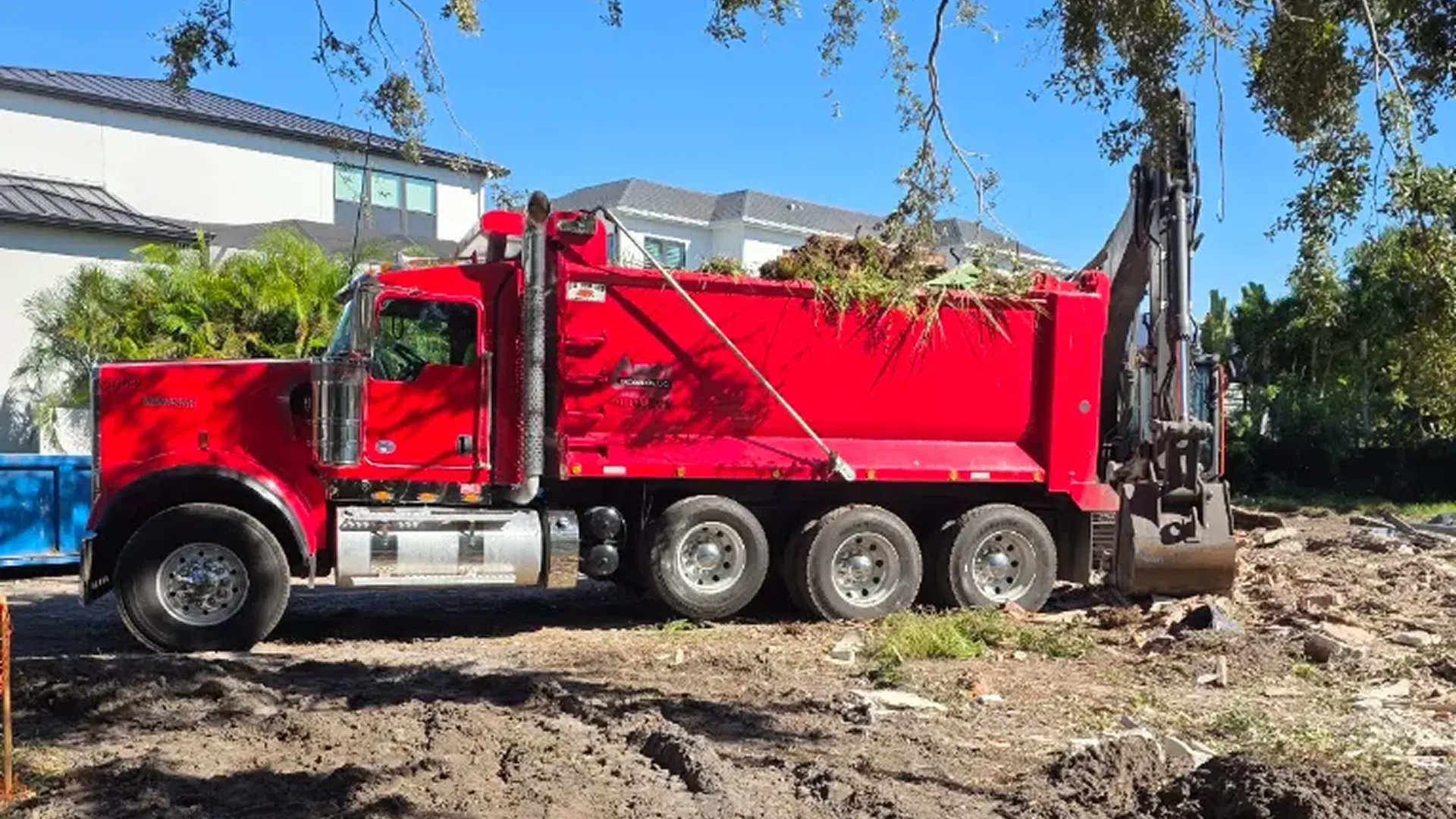
What happens to the 150+ yards of soil coming out of the hole? Homeowners often underestimate the sheer volume of expanded earth (called 'soil swell'). Dirt occupies 20% to 30% more volume once excavated than it did when compacted in the ground.
Option A: Complete Off-Site Haul Away
If your lot is flat and small, every cubic yard of excavated soil must be loaded into tandem dump trucks and hauled off to an approved landfill or commercial fill site. This incurs trucking and tipping fees that should be clearly outlined in your excavation estimate.
Option B: On-Site Pad and Swale Balancing
If you have a larger lot or low areas that collect rainwater, keeping the soil on-site saves thousands of dollars in hauling costs. Level One Grading can take the clean excavated pool dirt and simultaneously:
- Build up a raised structural foundation pad for a future workshop or pole barn.
- Fill in dangerous low spots and sinkage areas across your lawn.
- Regrade the yard to create beautiful, functional drainage swales that guide rainwater safely around the new pool deck.
5. Precision Digging: Why Accuracy Matters to Your Pool Builder
Pool excavation is not coarse digging; it is precision shaping. If an excavation crew over-digs the hole by six inches, the pool builder cannot simply throw loose dirt back into the bottom -- loose backfill will settle, causing the concrete shell to crack. Instead, the builder must fill that void with expensive extra concrete (gunite/shotcrete) or compacted crushed aggregate.
Using advanced laser level receivers mounted directly on the excavator arm, skilled operators carve steps, benches, tanning ledges, and deep-end hoppers to within a fraction of an inch of the builder's engineering plan.
Frequently Asked Questions About Pool Excavation in Florida
How long does a typical backyard pool excavation take?
With proper equipment and unobstructed access, a standard residential pool excavation takes 1 to 2 days of digging, plus an additional day for hauling dirt if all soil is being removed off-site.
What happens if the excavator hits rock or hardpan?
While much of Central Florida has sandy soil, areas near the Tampa Bypass Canal or parts of Hernando and Pasco counties have limestone rock shelves. Excavating rock requires heavy hydraulic breaker hammers or rock teeth, which adds machine time.
Who is responsible for repairing damaged lawn or irrigation after excavation?
Heavy excavation equipment will disturb turf and cut shallow irrigation lines within the access path. Standard excavation contracts specify that irrigation capping/repair and final lawn re-sodding are the homeowner's or pool builder's responsibility once the entire construction is complete.
Backyard Pool Excavation Readiness Checklist for Homeowners
To ensure excavation day proceeds smoothly without surprises, complete these preparations:
- Locate Private Underground Lines: Flag private sprinkler pipes, low-voltage landscape lighting cables, and propane gas lines running to outdoor firepits or grills.
- Clear Tree Branches in the Access Path: Trim overhead limbs below 14 feet along the equipment corridor between your driveway and backyard.
- Notify Immediate Neighbors: Let adjacent property owners know heavy equipment will be operating along property lines, as machinery noise and vibration are unavoidable during digging.
- Secure Household Pets: Keep dogs and livestock indoors or off-site while gates are open and heavy excavators are turning.
- Confirm Water Discharge Routing: If dewatering pumps are required for high groundwater, identify where pump hoses will safely discharge water without flooding neighbor yards.
Start Your Pool Project Right With Level One Grading
Whether you are an independent pool contractor looking for a reliable, fast-turnaround excavation partner or a homeowner managing your own outdoor living build, Level One Grading delivers the machinery, precision, and local Florida know-how your project demands.
Contact Level One Grading today to request a quote on pool excavation, rough digging, and dirt hauling services throughout Central Florida.

About Miguel Orozco
Miguel Orozco is the President of Level One Grading, a trusted Central Florida grading and excavation company, delivering precise earthwork solutions and dependable results for residential and commercial projects since its founding.