
Clearing Land for Pasture, Farm or Horse Property
Clearing land for pasture in Florida: what to keep, how to clear and the order of work. Free estimate from Level One Grading, +1 813-842-4840.

Miguel Orozco

Clearing land for pasture starts with a plan for what stays, not with the machine. In Central Florida a good pasture clear keeps the shade trees and the drainage in mind, takes out the stumps and brush that block grass and mowing, and leaves ground that can be graded and planted. Level One Grading is based in Plant City and clears agricultural land across Hillsborough, Polk and Pasco counties, including farmland, pasture and fence lines. This guide covers pasture clearing from planning to timing, for farm and horse property alike. For the full service, see our land clearing services guide.
What Should You Decide Before Clearing Land for Pasture?
Decide what the pasture is for first, because the answer changes how much has to come out. UF/IFAS says that if land will be used only for grazing, some stumps and roots can be left in place, although that makes fertilizing and spraying harder. Pastures for hay or silage, or land that may become cropland later, need every stump and root removed (UF/IFAS publication AG107).
Clearing land for horses, for cattle and for hay are three different jobs. Write down the use, the acreage and the fence plan before anyone looks at the ground, then walk the land with the contractor and point out the trees, gates, wet spots and boundary lines that matter to you.
What Should You Keep and What Should You Clear?
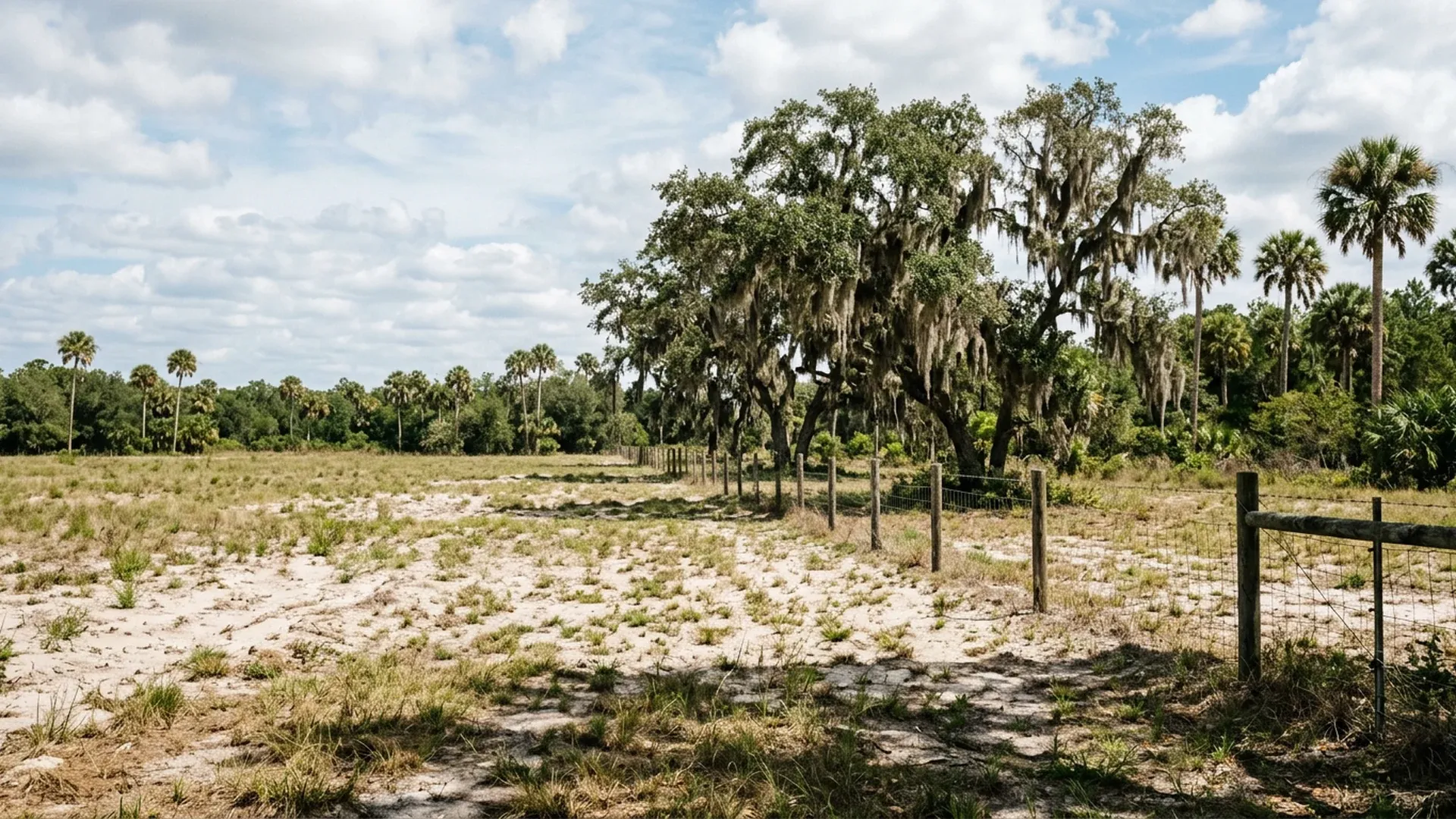
Keep what helps the animals and the land, and clear what blocks the grass. UF/IFAS notes that large trees or groups of trees can be left in place to serve as shade for livestock (UF/IFAS publication AG107). Summers in Central Florida are long and hot, so mark the healthy live oaks and other big trees before work starts and ask the crew to work around them.
Clear the dense brush, saplings, vines and scrub that shade out grass and hide fence lines. Leave existing growth along ditches and wet edges until you know where the water goes. If only certain trees should go, ask for selective clearing, which our land clearing page lists as part of what we do.
Which Clearing Method Fits a Pasture?
Most pasture clearing uses more than one method, and each one leaves a different surface. Mulching grinds brush and small trees where they stand and leaves chips on the ground, which suits open ground you want to protect. Bush hogging cuts tall grass, weeds and saplings across open fields. Grubbing pulls stumps and roots out of the ground, which is the choice for hay ground or land that may be cropped later.
Many jobs split the property, mulching the rough edges and grubbing only the fields that will be mowed, baled or planted. Our guide to forestry mulching vs land clearing compares the methods, and our post on stump removal for safer land preparation covers what happens to the stumps.
What Is the Order of Work When Clearing Land for Pasture?
The order matters because each step sets up the next one. A typical sequence for clearing land for pasture looks like this:
- Confirm the boundary lines and any easements, then flag the trees, gates and fence lines that stay.
- Request utility locates. Under section 556.105 of the Florida Statutes, an excavator must notify the state's underground utility notification system at least 2 full business days before beginning any excavation. Ask your contractor whether the planned work counts as excavation.
- Clear the trees and brush, then deal with stumps and roots for the areas that need them out.
- Move or dispose of the debris.
- Regrade low spots and shape the surface so water can leave.
- Test the soil, then lime and prepare the seedbed before planting.
How Do You Handle Drainage and Low Spots in a Pasture?
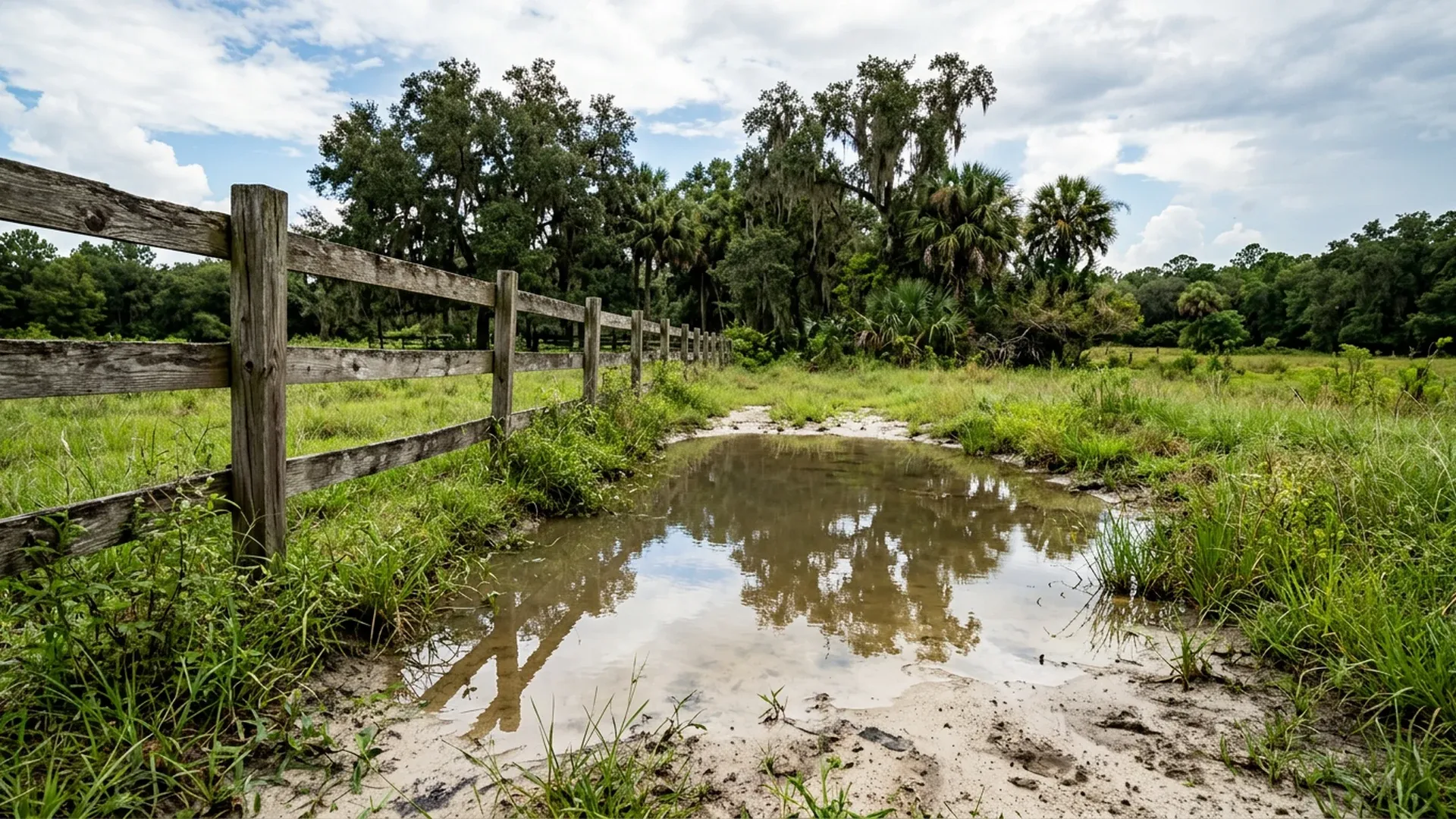
Low spots hold rain and stay soft long after the rest of the field has dried, so decide how to treat them while the machines are already on site. A grading pass can smooth a depression or open a shallow path for water, as long as the water has somewhere safe to go. Our guide to residential swale grading shows how shallow channels move runoff, and we do rough and fine grading with laser and GPS guidance.
Drainage also affects what you can grow. UF/IFAS says bermudagrass should not be planted on sites that flood or have very poor drainage, while bahiagrass can tolerate wetter areas (UF/IFAS publication AA216). If a wet area looks like a pond site, read our post on cattle pond excavation.
What Should You Do With Brush and Debris?
Plan the debris before the first tree falls, because piles get big fast. The usual choices are to chip brush for mulch, haul it away or burn it where permitted. Burning has its own rule: the Florida Forest Service lists land clearing and pile burning among the activities that need a burn authorization, and piles greater than 8 feet in diameter also need suppression equipment on hand (Florida Forest Service burn authorizations).
Counties and cities can add limits of their own, so check what applies to your parcel before you light a pile. Tree and clearing permits are a separate question, covered in our guide to the land clearing permit in Florida.
When Is the Best Time for Clearing Land for Pasture in Florida?
Count back from the planting window and give yourself months, not weeks. UF/IFAS advises starting land clearing and preparation early, because lime takes three to six months to be effective, and it says establishment can take two years or longer from clearing to first grazing (UF/IFAS publication AA216 and AG107).
The same guidance says to plant when rainfall is plentiful, and its planting table lists rainfed bahiagrass seed for June to August. That points to finishing the clear well before the summer rains. Expect rain delays anyway, and ask your contractor how the schedule changes when the ground is saturated. Your seed supplier or county Extension office can confirm planting dates for your forage.
What Should You Ask a Land Clearing Contractor?
Ask questions that put the plan in writing before the work starts.
- Which trees stay, and how will they be protected?
- How deep will stumps and roots come out, and in which areas?
- What happens to the brush and debris?
- How will low spots be regraded, and where will the water go?
- Who checks permits, burn rules and utility locates?
- Who handles fencing, seeding and fertilizing?
Level One Grading is licensed and insured, and our warranty claim rate is 2% annually, which we describe as industry-leading. We clear and grade the ground. Fencing, seeding and livestock services are separate trades, so line those up with their own providers and share the schedule with us.
Clearing Land for Pasture FAQ
Do I have to remove every stump when clearing land for pasture?
Not always. UF/IFAS says that on land used only for grazing, some stumps and roots can stay, but they make fertilizing and spraying harder. Hay or silage ground, or land that may be cropped later, needs all stumps and roots removed. Decide the use first, then the stump plan.
Should I leave trees in a pasture?
Often yes. UF/IFAS says large trees or groups of trees can be left to give livestock shade. Choose healthy trees, mark them before the work begins and keep the machines clear of their roots. Remove dead or leaning trees near fences, gates and feeding areas.
How long before animals can graze a newly cleared pasture?
It depends on the forage and the conditions. UF/IFAS says establishment can take two years or longer, starting with clearing, liming and weed control, and that grazing too early can hurt the stand. Ask your Extension office when your forage is ready.
Do you clear pasture and horse property outside Plant City?
Yes, across Hillsborough, Polk and Pasco counties, including rural acreage, pasture and fence lines. We are based in Plant City. Call +1 813-842-4840 with your address, and we will confirm service for your property and set up a free estimate.
Ready to Start Clearing Land for Pasture?
If you are clearing land for pasture on a horse property or farm acreage, tell us the use, the acreage and where the fence lines and wet spots are, and we will walk the land with you. You can reach Level One Grading at +1 813-842-4840, Monday to Saturday, 9AM to 5PM, or ask for your free estimate online.
Checked against UF/IFAS publications AA216 and AG107, Florida Statutes 556.105, the Florida Forest Service and levelonegrading.com in November 2026.

About Miguel Orozco
Miguel Orozco is the President of Level One Grading, a trusted Central Florida grading and excavation company, delivering precise earthwork solutions and dependable results for residential and commercial projects since its founding.