
Forestry Mulching vs. Traditional Land Clearing: Which Is Better?
Forestry mulching vs land clearing in Florida: compare soil, stumps, debris and permits. Call Level One Grading at +1 813-842-4840 for a free estimate.

Miguel Orozco

Forestry mulching vs land clearing comes down to what you want left on the ground. Forestry mulching grinds trees and brush where they stand and leaves the chips behind, while traditional land clearing cuts, pulls and hauls the material away. Neither is better in every case.
Mulching suits overgrown lots, fence lines and pasture where you want to protect the soil. Traditional clearing suits building pads, because stumps, roots and organic matter have to come out. Level One Grading clears land across Central Florida, and this guide shows how to pick for your lot. Our land clearing guide covers the full service.
What Is Forestry Mulching?
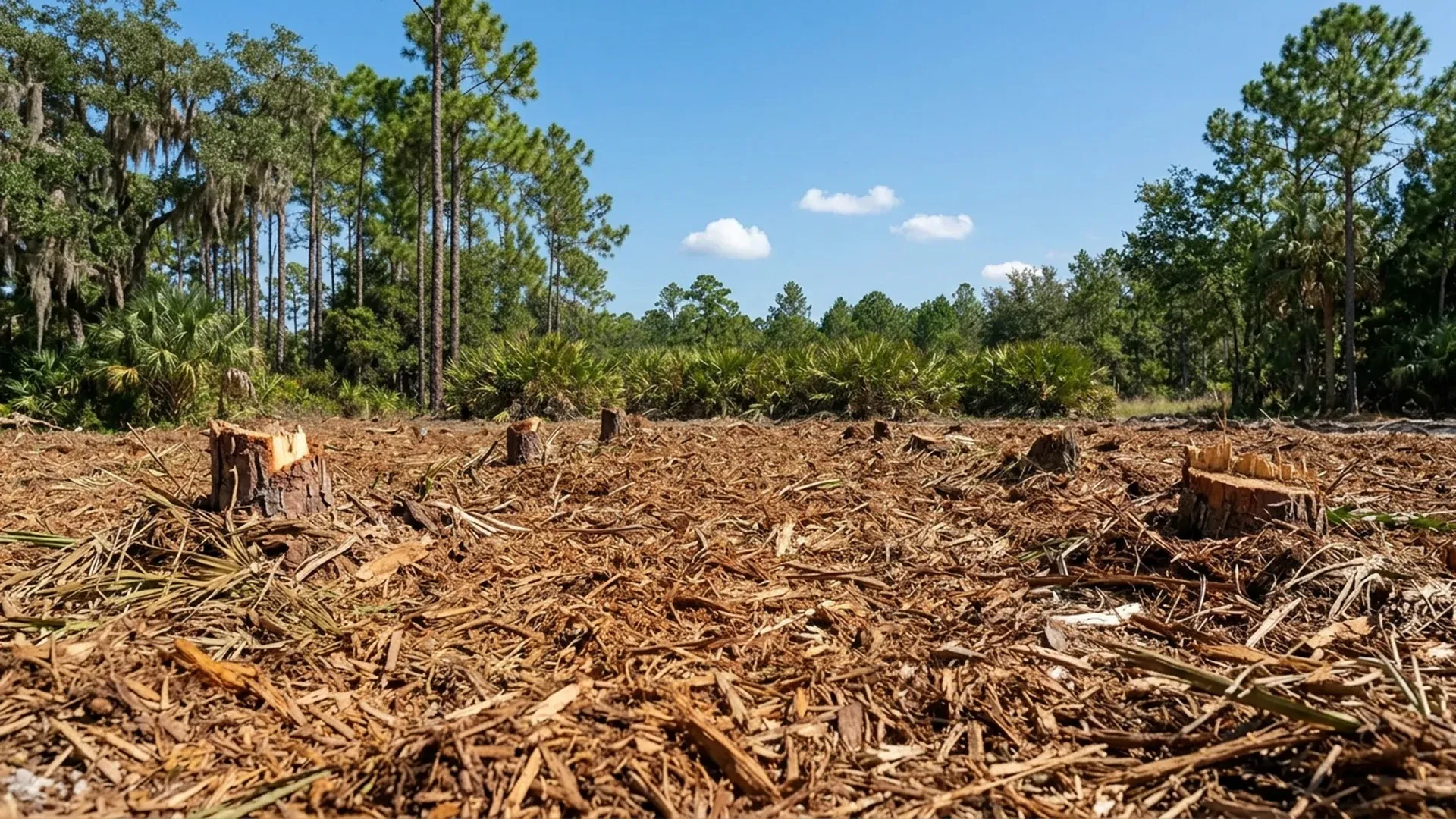
Forestry mulching is a clearing method where a machine with a mulching head grinds, shreds or chops trees and brush into small pieces and leaves them on the ground. The USDA Forest Service describes this kind of mastication as chopping noncommercial-size trees and shrubs into chunks placed on the soil surface to decompose (USDA Forest Service).
A Virginia Cooperative Extension guide says mulching heads can mount on tracked or wheeled machines, mulch stems up to 6 to 8 inches across and grind a range of stump sizes, and that it preserves soil integrity (Virginia Cooperative Extension). Our guide to land clearing equipment lists forestry mulchers among the machines used on smaller lots and sites with tight access.
What Is Traditional Land Clearing?
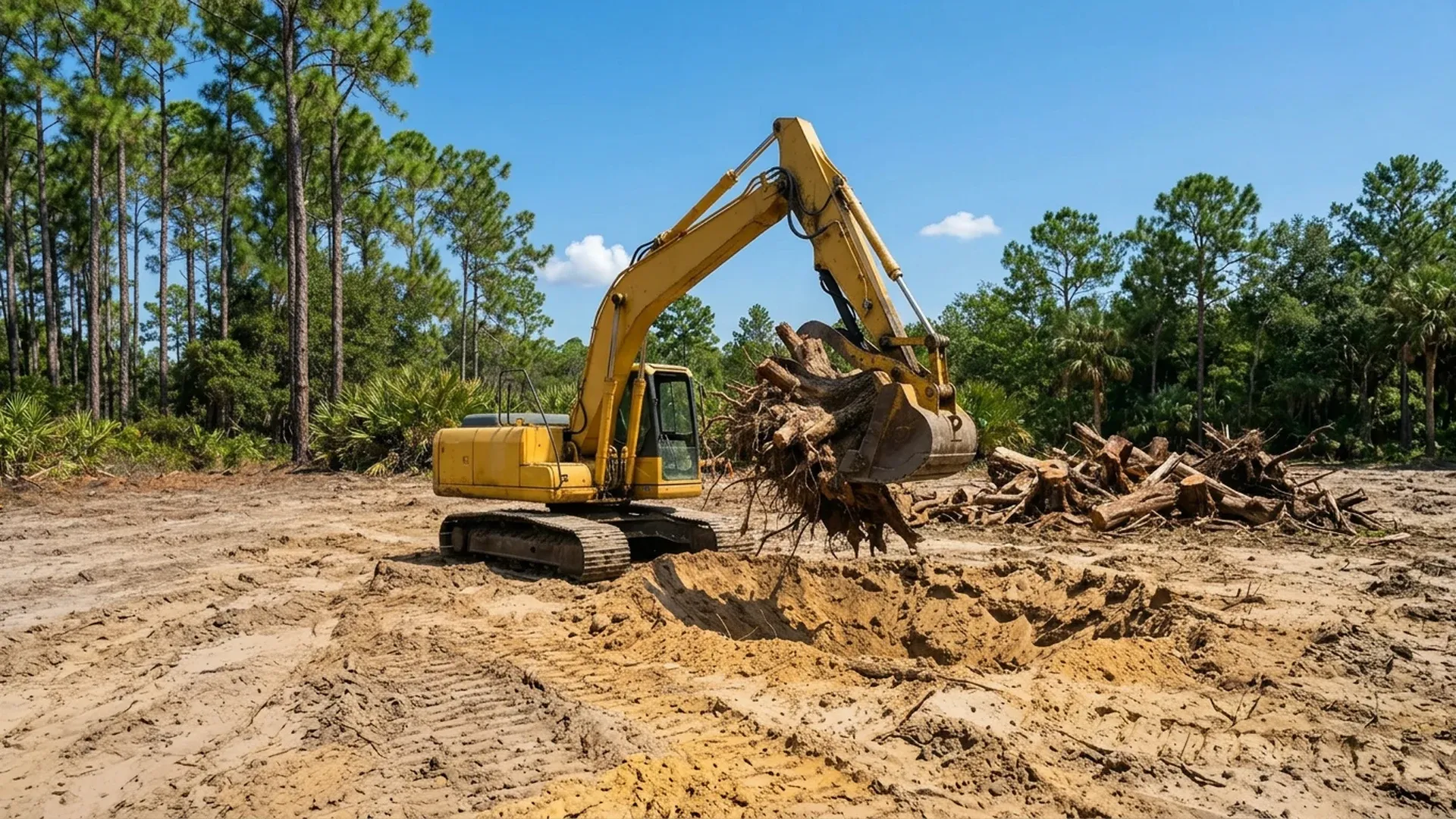
Traditional land clearing is the multi-step method: trees are felled, stumps and roots are pulled out, and the debris is piled and then hauled, chipped or burned where allowed. Excavators, dozers and skid steers do most of the work, and the ground is left bare and ready for grading.
Pulling roots out of the ground is called grubbing, and it is what makes traditional clearing right for construction. The same Virginia guide warns that bulldozers and loaders nearly always damage topsoil, because pulling roots out carries soil away with them. On a lot headed for a slab, that disturbance is planned, and the crew regrades the surface afterward. Level One Grading offers land clearing together with grading and site preparation, so the cleared ground can move straight to the next phase.
Forestry Mulching vs Land Clearing: How Do They Compare on Soil, Stumps and Debris?
In the forestry mulching vs land clearing comparison, mulching leaves a wood chip layer and most of the root system in place, while traditional clearing removes roots and leaves bare soil. These are the main differences:
- Soil: mulching disturbs less ground and leaves a chip cover. The Virginia guide credits it with reducing erosion. Traditional clearing exposes bare soil that needs sediment control until it is stabilized.
- Stumps and roots: a mulcher grinds stumps, but grinding shreds the visible wood and leaves roots underground to decay over time. Traditional clearing removes them.
- Debris: mulch stays on site as ground cover. Traditional clearing creates piles that must be hauled, chipped or burned.
- Next step: mulched ground may need the chips raked or stripped before grading. Cleared ground is ready for grading.
Ask which result your project needs, not which machine a contractor owns.
When Does Forestry Mulching Make Sense?
Forestry mulching makes sense when you want to open a property without stripping the soil and no structure needs the roots gone. Good fits include overgrown lots, fence lines, trails, pasture reclamation and brush that has taken over open ground. It also works where access is tight, because a mulching head can reach spaces a large dozer cannot.
The Forest Service notes that mastication is also used in fuel management, turning tall brush that carries fire into material lying on the ground. That makes mulching a fit for land you will keep open rather than build on. Tell the crew which trees stay, mark them before work starts, and agree on how deep the mulch layer will be when the job ends.
When Is Traditional Land Clearing the Better Choice?
Traditional land clearing is the better choice when the ground will carry a structure, a slab or a driveway. Organic matter under a pad can decompose and let the surface settle, so roots, stumps and topsoil have to come out. Level One Grading describes its site prep scope as scraping the lot to strip grass, roots and organic matter down to stable mineral earth.
Traditional clearing also fits stumps that must go below grade, trees larger than a mulching head can handle, and jobs that will be graded, filled or excavated next. Many projects combine both methods: mulch the brush and small trees across the property, then clear and grub only the building pad, driveway and septic area. Our stump removal service handles stumps that mulching leaves behind.
What About Burning, Hauling and Permits?
Both methods can need approvals, and neither one skips them. The Florida Forest Service lists land clearing and pile burning among the activities that require a burn authorization, so ask before you plan to burn debris on site. Hauling avoids burning but adds trucks and disposal, and we also rent roll-off dumpsters.
Counties can require a permit for the clearing itself. Hillsborough County requires a natural resources permit for land alteration, which includes removing vegetation by grubbing, tree removal and clearing, with exceptions for maintaining existing grounds. Pasco and Polk counties and cities have their own rules for tree removal and clearing. Check with your county or city before any equipment starts, and read our guide to land clearing before you hire anyone.
How Do You Decide Between Forestry Mulching vs Land Clearing?
You decide by starting from the end use, then checking vegetation, soil and schedule. The forestry mulching vs land clearing choice gets easier once you answer these questions with your contractor:
- Will anything be built on the cleared area?
- How large are the trees and stumps?
- Does the next trade need bare, graded ground?
- How much soil disturbance can the site tolerate?
- Are there trees to protect, wetlands or slopes?
If the answers point both ways, ask for a written scope that covers the combined approach and says which areas get which method. For lots headed to construction, our land grading services guide explains what follows clearing.
Forestry Mulching vs Land Clearing FAQ
Does forestry mulching remove stumps?
A mulcher grinds stumps down to or below ground level, but the root system stays underground and decays over time. If your plans need roots out, such as under a slab or driveway, you need traditional clearing or stump removal for those areas.
Can you build on land cleared by forestry mulching?
Not directly. Wood chips and roots are organic material, so the building area usually needs stripping, grubbing and compaction before a pad or foundation. Many owners mulch the open acreage and clear only the build area the traditional way, which is why the best answer is often both.
Is forestry mulching better for the soil?
It disturbs less soil and leaves a protective chip layer, which Extension sources credit with helping reduce erosion. It does not fit every site, and it does not replace grading or drainage work when the ground must be built on or kept dry.
Do I need a permit for either method?
Often yes, and rules vary by county and city. Check tree removal and land alteration rules with your county or city before work starts, and confirm whether your debris plan needs a burn authorization. Ask your contractor who applies for each approval.
Ready to Clear Your Land in Central Florida?
Tell us what you plan to build, fence or reclaim, and we will walk the property with you and recommend the right approach to forestry mulching vs land clearing. Call Level One Grading at +1 813-842-4840, Monday to Saturday, 9AM to 5PM, or request a free estimate today.
Checked against the USDA Forest Service, Virginia Cooperative Extension, Florida Forest Service and Hillsborough County in October 2026.

About Miguel Orozco
Miguel Orozco is the President of Level One Grading, a trusted Central Florida grading and excavation company, delivering precise earthwork solutions and dependable results for residential and commercial projects since its founding.