
Foundation Excavation and Trenching: What to Expect
Foundation excavation and trenching in Florida: what happens before, during and after the dig. Call Level One Grading at +1 813-842-4840.

Miguel Orozco

Foundation excavation is the first dig on a new build: the ground is opened for footers, stem walls and the pad, to the depths and widths your engineered plans call for. Done right, it gives the foundation crew a clean, correctly sized trench. Done wrong, it costs extra work for every trade that follows.
Level One Grading handles foundation excavation, footer trenching and pad preparation in coordination with your builder. This guide explains what to expect before, during and after the dig, and how Florida soil, water and safety rules change the job. For the full range of digging services, see our excavation guide.
What Is Foundation Excavation?
Foundation excavation is the digging and shaping of soil that opens the ground for a building's foundation. It usually includes stripping the pad area, excavating to the design elevation and cutting the footer trenches that will hold the concrete and reinforcing steel. Our foundation work covers initial excavation and footer trenching, stem wall preparation and pad pouring. The result should be a trench that matches the plan in depth, width and elevation.
Foundation excavation is different from site preparation. Site prep clears, grades and builds the pad, while foundation excavation cuts into that prepared ground to the exact lines of the plans. Our guide to the site preparation steps shows where the two meet.
What Happens Before the Excavator Arrives?
Before foundation excavation starts, the plans, locates and approvals have to be in place. Your engineer or builder provides the foundation plans with depths, widths and elevations, and the layout is staked on the ground so the operator digs to those lines.
Florida's Underground Facility Damage Prevention and Safety Act, section 556.105 of the Florida Statutes, requires an excavator to give notice through the 811 system at least 2 full business days before beginning excavation, so utility owners can mark buried lines. Ask your contractor for the notice confirmation. Private lines, such as irrigation or a feed to a shed, are usually not marked by 811, so locate those yourself. Permits and inspection scheduling come from your county or city, so ask the building department what it needs before work begins.
How Is the Foundation Trench Dug?
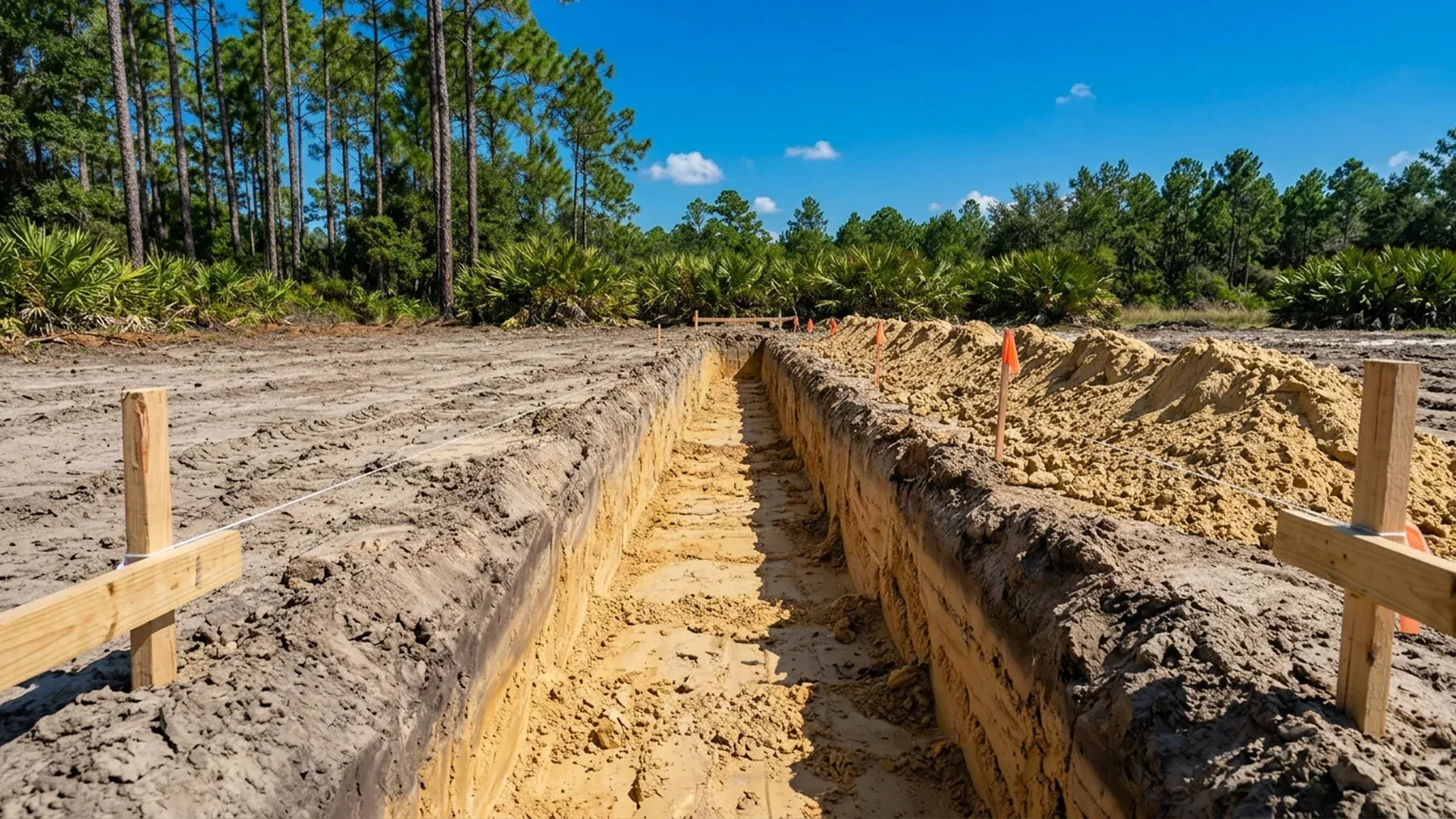
A foundation trench is dug in a set order so the final depth and width match the plans. The usual sequence looks like this:
- Strip the organic soil and roots from the pad area.
- Excavate to the design elevation for the pad or slab.
- Mark the footer lines from the layout.
- Dig the footer trenches to the depth and width on the plans.
- Keep the spoil pile away from the trench edge and clean the bottom.
Level One Grading's foundation page says the company uses GPS-guided equipment to work to exact elevations and compaction levels and coordinates with inspectors. Footer depth and width come from your engineered plans and local code, not from a rule of thumb, so the crew digs to the numbers you provide.
How Do Soil and Water Change Foundation Excavation in Florida?
High water tables and soft soil change foundation excavation in Florida more than any other factor. Our foundation work guide notes that much of Hillsborough, Polk and Pasco counties sits above seasonally high water tables, so a trench can fill with water faster than you expect, and soft soils can slump at the edges.
Florida Building Code, Residential, section R401.4.2 addresses compressible or shifting soil: where a full geotechnical evaluation is not done, it must be removed to a depth and width sufficient to ensure stable moisture content, or stabilized. The soil results from your engineer decide how deep to go. If water collects, the crew has to control it before concrete goes in, and the Florida DEP stormwater construction permit can cover dewatering on qualifying projects. Read our guide to inground pool excavation for a close look at dewatering and soil removal.
What Safety Rules Apply to Trenching?
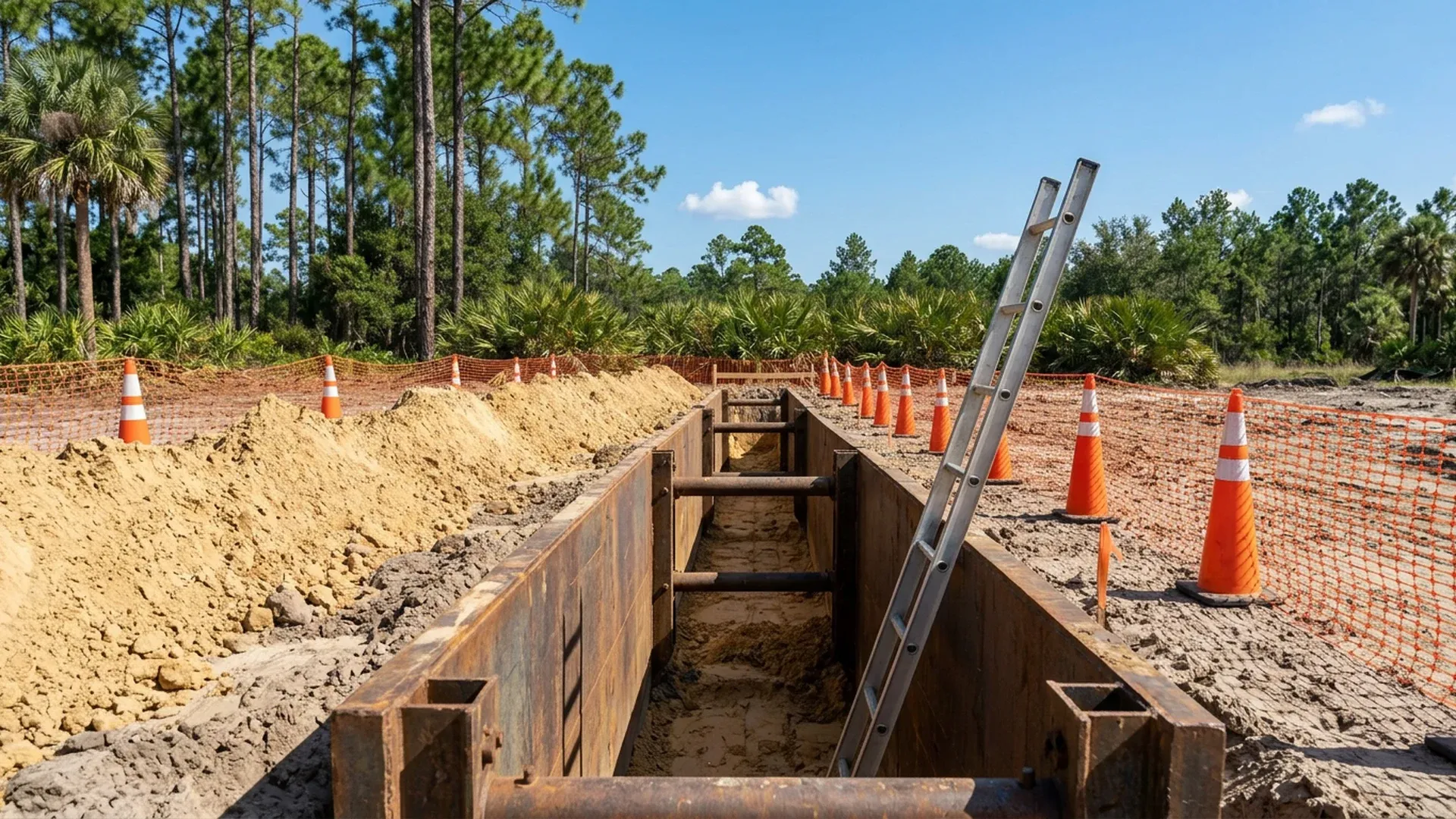
OSHA requires protection against cave-ins in most trenches, and it calls trench collapses the greatest risk to workers. Under 29 CFR 1926.652, an excavation needs an adequate protective system unless it is in stable rock or less than 5 feet deep and a competent person finds no indication of a potential cave-in. The three methods are sloping, shoring and shielding.
Other OSHA rules matter on a residential site. Under 29 CFR 1926.651, a competent person must inspect excavations daily and after every rainstorm. Spoil and equipment must stay at least 2 feet from the edge, or be held back by retaining devices. Trenches 4 feet or deeper need a ladder, stairway or ramp within 25 feet of lateral travel. These rules protect workers, and they are a good sign of a careful contractor. See OSHA's trenching and excavation page for the full standard.
When Does the Building Inspector Check the Foundation?
The foundation inspection happens after the trenches are excavated and forms erected. That timing is set in the Florida Building Code, Building, 2023 edition, section 110.3, which lists stem walls, monolithic slabs, pile caps and footers among the components checked, and your local building department schedules it.
Do not backfill or pour before the inspector signs off. Order the inspection early, because it can hold up the pour if the date slips. If the trench fails on size, depth or soil, the fix is far cheaper before concrete than after. Level One Grading's foundation page says the team coordinates with inspectors to keep your project on schedule and within budget.
What Should You Ask Your Excavation Contractor?
Ask for proof and a written scope, not promises. The questions that matter for foundation excavation are:
- Can you show your license and insurance?
- Who places the 811 notice, and can I see the confirmation?
- How do you handle water in the trench?
- What trench protection do you use at depth?
- Does the scope include haul-off of spoil and backfill after inspection?
Level One Grading is licensed and insured, with an industry-leading 2% warranty claim rate annually. For a deeper checklist, read our guide to hiring an excavation contractor in Central Florida. Our post on foundation work in Tampa covers the pad work that comes before the dig.
Foundation Excavation FAQ
How deep is foundation excavation?
Depth comes from your engineered plans, soil conditions and local code, not from a fixed number. Ask your builder or engineer for the footer depth, width and elevation in writing, and have the crew dig to those figures and nothing deeper.
Can foundation excavation continue in the rain?
Heavy rain can pause the work, and water in a trench must be controlled before concrete goes in. OSHA also requires a competent person to inspect the excavation after every rainstorm. Your crew decides when conditions are safe to continue.
Who calls 811 before foundation excavation?
Florida's statute puts the notice on the excavator, the person doing the dig. Ask your contractor to place it and show you the confirmation, and call 811 yourself for any work you do directly. The notice is due at least 2 full business days before digging.
What is the difference between foundation excavation and site prep?
Site prep clears, grades and compacts the lot into a building pad. Foundation excavation then cuts the footer trenches and pad area to the plan. Most projects need both, in that order, and our site preparation services guide explains the first half.
Ready to Plan Your Foundation Excavation?
Bring your plans, and we will walk the site and confirm the scope. Call Level One Grading at +1 813-842-4840, Monday to Saturday, 9AM to 5PM, or request a free estimate for foundation excavation today.
Checked against OSHA 29 CFR 1926, the Florida Statutes, the 2023 Florida Building Code and levelonegrading.com in October 2026.

About Miguel Orozco
Miguel Orozco is the President of Level One Grading, a trusted Central Florida grading and excavation company, delivering precise earthwork solutions and dependable results for residential and commercial projects since its founding.