
How to Hire a Storm Cleanup Contractor Without Getting Scammed
Storm cleanup contractor Florida checklist: verify licenses, insurance and contracts, and spot scams. Free estimate, Level One Grading +1 813-842-4840.

Miguel Orozco

Hiring a storm cleanup contractor in Florida comes down to five checks: the license or business tax receipt, proof of insurance, a written estimate, a safe payment plan and a contract you have read. After a hurricane, qualified crews book up quickly and scammers arrive just as fast, according to the Florida Attorney General. This guide shows how to vet a storm cleanup contractor in Florida, which red flags to walk away from and what your paperwork should say. We are Level One Grading, a licensed and insured earthwork company from Plant City that works across Hillsborough, Polk and Pasco. For the full recovery sequence, see our storm recovery guide.
What Should Happen First Before You Hire a Storm Cleanup Contractor?
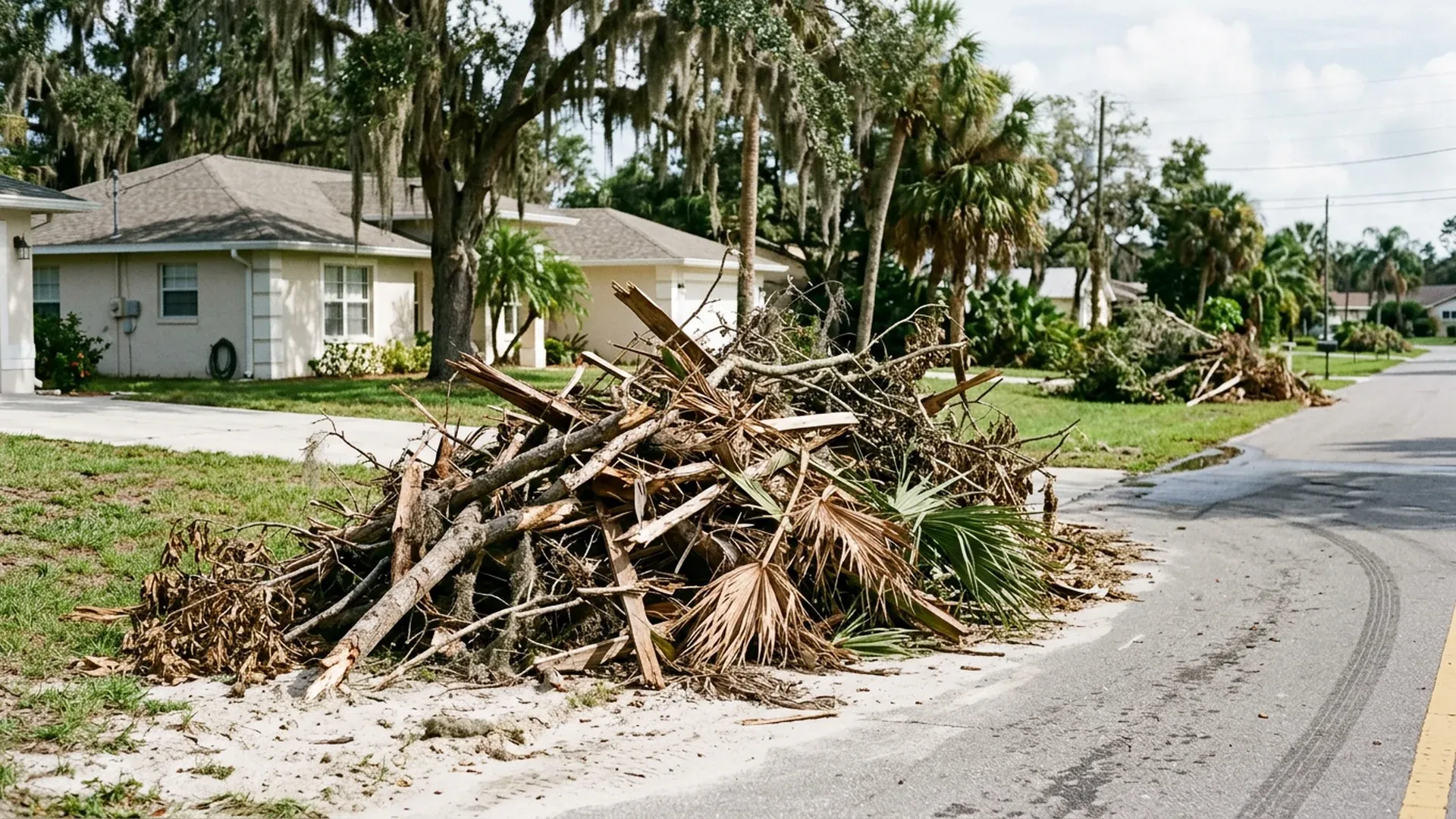
Make the property safe, photograph the damage and call your insurance company before anyone starts work. The Florida Attorney General advises having your insurer evaluate the damage before you arrange repairs, so you know what your policy will cover. Photograph each fallen tree, debris pile and damaged structure from several angles before anything moves.
Then write down the job in plain words: clear the driveway, cut and haul a fallen oak, remove limbs, repair washed out ground. One written list lets every contractor bid the same scope, which makes the estimates easy to compare. Our hurricane debris cleanup guide covers the safe order of work for fallen trees and debris.
How Do You Vet a Storm Cleanup Contractor in Florida?
Start with the license. Florida licenses construction contractors under Chapter 489 of the state statutes, and you can verify a contractor license in Florida on MyFloridaLicense.com by license number or by name. The Department of Business and Professional Regulation says to search the business name first and then search the individual who qualifies it, to confirm the two match.
Not every cleanup job falls under a state construction license. The department also tells consumers to check with their county or city about a local business tax receipt or certificate of competency for services that do not need a state license. Ask which license or receipt covers your job, then check the number yourself.
What Insurance Proof Should a Contractor Show?
Ask for two things in writing before you sign: a certificate of general liability insurance and proof of workers' compensation coverage or a workers' compensation exemption. The Florida Department of Financial Services lists both checks on its contractor fraud page, and it advises against letting a contractor inspect your property until you have confirmed the license and insurance.
You can confirm coverage yourself. The state's Proof of Coverage database shows workers' compensation policies, and the Exemption Search shows officers who have opted out. For tree work, the Attorney General adds that you should verify with the insurer that the policy is current. A certificate that is expired, blank or issued to a different company means keep looking.
What Are the Red Flags After a Storm?
Debris removal scams in Florida follow a pattern, and the Department of Financial Services and the Attorney General describe the same warning signs. Walk away from a storm cleanup contractor in Florida who:
- Shows up unsolicited, points out damage you had not noticed or offers tree removal after a hurricane out of the blue.
- Asks for full payment up front or for cash only.
- Pushes you to sign today or says the price lasts for one day only.
- Claims a discount because of leftover supplies from another job.
- Cannot show a license, a certificate of insurance or local references.
- Offers to waive your insurance deductible or pressures you to file a claim.
- Gives an estimate far below or far above the others for the same work.
What Should a Written Estimate and Contract Include?
Collect at least three written, itemized estimates, as the Attorney General recommends, and compare them line by line. Each one should name the company and its license details, describe the scope in plain words and say whether hauling and disposal are included. For hurricane debris removal in Florida, the Attorney General suggests asking whether debris removal is part of a tree estimate.
The contract should also state the start and finish window, who handles permits where they apply, how damage from equipment will be repaired and the buyer's right to cancel language. Read the fine print before signing and keep a signed copy. If a bid is vague about any of these points, ask for the missing detail in writing.
How Should You Pay a Storm Cleanup Contractor in Florida?
Never pay the full amount upfront, and hold the final payment until you are satisfied with the work. The Attorney General gives that same advice for tree work. Pay by check or credit card instead of cash so there is a record.
For residential repair work, section 489.126 of the Florida Statutes sets permit and start deadlines for a contractor who collects a large initial payment, so ask how any deposit will be used. During a declared state of emergency, section 501.160 bars unconscionable prices on essential commodities and services, and anyone offering goods or services to the public must hold a business tax receipt. Report suspected gouging or scams to the Attorney General's office at 1(866) 9NO-SCAM.
What Should You Document Before and After the Work?
When you hire a storm cleanup contractor in Florida, save every estimate, the signed contract, the insurance certificate and each receipt. After the work, take dated photos from the same angles as your before photos, so you can show what was cleared and what condition the ground was left in.
Before the last payment, the Attorney General advises asking for lien releases from subcontractors and suppliers, since unpaid ones can leave a lien on your property if the contractor does not pay them. Do not sign a certificate of completion until you are satisfied. Our Tampa storm damage cleanup guide lists the work that often follows hauling, such as erosion and drainage repair, which helps you spot items missing from a bid.
When Does a Licensed Local Earthwork Company Make Sense?
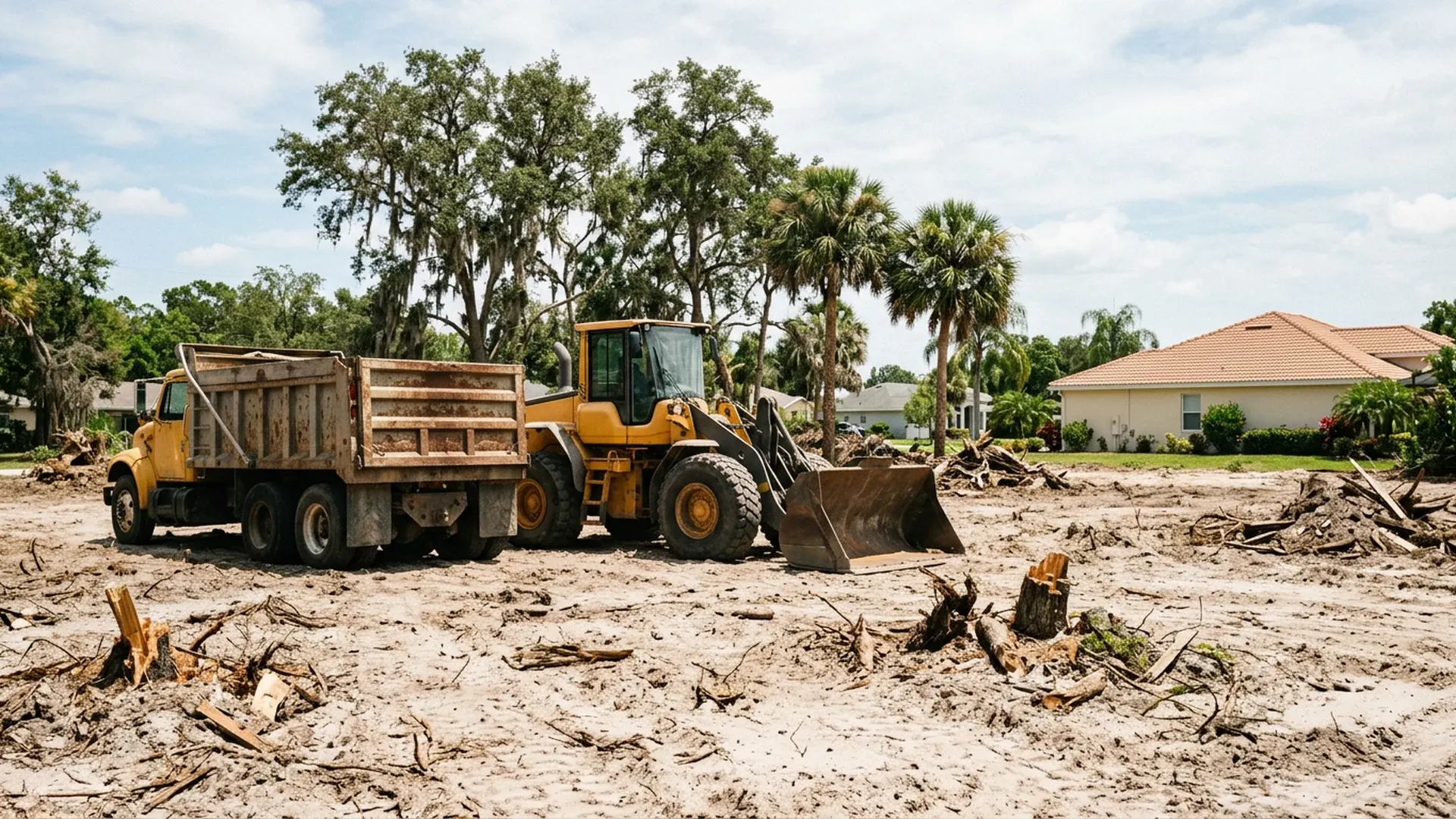
Hire for the job you actually have. When the storm left fallen trees, limbs and debris on a lot, along with ruts, washed out ground or drainage that needs correcting, an earthwork contractor can handle the clearing and the ground repair afterward. We hold a license and carry insurance, and our warranty claim rate is an industry-leading 2% annually. We dig, grade, clear and prep sites, and we give a free estimate.
We do not do roofing, insurance adjusting or tree surgery. For those, hire the right specialist and run the same checks. Apply the same standard to us: ask for our license, our insurance certificate and a written scope before you agree to anything.
Storm Cleanup Contractor Florida FAQ
Do I need a state license to hire a debris removal contractor?
The answer depends on the type of work. Florida licenses construction contractors at the state level, while other services fall under local rules. The Department of Business and Professional Regulation says to ask your county or city about a local business tax receipt or certificate of competency. Ask the contractor which one applies to your job.
Can a storm cleanup contractor in Florida ask for full payment upfront?
That is a warning sign. The Florida Attorney General advises never paying the full amount upfront and waiting to make the final payment until you are completely satisfied with the work. Pay by check or credit card, get a receipt for every payment and ask what any deposit will cover before you hand it over.
How do I check a contractor's workers' compensation coverage?
Search the Florida Division of Workers' Compensation Proof of Coverage database by employer name, and use the Exemption Search for corporate officers who opted out. Also request a certificate of general liability insurance, then confirm it is current with the insurer or agent named on the certificate.
Where does Level One Grading work after storms?
Our office is in Plant City, and our work covers Hillsborough, Polk and Pasco counties. Call +1 813-842-4840, Monday to Saturday, 9AM to 5PM, to confirm service for your address, describe the storm damage and ask for a free estimate. We will let you know whether the job fits our services.
Ready to Hire a Storm Cleanup Contractor in Florida?
If you are comparing bids for a storm cleanup contractor in Florida, bring us your photos and your written list, and we will walk the property with you. Call us at +1 813-842-4840 between 9AM and 5PM, Monday to Saturday, and book the free estimate. We will tell you plainly which parts of the job are ours and which need another specialist.
Checked against Florida Statutes 489.126 and 501.160, Florida Attorney General, DFS and DBPR guidance and levelonegrading.com in November 2026.

About Miguel Orozco
Miguel Orozco is the President of Level One Grading, a trusted Central Florida grading and excavation company, delivering precise earthwork solutions and dependable results for residential and commercial projects since its founding.