
Best Drainage Solutions for Florida Properties
Top drainage solutions for Florida properties: land grading, French drains, swales & retention basins. Protect your investment from heavy rains.

Miguel Orozco

Florida receives between 50 and 60 inches of rain every year, nearly double the U.S. national average. For property owners across the state, that rainfall isn't just an inconvenience. Without proper drainage solutions for Florida properties, standing water can damage foundations, erode soil, destroy landscaping, and create conditions for mold and structural failure within 24 to 48 hours.
Whether you own a residential lot, a commercial parcel, or raw land ready for development, understanding your drainage options is the first step toward protecting your investment. In this article, you'll see the most effective drainage solutions for Florida properties, how each one works, when to use it, and why land grading is often the foundation that makes every other system perform correctly.
Why Yard Drainage Florida Properties Need Is Different From the Rest of the U.S.
Effective yard drainage for Florida properties starts with understanding what makes the state's conditions unique. Florida's terrain is predominantly flat, which means water has nowhere to go naturally. Unlike properties in the Carolinas or Georgia, where elevation differences help move water downhill, Florida lots often require engineered solutions to create the flow that geography doesn't provide.
Three factors compound the challenge:
Sandy and clay-mixed soils: Florida soil varies significantly by region. Sandy soils drain quickly but shift under saturation. Clay-heavy soils absorb almost no water, causing runoff to pool on the surface. Neither type handles heavy rainfall passively.
High water table: In many parts of Florida, the water table sits just a few feet below the surface. This limits how much water can drain downward, increasing surface saturation during rain events.
Hurricane season: From June through November, a single storm system can deliver more than 10 inches of rain in 24 hours. A yard drainage system in Florida must handle not just regular rainfall but extreme weather events that overwhelm standard residential infrastructure.
Understanding these factors is what separates a properly engineered drainage solution from one that fails the first time a tropical system makes landfall.
Land Grading and Drainage Florida: The Foundation of Every System
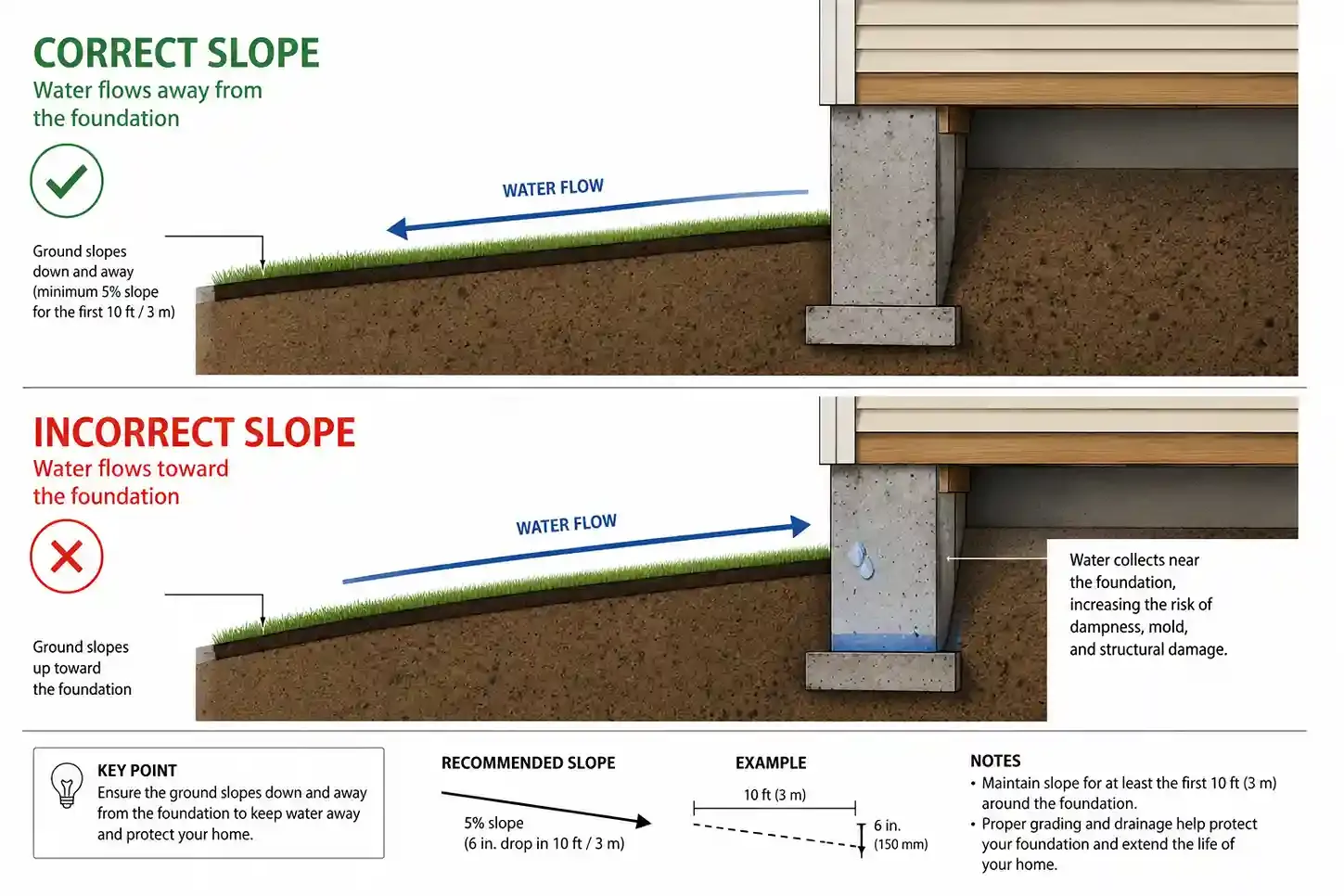
Before any drain, pipe, or basin is installed, the land itself needs to be properly shaped. Land grading and drainage in Florida is the process of reshaping the soil's slope so that water flows away from structures, not toward them.
Florida building code requires a minimum fall of 6 inches within the first 10 feet from any foundation. On flat lots, which describe the majority of Florida properties, achieving this slope requires moving earth strategically. Positive grading means the yard slopes away from the house. Negative grading means the yard slopes toward the foundation, a condition that leads directly to water intrusion, foundation cracking, and mold.
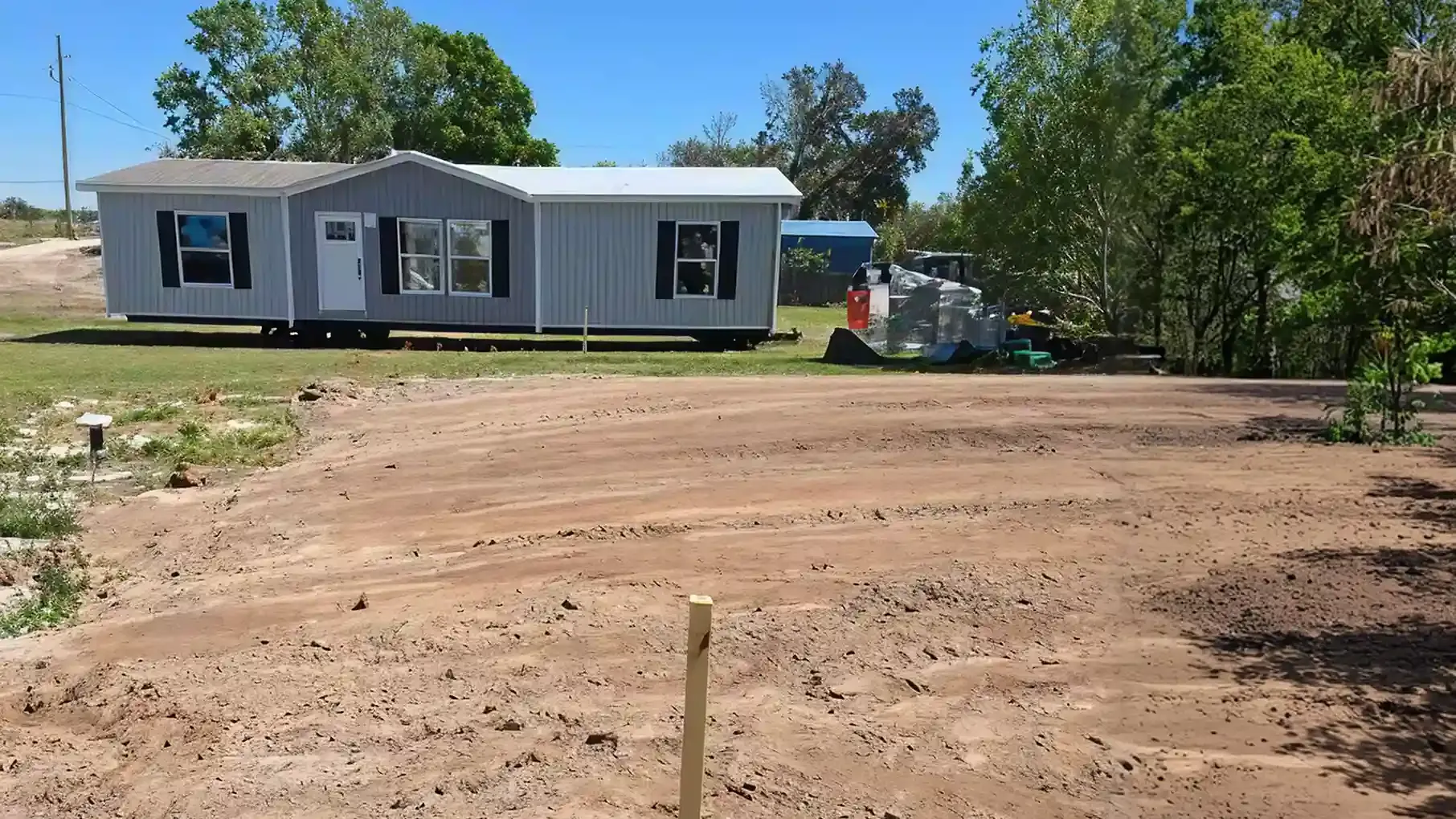
Land grading is the first step Level One Grading evaluates on every project. It is also the most cost-effective intervention: correcting the grade early can prevent $10,000 to $50,000 in foundation repair costs down the line. For new developments or undeveloped parcels, site grading must be completed before any structure is built, ensuring that drainage functions correctly from day one.
Grading alone solves a significant percentage of drainage complaints on Florida properties, without a single pipe being laid.
French Drain Installation Florida: Directing Underground Water Flow
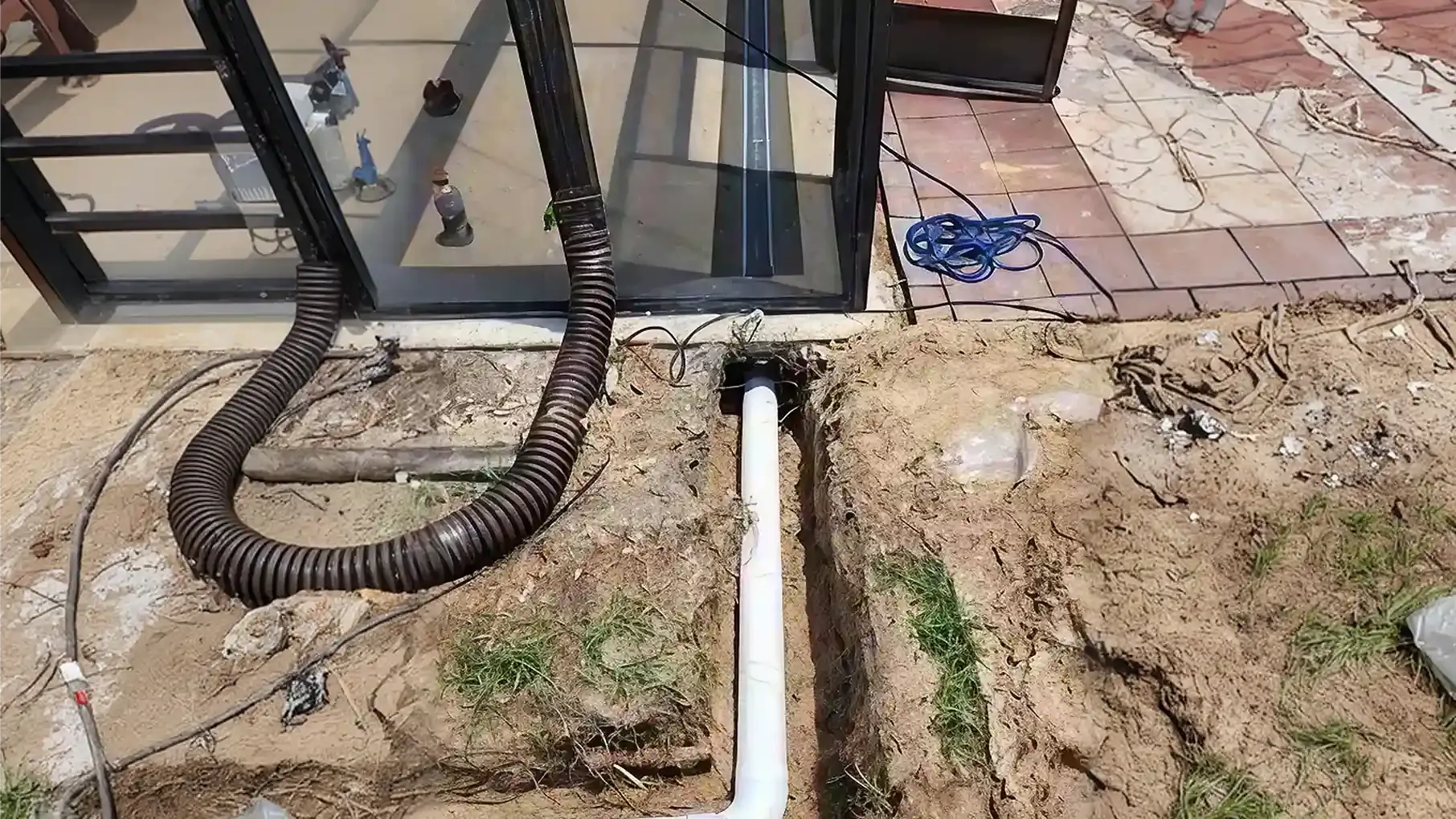
For properties where surface grading alone isn't enough, French drain installation in Florida is one of the most reliable and widely used drainage solutions. A French drain is an underground trench filled with gravel and a perforated pipe that collects subsurface water and redirects it away from the problem area.
French drains are particularly effective for:
- Properties with a high water table where ground saturation is a persistent issue
- Areas adjacent to retaining walls that accumulate hydrostatic pressure
- Zones that experience repeated pooling despite correct surface grading
- Foundation perimeters where water consistently migrates toward the structure
In Florida's climate, French drains need to be sized correctly for the rainfall volume the region receives. An undersized system will back up during a heavy rain event, defeating its purpose. A properly engineered French drain installation accounts for soil permeability, trench depth, pipe diameter, and the outlet point where water exits the system.
Swales and Retention Areas: Florida's Natural Drainage Infrastructure
Swales and retention areas are among Florida's most important and most overlooked, drainage tools. A swale is a shallow, vegetated channel designed to slow and redirect surface water runoff. A retention area (or retention pond) is a low-lying section of the property designed to temporarily hold excess water and allow it to infiltrate or evaporate over time.
Both solutions are common in Florida for several reasons:
They work with the land, not against it. Rather than piping water away at high velocity, swales and retention areas slow it down, reduce erosion, and allow some natural groundwater recharge.
They meet regulatory requirements. Many Florida counties require stormwater retention on larger residential and commercial properties. Proper swale and retention design ensures compliance with local ordinances and avoids fines or permit issues.
They protect neighboring properties. Florida law prohibits regrading or drainage modifications that redirect water onto an adjacent parcel. A properly designed swale keeps water within your property boundary and discharges it to an approved outlet.
For commercial properties, retention ponds can also become aesthetic features — landscaped, aerated, and integrated into the site design rather than treated as a necessary inconvenience.
Catch Basins and Channel Drains: Surface Solutions for High-Volume Areas
Where water pools rapidly on paved or hardscaped surfaces, catch basins and channel drains provide targeted drainage solutions for Florida properties that experience concentrated runoff. Catch basins are underground collection chambers placed at low points in a yard or paved area. Channel drains are linear grates installed along driveways, pool decks, or the base of retaining walls to intercept sheet flow before it accumulates.
Both systems connect to underground piping that carries collected water to an approved discharge point. They are especially common in:
- Driveways and parking areas where impervious surfaces prevent infiltration
- Pool decks where runoff from decking and roof drainage converge
- Commercial properties with large paved footprints
- Residential properties where downspout water concentrates in a single low spot
Catch basins require periodic maintenance, sediment and debris accumulate in the chamber and must be removed to prevent blockages. In Florida's environment, inspecting and cleaning catch basins before hurricane season each year is considered standard property maintenance.
FAQ: Drainage Solutions for Florida Properties
What is the most effective drainage solution for a flat Florida property?
For flat Florida properties, the most effective approach combines land grading with one or more subsurface systems. Grading creates the slope that allows water to move. French drains or catch basins then collect and redirect any water that grading alone can't address. Most flat properties in Florida benefit from a multi-system approach designed by a licensed site preparation and drainage contractor.
How much do drainage solutions for Florida properties cost?
Costs vary significantly based on property size, soil conditions, and the complexity of the system required. Basic land regrading starts around $500 to $3,000 for residential lots. French drain installation for Florida properties ranges from $3,000 to $10,000. Full drainage system design and installation for larger parcels can exceed $20,000. A professional site assessment is the most accurate way to estimate cost for your specific property.
Do I need a permit for drainage work on my Florida property?
In most Florida counties, significant drainage modifications, including French drain installation, retention pond construction, and grading that affects more than a defined area, require a permit. Requirements vary by county and municipality. A licensed site preparation contractor familiar with local codes can confirm what permits apply to your project and manage the approval process on your behalf.
Hire a Site Preparation Drainage Contractor in Florida
The drainage solutions described in this article work best when they are designed together, not installed independently without a full site assessment. A French drain that discharges to an improperly graded area will still allow water to pool. A catch basin connected to an undersized pipe will back up. Drainage systems in Florida require engineering that accounts for rainfall intensity, soil type, water table depth, and neighboring property boundaries, all at once.
Level One Grading specializes in site preparation drainage contractor services across Florida. Our team evaluates your property's unique conditions and designs a drainage solution that performs during everyday rain events and through hurricane season. Whether you need land grading, French drain installation, swale construction, or a complete stormwater management plan, we provide the expertise to protect your investment long-term.
Contact Level One Grading today for a site assessment and let's build a drainage solution that works for your Florida property.

About Miguel Orozco
Miguel Orozco is the President of Level One Grading, a trusted Central Florida grading and excavation company, delivering precise earthwork solutions and dependable results for residential and commercial projects since its founding.