
Site Preparation Florida: Complete Checklist
Site preparation Florida builders trust starts with grading, not concrete. Get the full checklist before your next project breaks ground.

Miguel Orozco

Every delayed framing crew, every change order tied to "unexpected soil conditions," every concrete pour that has to get redone, most of it traces back to the same root cause. Site preparation Florida projects skip or rush almost always resurfaces later, usually at the worst possible point in the schedule.
That's a real risk in this market specifically. Florida's flat terrain and high water table mean a lot that looks build-ready on paper can still hold water, settle unevenly, or fail to drain the way the plans assume. Getting site preparation Florida contractors actually sign off on, not just a quick scrape and a permit, is what keeps a project on schedule instead of three weeks behind by the time the slab goes in.
Here's what proper site preparation Florida builders rely on actually includes, broken into the three pieces that most often get confused with each other.
Grading vs Excavation: What's the Real Difference?
Grading vs excavation is one of the most common points of confusion on a job site, and it matters because the two are scheduled, priced, and performed differently.
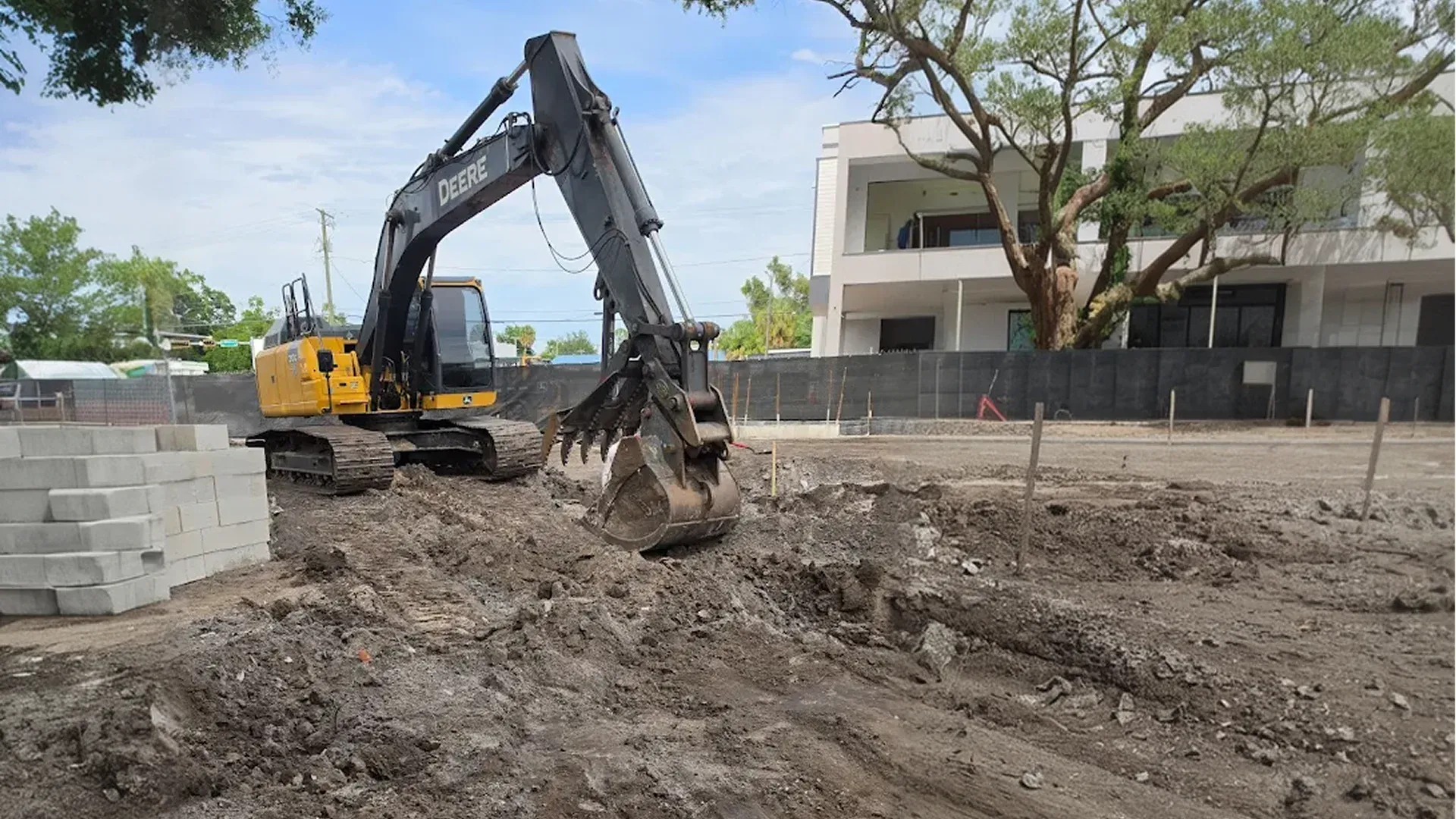
Excavation is the removal of soil, rock, or other material to create space, for a foundation, a basement, a retention pond, or utility trenches. It's about digging down and taking material away.
Grading is the shaping and leveling of the soil that's left, including the soil brought in to replace what excavation removed. It's about controlling slope, compaction, and elevation so water moves where it's supposed to and the surface can support what gets built on it.
Understanding grading vs excavation matters most at the bidding stage. A quote that only covers excavation but not the grading vs excavation work needed afterward can leave a site technically "dug" but nowhere close to build-ready and that gap is exactly where schedules start slipping.
Why Construction Grading Comes Before Anything Else
Construction grading is the step that determines whether every trade that comes after it, foundation, slab, utilities, even landscaping, has a stable, properly draining base to work from. Skip it or shortcut it, and problems don't show up immediately. They show up six months or two years later.
Three things construction grading is responsible for on a typical Florida site:
- Positive drainage away from the structure. Construction grading establishes the slope that carries rainwater away from the foundation instead of pooling against it, which is one of the most common causes of post-construction foundation claims in the state.
- Compaction the structure can actually be built on. Loose or improperly compacted fill is one of the leading causes of slab cracking and settling, and it's invisible until weight is added.
- A surface elevation that matches the approved plans. Construction grading has to hit the exact elevations specified by the civil engineer, or later inspections and utility tie-ins can fail.
Because soil in much of Florida is sandy and fast-draining when healthy, construction grading also has to account for how that soil behaves once it's disturbed, filled, and compacted, sandy soil that drains well in its natural state doesn't automatically do the same once it's been moved and repacked, which is part of why Florida's high rainfall and water table conditions make drainage planning during construction grading a non-negotiable step rather than an afterthought (UF/IFAS Extension).
If signs of poor grading are already showing up on an existing property rather than a new build, our breakdown of grading problems Florida properties develop covers what to look for before construction even starts.
How Laser Grading Keeps Your Site Build-Ready
Laser grading uses a laser-guided system mounted on grading equipment to read elevation in real time and adjust the blade automatically, instead of relying on a crew checking grade stakes by eye every few passes.
The practical difference shows up in three places:
- Tolerance. Laser grading typically holds elevation within a fraction of an inch across an entire site, compared to the wider margin of error that comes with manual grade-checking.
- Speed. Because the equipment is making constant micro-adjustments instead of stopping to re-survey, laser grading usually finishes a comparable site faster than traditional methods.
- Consistency on larger sites. On multi-acre commercial or subdivision projects, laser grading keeps the entire surface consistent instead of having slightly different elevations from one section to the next, which matters enormously once drainage plans and utility runs are layered on top.
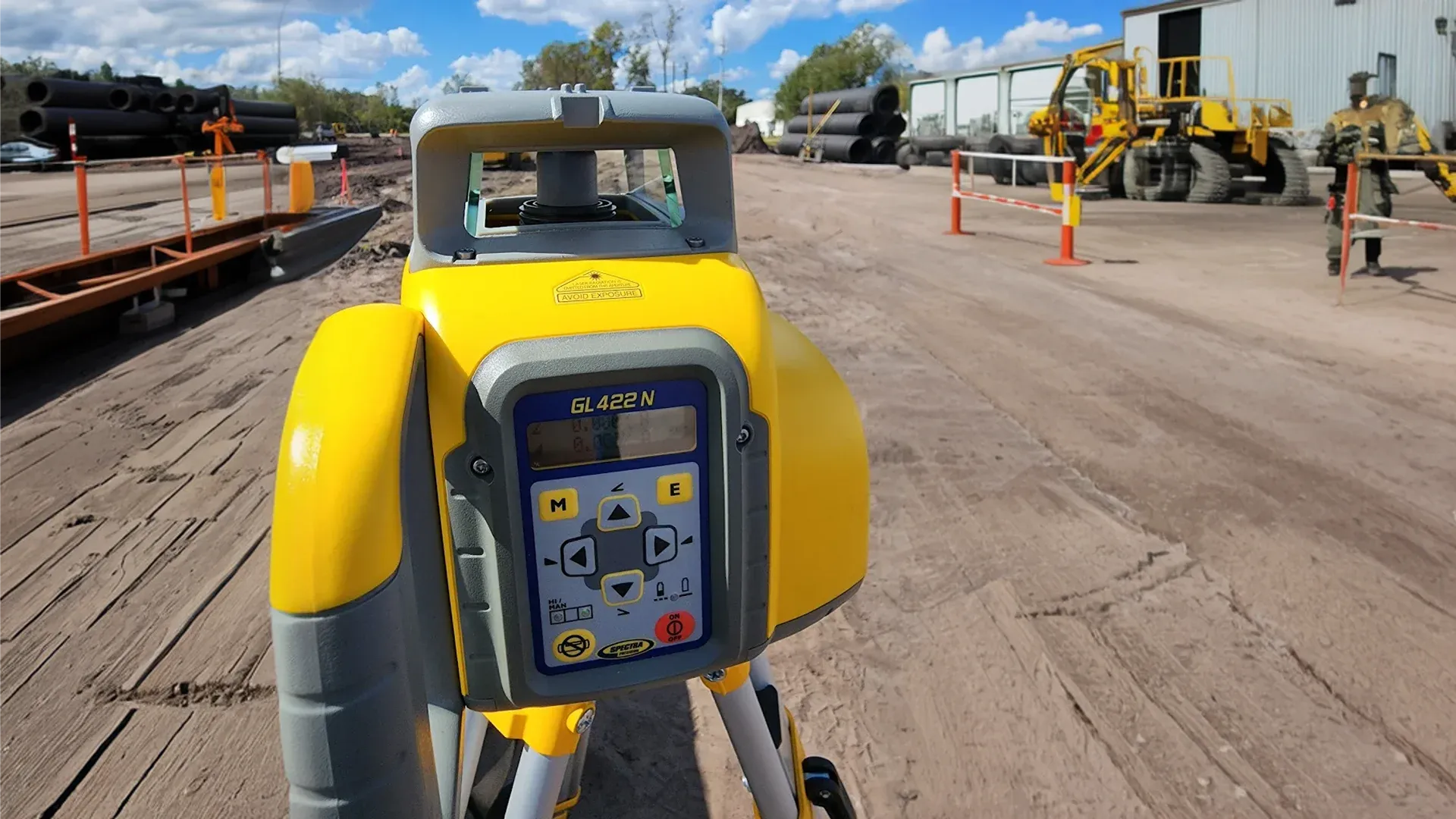
Not every project needs laser grading. A small residential lot with simple drainage needs might be handled efficiently without it. But for anything with tight tolerances, large square footage, or engineered drainage plans, laser grading is usually the difference between a site that passes inspection on the first try and one that doesn't.
Frequently Asked Questions
What's included in site preparation for a construction project?
A typical site preparation Florida scope includes clearing vegetation and debris, excavation to the required depth, rough and finish grading to the elevations on the approved plans, soil compaction testing, and establishing drainage paths before any foundation work begins. The exact scope depends on the site's existing condition and the project's engineering plans.
How long does site preparation usually take?
For a standard residential lot, site preparation Florida crews can often complete grading and compaction in a few days to about a week, weather permitting. Larger commercial or multi-acre sites can take several weeks, particularly if extensive drainage infrastructure or significant cut-and-fill work is required.
Do I need a permit for grading work in Florida?
In most Florida counties and municipalities yes, grading and land-disturbing activity typically requires a permit, especially if it affects stormwater drainage or exceeds a certain disturbed area threshold. Requirements vary by jurisdiction, so it's worth confirming with the local building department or having your contractor handle the permitting as part of the project.
What happens if site preparation is done poorly?
Poor site preparation Florida builders later regret is rarely obvious at first. The slab still gets poured and the building goes up, but improperly compacted soil or incorrect drainage slope tends to surface later as cracked slabs, sticking doors, foundation settling, or water intrusion, often well after the warranty period on the original work has expired. Our guide on yard flooding in Florida covers what that looks like once the water starts showing up.
The Bottom Line
Site preparation Florida construction depends on isn't one task, it's grading vs excavation done in the right order, construction grading executed to the plans, and laser grading deployed where precision actually matters. Get those three right and everything built on top has a stable, properly draining foundation to stand on.
Talk to the Level One Grading team about preparing your property the right way. Whether it's a single residential lot or a multi-acre commercial site, we can walk the plans, flag anything the grading scope needs to account for, and make sure site preparation isn't the thing that puts your schedule behind before the first wall goes up. Call 813-842-4840 to get started.

About Miguel Orozco
Miguel Orozco is the President of Level One Grading, a trusted Central Florida grading and excavation company, delivering precise earthwork solutions and dependable results for residential and commercial projects since its founding.