
Sediment Fences in Mulberry, FL: Erosion Control for Active Job Sites
Sediment fences in Mulberry, FL: how proper silt fence installation works, when NPDES rules apply, and how to keep your job site compliant. Get a quote.

Miguel Orozco

If you're breaking ground in western Polk County, sediment fences are usually the first thing an inspector looks for and the last thing most owners think about. Sediment fences in Mulberry, FL, also called silt fences, are temporary fabric barriers staked and trenched along the downslope edge of disturbed soil. They slow runoff, let water filter through and trap sediment before it reaches a neighboring lot, a ditch or a waterway.
Florida's sandy soils, flat terrain and heavy summer downpours make bare dirt wash away fast. This guide explains how a sediment fence works, how proper silt fence installation is done, when Florida's stormwater permit rules apply, and how to keep fencing working from the first day of clearing to final stabilization.
Silt Fence Installation: Trenched In, Not Just Staked Up
Good silt fence installation starts with placement. The fence runs along the downslope edge of the disturbed area, following the contour of the land so runoff spreads against the fabric instead of rushing along it. At Level One Grading, the fabric is trenched 6 inches into the ground and staked at the proper intervals, so it holds under heavy rain and can't be undercut.
That trench is the detail most often skipped. A fence that is only fastened to stakes at the surface lets water flow underneath, and the sediment you were trying to stop ends up off-site anyway. Careful silt fence installation is what separates a fence that passes inspection from one that fails after the first storm.
These are the most common silt fence installation mistakes:
- Fabric stapled at the surface, not trenched: water runs underneath and undercuts the fence.
- Fence placed across a concentrated flow path: fabric blows out under the volume of water.
- Gaps or weak joints at corners and ends: sediment escapes through the openings.
- Stakes too far apart: fabric sags and collapses when loaded with sediment.
NPDES Permit Compliance on Florida Construction Sites
NPDES permit compliance is the reason most job sites need fencing in the first place. Under the Florida Department of Environmental Protection's stormwater program, coverage under the Construction Generic Permit is required for projects that disturb one acre or more, or disturb less than an acre as part of a larger common plan of development or sale, and that discharge stormwater to surface waters or a municipal storm sewer system. You can read the details on the FDEP construction stormwater page.
Operators are expected to develop a stormwater pollution prevention plan, obtain permit coverage and apply best management practices such as sediment fences to limit erosion. NPDES permit compliance is also separate from other approvals your project may need, such as local stormwater or environmental resource permits.
Level One Grading installs sediment fences to meet FDEP and local requirements and provides the installation and documentation that support NPDES permit compliance throughout the project. Your engineer or general contractor determines exactly what your site needs, so confirm the requirements for your parcel before work begins.
Construction Site Erosion Control Beyond the Fence
A sediment fence is one tool, not the whole plan. Effective construction site erosion control combines several practices that work together:
- Phased clearing. Disturb only the area you're about to build on, so less bare soil is exposed at any time.
- Controlled runoff. Grade and shape the site so water moves to designed outlets rather than across open dirt.
- Sediment barriers. Fencing on the downslope side of every disturbed area.
- Stabilization. Cover bare ground with sod, seed, mulch or hardscape as soon as the work allows.
In and around Mulberry, where the terrain is flat and the rainy season runs through the summer, construction site erosion control pays off twice: it keeps your site compliant and it keeps your topsoil where you paid to put it. Sites next to a ditch, retention pond or wetland deserve extra attention, because sediment has a short path to the water. Strong construction site erosion control there is not optional. Proper site preparation and water and erosion control planning before the first pass of the excavator makes every later step easier. For a homeowner's view of why this matters, see our article on why home foundation erosion control can't wait.
Sediment Fence Maintenance and Removal
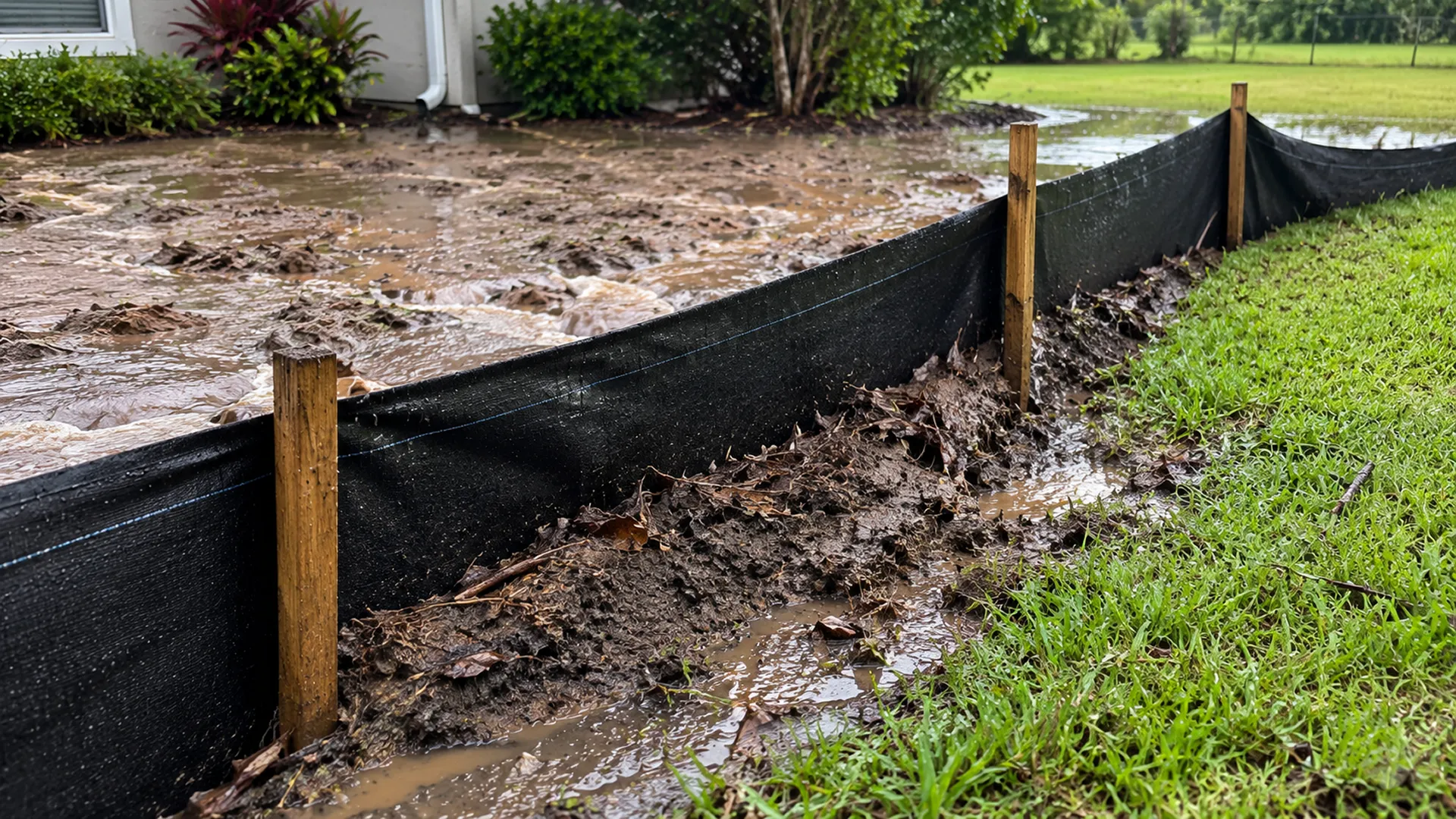
A fence that isn't inspected stops working. Sediment fence maintenance means checking the fabric after significant rain, clearing built-up sediment, repairing tears or leaning stakes and replacing fabric that has reached capacity. Many erosion control guidelines recommend cleaning out deposits well before they reach about half the fence height, and the FDEP permit itself includes site inspection and corrective action requirements.
Silt fencing is a temporary measure. It's designed to last for the duration of construction, typically 6 to 24 months. Once the site is stabilized with vegetation or hardscape and permit requirements are satisfied, the fence and stakes should be removed and the area cleaned up. Level One Grading handles installation, sediment fence maintenance and post-construction removal, so you don't need to coordinate a second crew.
What Inspectors Commonly Look For
A quick self-check keeps sediment fence maintenance on track between formal inspections:
- Fabric is intact, with no rips, sags or blown-out sections
- The bottom edge is still trenched and buried, with no daylight under the fence
- Stakes are upright and evenly spaced
- Sediment has not built up close to the top of the fence
- Disturbed areas behind the fence are being stabilized as work finishes
Regular sediment fence maintenance after each significant storm is far cheaper than a corrective action, a stop-work notice or a neighbor's complaint.
Frequently Asked Questions
Is a sediment fence required on my project in Florida?
In most cases, yes. Florida requires stormwater permit coverage and erosion controls on sites that disturb one acre or more, and sometimes on smaller sites that are part of a larger development. Local rules can be stricter, so we can help you understand what applies to your project.
What is the difference between a silt fence and a sediment fence?
Nothing. The terms are interchangeable. Both describe a filter fabric barrier used to control erosion on construction sites.
How long does a sediment fence last?
Typically 6 to 24 months, which is the length of most construction projects. It should be inspected regularly and removed once the site is stabilized.
Can you install sediment fences on short notice?
Yes. Permit inspections and project deadlines often require a fast turnaround, and Level One Grading schedules installation as quickly as possible.
Keep Your Mulberry Job Site Compliant
Runoff doesn't wait for the paperwork. Correctly placed, trenched and maintained sediment fences in Mulberry, FL protect your neighbors, your permit and your schedule. Pair them with good grading, stabilization and regular inspections, and your site stays clean through the wettest months.
Level One Grading provides sediment fence installation across Polk County and Central Florida, with installation, upkeep and removal handled by one licensed and insured crew.
Starting a project in Mulberry? Request a free sediment fence quote from Level One Grading today.

About Miguel Orozco
Miguel Orozco is the President of Level One Grading, a trusted Central Florida grading and excavation company, delivering precise earthwork solutions and dependable results for residential and commercial projects since its founding.