
Laser Grading in St. Pete, FL: What It Is and When It Makes a Difference
Laser grading in St. Pete, FL explained: how it works, rough vs. final grade, and when precision grading fixes drainage and protects your build. Free estimate.

Miguel Orozco

In St. Petersburg, where a few inches of elevation can decide whether rain runs to the street or toward your garage, laser grading in St. Pete, FL is often the difference between a lot that drains and a lot that doesn't. Laser grading uses a laser reference plane and receivers on the machine to cut and fill land to an exact elevation and slope, instead of relying on an operator's eye.
This guide explains how laser grading works, how a rough grade differs from a final grade, the projects where laser grading matters most, and what to know about grading in Pinellas County's flat, low-lying terrain. If you're planning a slab, driveway, new build or a drainage fix, it will help you decide whether laser grading belongs in your scope.
What Is Laser Grading? How the Process Works
What is laser grading? It's the process of leveling, shaping and preparing land to a specific elevation and slope using laser-guided precision. A laser transmitter sets a fixed reference plane across the site. A receiver mounted on the grading machine reads that plane and tells the operator, or the machine controls, whether to cut or fill. The result is a surface built to the engineered numbers rather than to how it looks from the cab.
So what is laser grading good for in practice? It controls where water goes, how structures are supported and how finished surfaces perform over time. Level One Grading uses laser-guided bulldozers, motor graders and skid steers to hit the slopes and elevations called for in your plans, from rough grading on new construction to fine grading for landscaping and hardscaping.
Rough Grade vs. Final Grade: Two Passes, Two Jobs
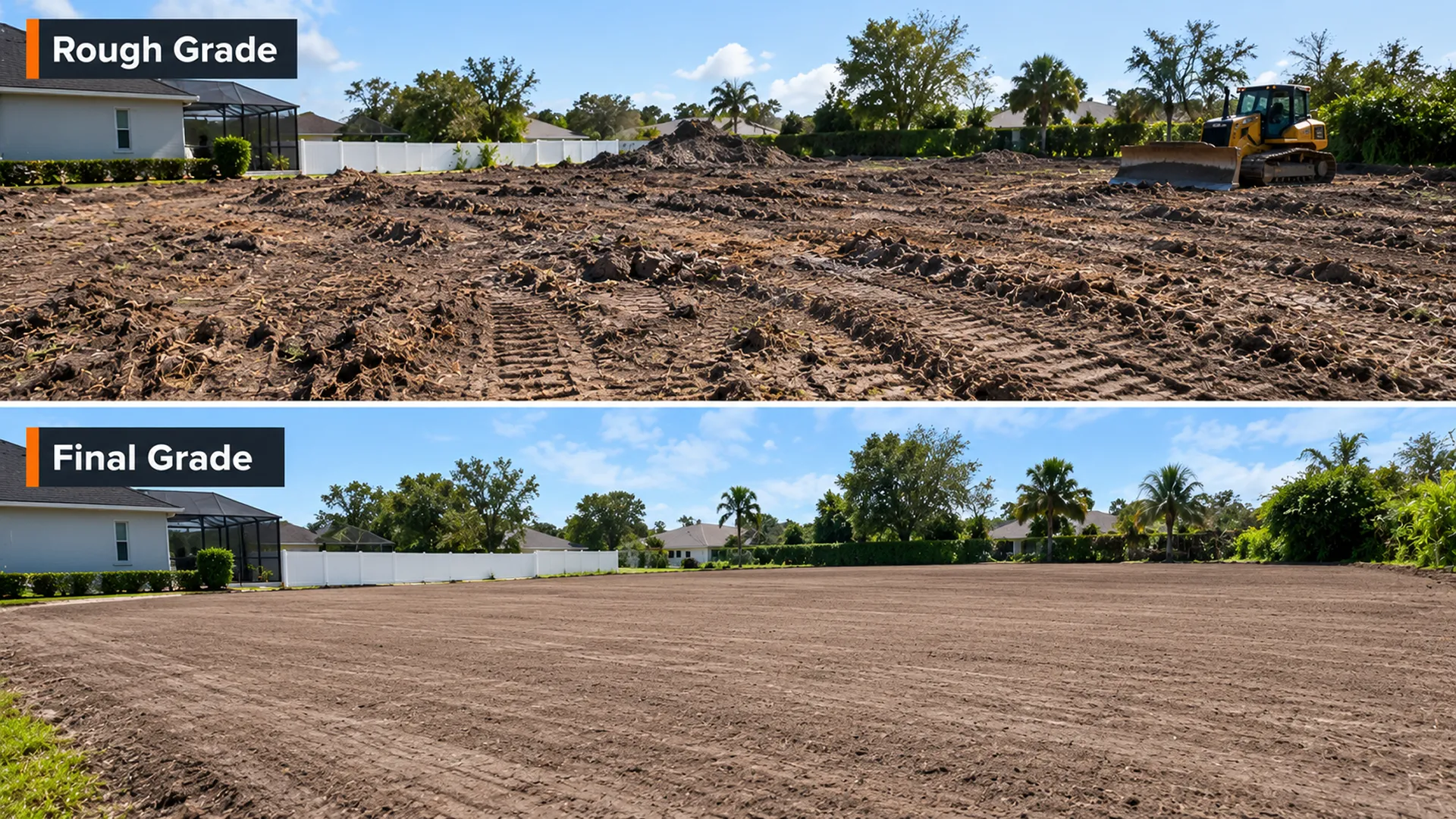
Understanding rough grade vs. final grade helps you plan the sequence of a project and avoid paying for the wrong pass at the wrong time.
- Lot scrape. Stripping grass, roots and organic material down to raw mineral soil at the very start, so unstable material isn't left under your build.
- Rough grade. The first major pass. Large volumes of earth are moved to bring the site close to final elevation and establish its overall shape and slope before utilities go in.
- Final grade. The last, precise pass, done after underground work is complete. It brings the surface to exact finished elevation, smooth and properly sloped, ready for sod, concrete or a driveway.
- Timing: rough grade happens early, before utilities; final grade happens late, after underground work.
- Goal: rough grade gets close to design elevation; final grade hits exact finished elevation.
- Precision: rough grade sets broad contours and the drainage pattern; final grade holds tight tolerances for paving, slabs and sod.
Ask any contractor how they handle rough grade vs. final grade on your site; the answer shows how carefully they plan the sequence. The rough grade vs. final grade split matters because a perfect final grade is impossible on top of a poor rough grade, and a perfect rough grade will be disturbed by trenching if the final pass isn't done last. On a typical St. Pete lot, the rough grade vs. final grade sequence looks like this: scrape, rough grade, underground utilities and footings, then a final grade timed just before the slab, pavers, driveway or sod. Skipping the second pass is one of the most common reasons new lots end up with low spots that hold water.
When Laser Grading Makes a Difference (and When It Doesn't)
Laser grading makes a difference when precision affects performance, because small elevation errors turn into standing water, cracked concrete or uneven surfaces. The short version: laser grading makes a difference on anything that has to hold a slope over distance or carry a load. The biggest cases:
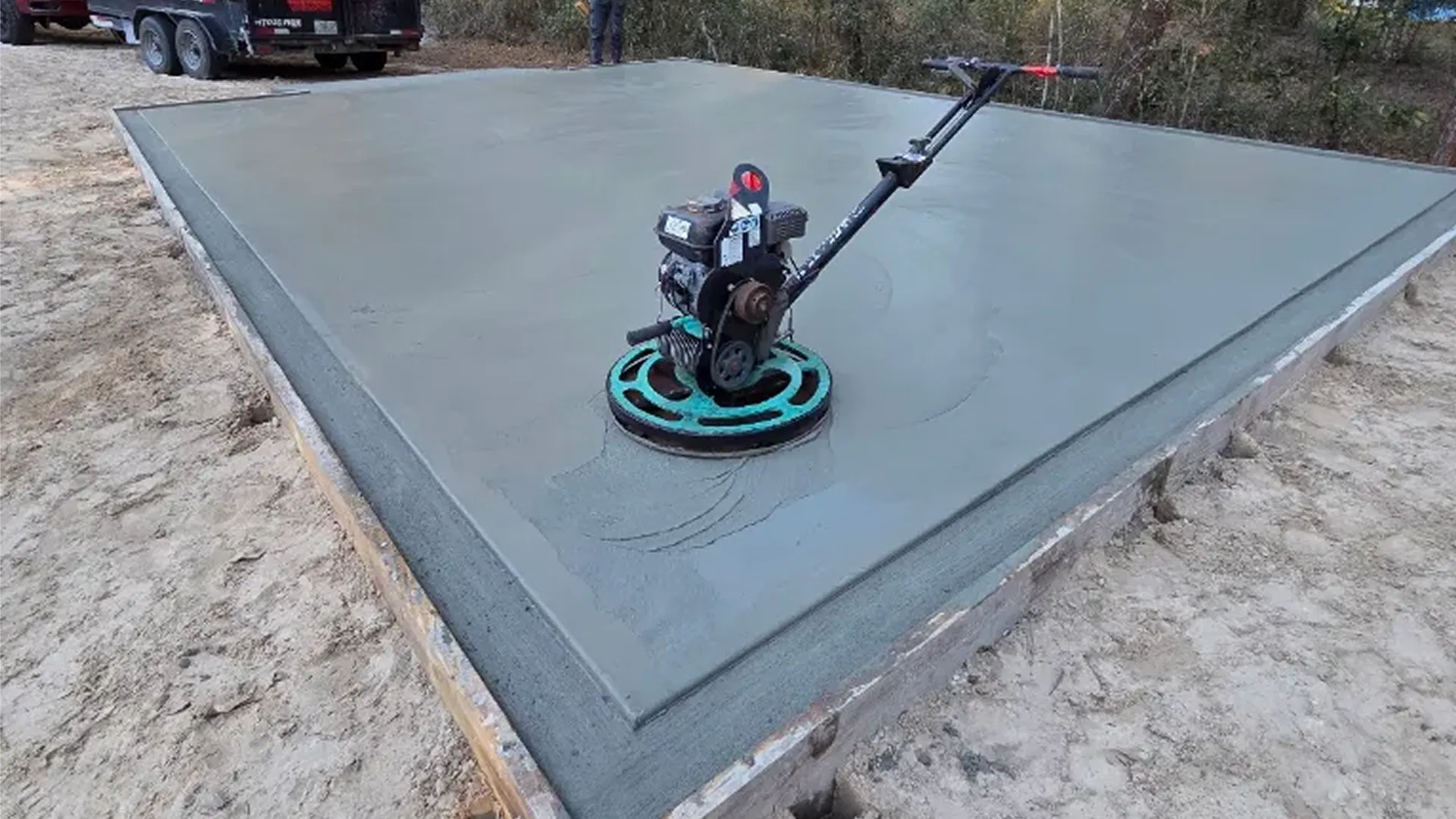
- Foundation pads. Monolithic slabs and stem wall foundations need accurate, well-compacted grade to perform.
- Drainage correction. Re-grading a yard or lot so water flows away from structures.
- Driveways. Asphalt, concrete, gravel and granite all need a compacted base with the right slope to shed water.
- Large or flat sites. Small errors add up over distance, and laser control keeps them in check.
- Final grade before sod or hardscape. A smooth, sloped surface prevents birdbaths and ponding.
Building codes care about this too. The Florida Building Code requires lots to be graded so the surface falls away from the foundation, with at least 6 inches of fall in the first 10 feet, and impervious surfaces near the foundation sloped at least 2 percent away from the building (see this Florida Building Code foundations summary from the Florida Home Builders Association). Laser grading makes those numbers straightforward to hit and verify, and that verification is where laser grading makes a difference at permit inspections and final surveys.
Laser grading makes a difference less often on minor cosmetic work, like leveling a small planting bed or touching up topsoil. In those cases, hand tools or a basic skid steer pass may be enough. An honest site evaluation should tell you which category your project falls into.
Grading in Pinellas County: What St. Pete Properties Face
Grading in Pinellas County comes with its own challenges. St. Petersburg sits on a low, flat peninsula with a high water table, so water has very little natural slope to work with. Many lots are small and tightly built, which leaves little room for swales, and older properties have often settled or been re-filled over the decades. After the recent hurricane seasons, drainage and flood exposure are top of mind for many Pinellas homeowners.
Careful grading in Pinellas County matters because there is so little natural slope to work with, and it starts with a survey of existing elevations, then a plan that moves water away from structures toward an approved outlet. Changes that alter drainage patterns or add fill, especially in a mapped flood zone, can require permit review, so confirm requirements with the City of St. Petersburg or your county building department before starting.
Grading in Pinellas County is often only part of the answer. On flat lots, it works best alongside drains and outlets, which we compare in advanced drainage systems vs. French drains and in our guide to drainage solutions in Tampa, FL. If you need fill to raise a low area, start with our tips on ordering fill dirt.
Frequently Asked Questions
What is laser grading?
Laser grading is the process of leveling and shaping land to a precise elevation and slope using laser-guided equipment. It's used to control drainage and prepare a stable surface for foundations, driveways, landscaping and paving.
What is the difference between rough and fine laser grading?
Rough laser grading establishes the basic contours and drainage pattern of a site. Fine, or final, laser grading creates the precise finished surface for construction or landscaping.
Can laser grading fix an existing drainage problem?
Often, yes. Laser re-grading, swale creation and slope adjustment can redirect water away from structures. Severe or multi-point problems may also need drains, which is why a site evaluation comes first.
Do you provide laser grading for driveways?
Yes. Accurate grading gives a driveway proper drainage and a stable base for asphalt, concrete, gravel or other materials.
Get the Grade Right the First Time
Whether you're pouring a slab, paving a driveway or trying to stop water from pooling, laser grading in St. Pete, FL gives you a surface built to specification instead of approximation. It's most valuable where precision affects drainage and structural performance, and it's worth skipping for simple cosmetic work.
Level One Grading provides laser grading across Pinellas, Hillsborough, Polk and Pasco counties, and we can coordinate related site preparation from lot scrape to final grade.
Not sure whether your project needs it? Request a free laser grading evaluation in St. Pete from Level One Grading today.

About Miguel Orozco
Miguel Orozco is the President of Level One Grading, a trusted Central Florida grading and excavation company, delivering precise earthwork solutions and dependable results for residential and commercial projects since its founding.