
How to Grade Your Backyard for a Pool in Florida
Learn how to grade your backyard for a pool in Florida, from equipment to drainage. Avoid costly mistakes, call (813) 842-4840 before excavation.

Miguel Orozco

Before a pool contractor ever breaks ground, the yard itself has to be ready, and that starts with knowing how to grade your backyard for a pool the right way. In Central Florida, where sandy soil, a high water table, and heavy summer rain all come into play, grading mistakes made before excavation can turn into drainage problems, deck cracking, or equipment pad settling long after the pool is finished.
This guide covers exactly how to grade your backyard for a pool, what equipment the work requires, how modern grading technology improves accuracy, and how to plan drainage so water moves away from your new pool instead of toward it.
Why Proper Grading Matters Before Pool Excavation
Residential excavation for pools, utilities, and additions in Florida always starts with the same question: does the existing grade support what's about to be built, or does it need to change first? Learning how to grade your backyard for a pool means understanding that the pool itself is only part of the picture, the surrounding deck, equipment pad, and drainage all depend on the yard's overall slope.
Residential excavation for pools in Florida typically requires the final grade to slope away from the house, away from the pool equipment pad, and toward an approved drainage point, usually a swale, storm drain, or retention area. Skipping this step during residential excavation for pools and utilities often leads to water pooling against the pool deck or, worse, migrating back toward the home's foundation.
Before any residential excavation for pools begins, a contractor should confirm the basics of how to grade your backyard for a pool on your specific lot:
- The existing high and low points across the yard
- Where the pool equipment pad will sit relative to drainage flow
- How the new pool deck elevation will interact with the home's existing grade
The Equipment Used to Grade a Pool Site
Knowing how to grade your backyard for a pool also means understanding the excavation grading equipment Florida contractors actually use on residential lots. Pool sites are tighter and more precise than open land clearing projects, which changes what equipment makes sense for the job.
Typical excavation grading equipment Florida crews bring to a residential pool site includes:
- Mini excavators for precise digging in tight backyard access
- Skid steers with grading attachments for finish grading around the pool shell
- Compaction equipment to properly settle backfill around the pool structure
- Laser levels or GPS-guided grading tools to confirm exact elevations
The right excavation grading equipment Florida crews select depends heavily on yard access, and it's a key part of how to grade your backyard for a pool without damaging existing landscaping or fencing. A gated backyard with a six-foot side entry limits what can physically reach the site, which is why an experienced contractor walks the access route before ever committing to a piece of equipment.
GPS Laser Grading vs. Traditional Grading for Pool Pads
One of the biggest upgrades in modern pool site work is GPS laser grading versus traditional grading, and it matters more for pools than almost any other residential project because tolerances are so tight. A pool deck and equipment pad need to be accurate within a fraction of an inch, and GPS laser grading versus traditional grading methods produce very different results at that level of precision.
Traditional grading relies on an operator's eye, a string line, and manual checks with a level, which works but leaves room for small errors that add up. GPS laser grading versus traditional grading comparisons consistently show that laser-guided equipment holds elevation to within a quarter inch or less across the entire site, critical for a pool deck that has to drain correctly in every direction.
Advantages of GPS laser grading over traditional grading for pool projects include:
- Elevation accuracy that prevents low spots around the pool deck
- Faster grading passes, reducing time equipment sits on a residential lot
- Documented elevation data that can be shared with the pool contractor and inspector
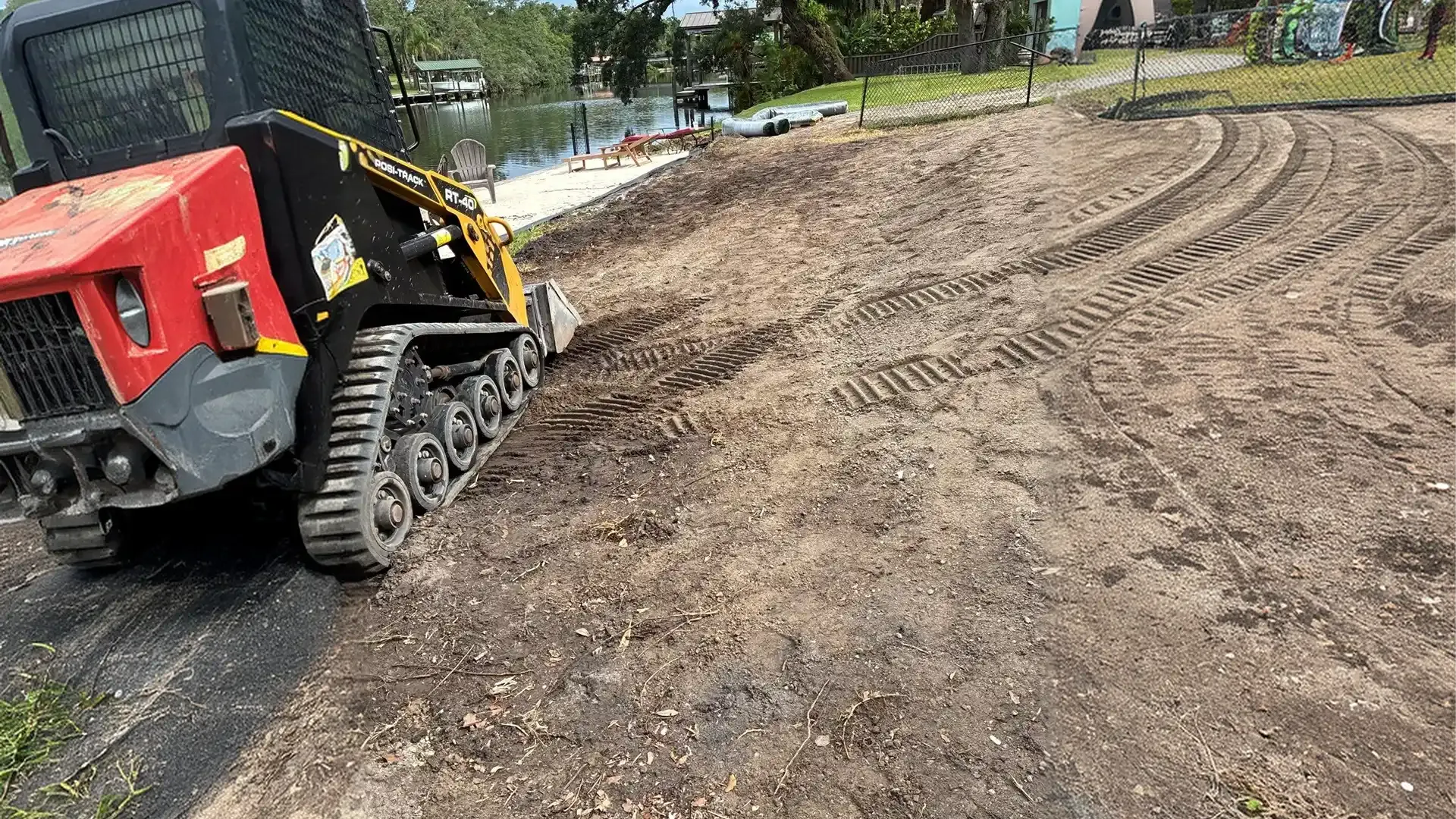
For most Central Florida pool projects, the accuracy gained from GPS laser grading versus traditional grading methods pays for itself in avoided callbacks, and it's one of the clearest examples of why how to grade your backyard for a pool has changed as technology has improved.
Drainage Planning Around Your New Pool
No plan for how to grade your backyard for a pool is complete without addressing why French drains are important for Florida properties, especially ones with a pool. This final piece of learning how to grade your backyard for a pool ties the earthwork back to long-term drainage performance. Pool decks are large impervious surfaces, which means rain that used to soak into open lawn now runs off in concentrated volume, often right toward the house or a neighboring lot.
Why French drains matter for Florida properties with a pool comes down to managing that concentrated runoff before it becomes a problem. A French drain installed along the low side of a pool deck intercepts water before it reaches the foundation or spills onto a neighbor's property, working alongside the grade rather than replacing it.
Reasons French drains are important for Florida properties near a pool include:
- Large paved pool decks increase runoff volume compared to open lawn
- Pool equipment pads need to stay dry to avoid electrical and mechanical issues
- Local code often requires positive drainage away from any new impervious surface
Frequently Asked Questions
Do I need a permit to grade my yard for a pool?
In most Florida counties, yes. Pool installation typically requires a grading and drainage permit in addition to the pool permit itself, since the county reviews how the new impervious surface affects site drainage.
How long does it take to grade a backyard for a pool?
A straightforward residential lot with good access can be graded in one to two days. Sites with poor drainage, fill requirements, or tight equipment access can take longer.
Can I grade the yard myself before the pool contractor arrives?
Minor landscaping adjustments may be fine, but if you're wondering how to grade your backyard for a pool at professional tolerances, the precision required for a pool deck and equipment pad typically requires professional grading equipment and laser-level accuracy to avoid costly rework.
What happens if the yard isn't graded correctly before pool installation?
Water can pool against the pool deck or migrate toward the home's foundation, and settling around the pool shell or equipment pad can cause cracking within the first year or two.
Conclusion
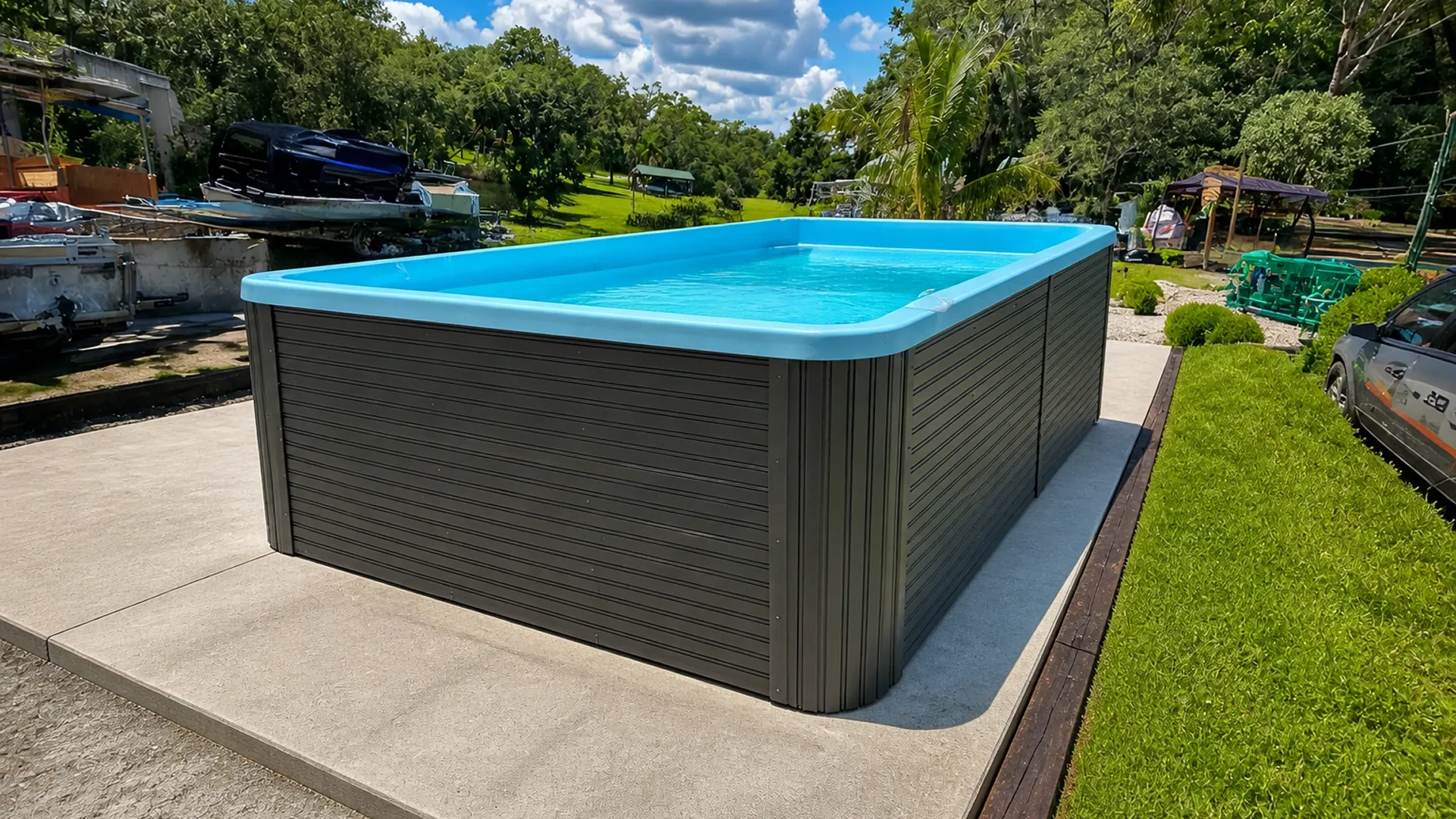
Knowing how to grade your backyard for a pool before excavation starts protects the pool, the deck, and everything around it for years to come. From choosing the right excavation grading equipment to weighing GPS laser grading versus traditional grading and planning drainage with the right French drain placement, getting the grade right the first time avoids expensive fixes later.
Ready to learn how to grade your backyard for a pool the right way? Contact Level One Grading for a site assessment before you break ground.

About Miguel Orozco
Miguel Orozco is the President of Level One Grading, a trusted Central Florida grading and excavation company, delivering precise earthwork solutions and dependable results for residential and commercial projects since its founding.