
Grading Problems in Florida: 7 Signs in Seffner
Flooded yards, cracked concrete slabs, sinking soil: Check out the 7 signs of grading problems in Florida that appear in Seffner every time it rains.

Miguel Orozco

Your yard floods every time it rains. The driveway has a hairline crack that keeps getting wider. Water pools in the same corner of the lawn no matter how many times you mow around it. None of that is bad luck, it's almost always one of several grading problems Florida properties in Seffner develop quietly, year after year, until the fix costs five figures instead of five hundred dollars.
Seffner makes these grading problems worse than most Florida towns, and not by accident. The local soil series is actually named after the community itself, and government soil surveys describe it as somewhat poorly drained, formed in sandy marine sediments, on slopes of less than 2 percent. That combination of flat ground and slow draining sand is exactly the recipe for grading problems Florida homeowners in this part of Hillsborough County run into year after year, often without realizing the soil under their own lawn is part of the reason.
Most people only hear about these grading problems after a storm has already done the damage. By then, what could have been a simple regrading job has turned into a foundation repair or a drainage overhaul, and the homeowner is left wondering how a few soggy weekends turned a minor grading problem into a five figure bill. These Florida grading problems rarely arrive all at once, which is exactly why they're easy to miss until the cost has already climbed.
Florida grading problems tend to follow a pattern once you know what to look for, and Seffner is no exception. Below are the seven signs worth walking your property to check for, grouped by what's actually happening underground, plus where these grading problems commonly start. Most grading problems fall into one of three groups, and recognizing which group applies to your yard makes the next step a lot clearer.
Uneven Land Around the House or Job Site
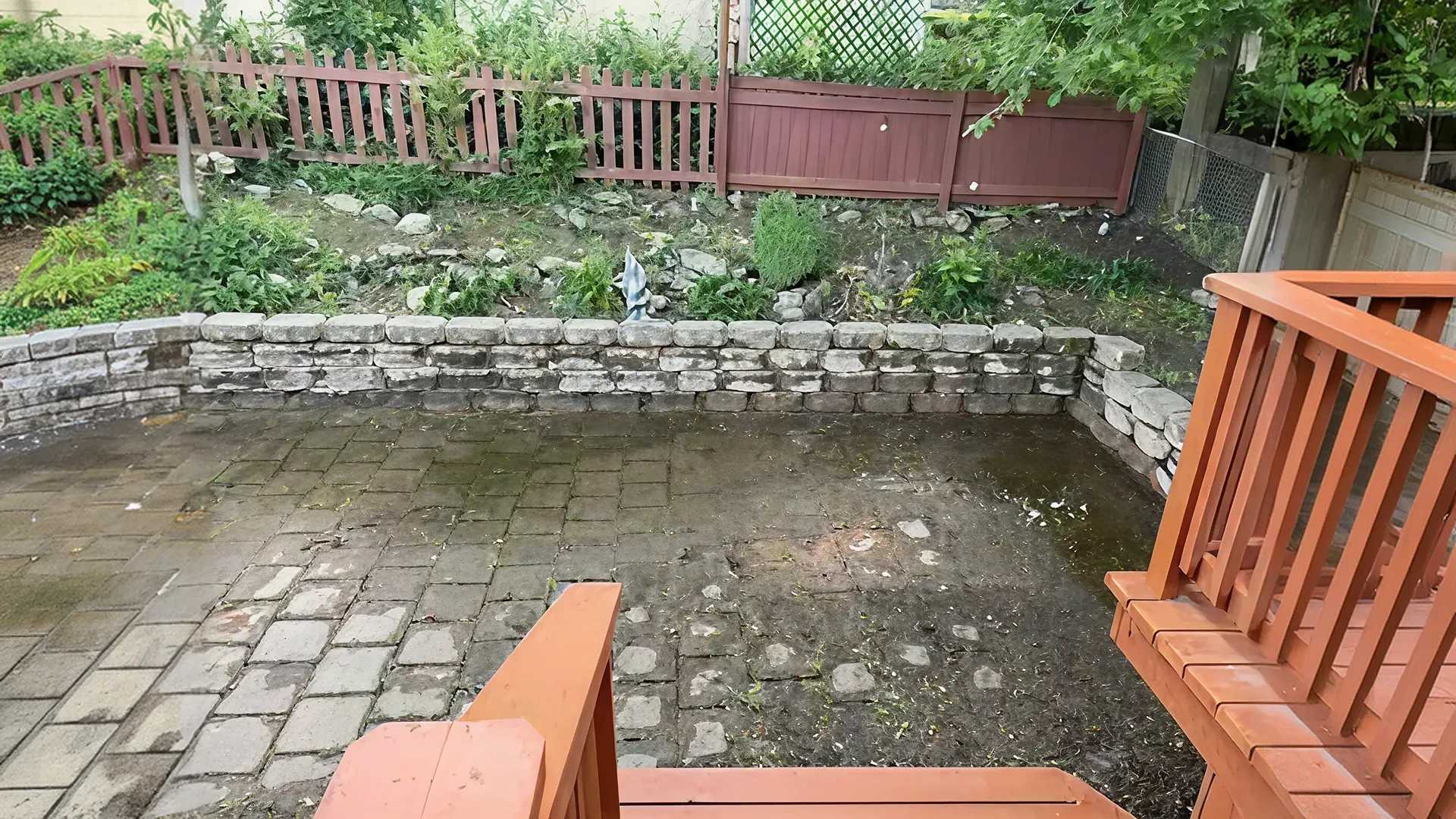
Uneven land is usually the first clue something is off, often well before water or cracks make it obvious, and it's one of the easiest grading problems to catch early if you know where to look. Walk the perimeter of the house or job site and look for a slope that wasn't part of the original grading, soil that has settled near the foundation, or grass sitting noticeably lower in one section than the rest of the yard. In a town like Seffner, where the native soil is already prone to settling once it's disturbed, uneven land tends to show up faster than homeowners expect.
- A slope that wasn't there before. If part of the property has visibly sunk or shifted compared to the surrounding grade, that's uneven land caused by soil settling, common around utility trenches, septic fields, or areas that were filled in during construction.
- Doors and windows that stick. When uneven land shifts the soil beneath a foundation, the structure can move just enough to throw door frames and window frames out of square. If a door that used to close easily now needs a shove, the ground underneath it has likely moved.
- Cracks in driveways, patios, or slabs. A crack that keeps widening, especially a diagonal one, often points to uneven land settling unevenly beneath the concrete, rather than normal curing cracks that show up in the first year. This is one of the more visible signs of uneven land that Seffner homeowners notice, simply because it's the one that's hardest to ignore, and one of the grading problems that gets expensive fast once concrete is involved.
If a contractor is already involved in the project, our guide to site preparation in Florida explains what proper grading should look like before a single slab gets poured, since this kind of settling left unaddressed at this stage tends to resurface later as a far costlier repair.
Yard Drainage Issues That Won't Go Away on Their Own
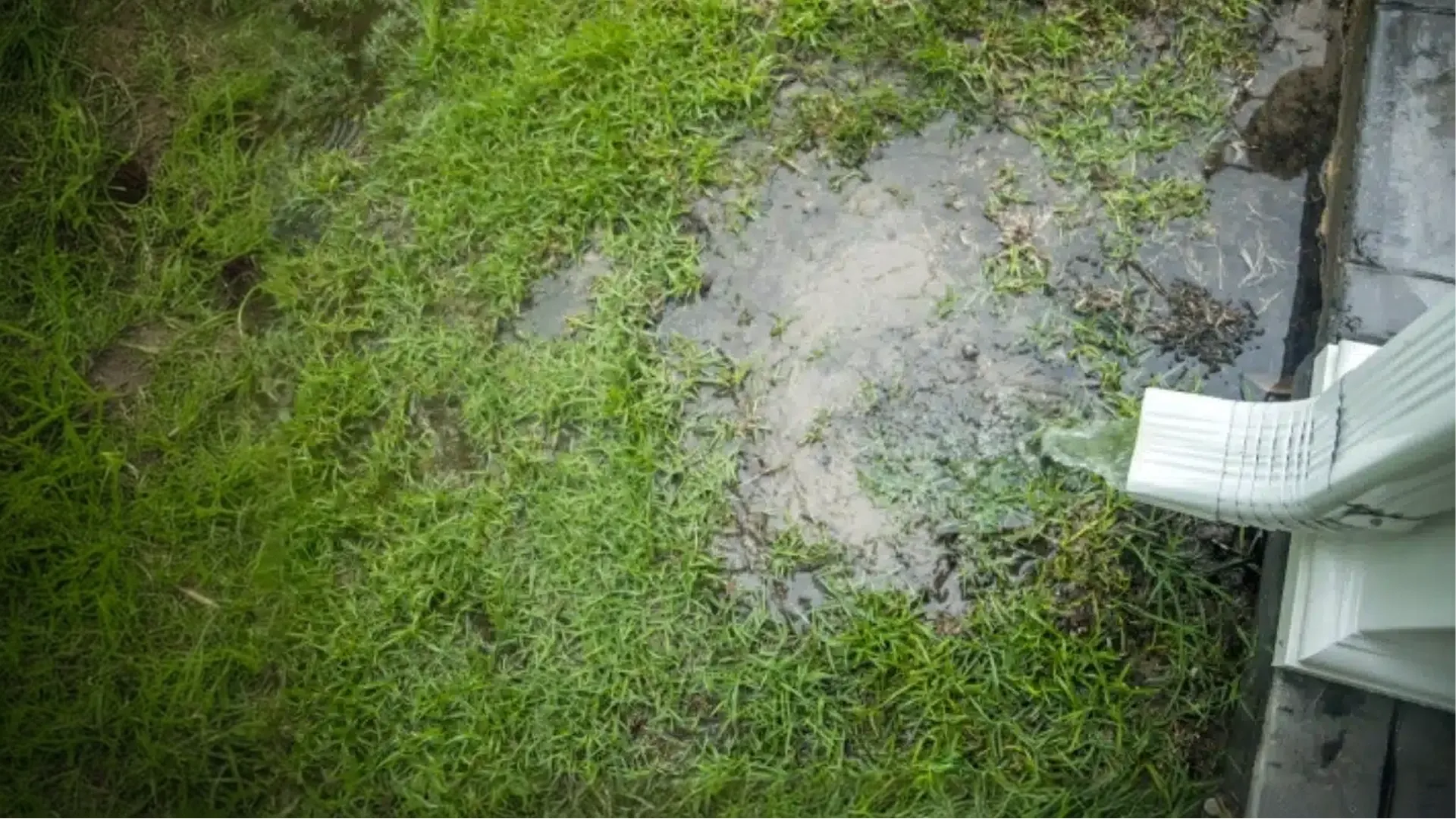
Yard drainage issues are the most common reason Seffner homeowners call a grading company in the first place, and they almost always start small. A puddle that used to disappear in an hour starts taking a full day. A patch of lawn that used to dry out by Tuesday is still soggy on Thursday, and that pattern alone is usually enough to confirm yard drainage issues are developing into a bigger grading problem.
- Standing water more than 24 hours after rain. Healthy, properly graded soil should drain within a few hours. If water is still visibly standing the next day, that's one of the clearest yard drainage issues a property can show, not just "Florida being Florida."
- Water pooling against the foundation or walls. This is the version of yard drainage issues that turns expensive fastest, and one of the grading problems Florida insurance adjusters see most often in storm damage claims across this part of Hillsborough County. Water sitting against a foundation for hours at a time can work its way into crawl spaces, slabs, and even interior walls over a single rainy season, and Seffner's somewhat poorly drained soil gives that water fewer places to go on its own, which only makes these grading problems worse over time.
For a deeper look at how this connects to flooding specifically, see our breakdown of yard flooding in Florida and what stops it for good, since most of these issues and flooding risk come from the exact same root grading problem.
Soil Erosion Florida Properties in Seffner Deal With After Every Heavy Rain
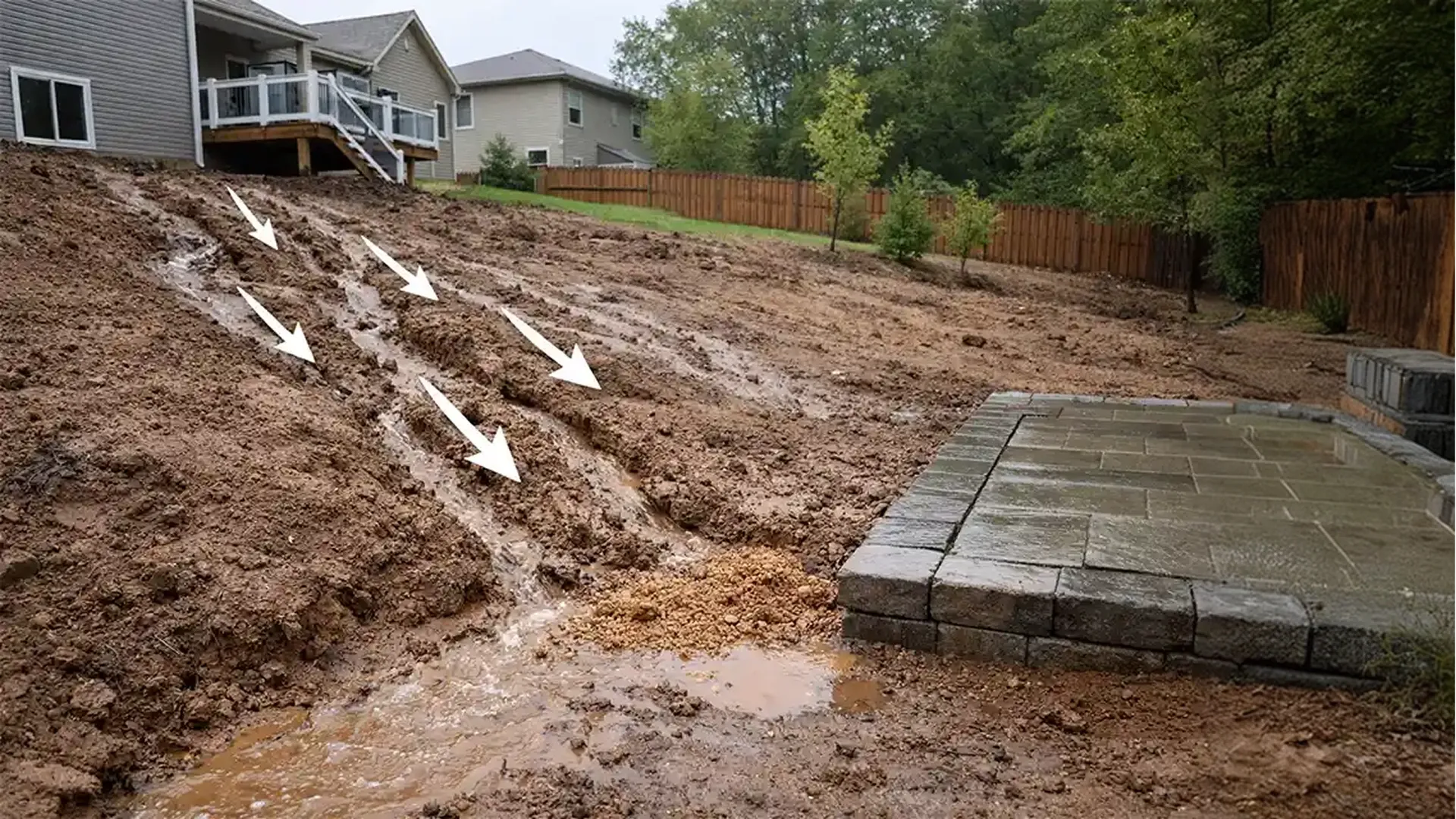
Soil erosion Florida properties experience shows up differently in Seffner than it does in other parts of the state, because the local soil is mostly sandy, fast draining, and loosely packed compared to clay heavy ground up north. That same sandy soil that drains quickly when it's healthy can wash away just as quickly once the grading is off, which is exactly why soil erosion Florida contractors track tends to concentrate in flat, sandy towns like this one, and why it's treated as one of the more urgent grading problems on a property checklist.
- Exposed roots, mulch, or sediment trails. If mulch beds keep "disappearing" after storms or you notice small channels of sediment running across a slope, that's soil erosion Florida lawns are especially prone to, actively removing topsoil from your Seffner property.
- Small gullies or sinking patches after storms. Anything that looks like a miniature ravine cutting across the yard, or a patch of ground that sinks slightly after a hard rain, shows poor grading working against the property at the same time as the original problem.
Frequently Asked Questions
How do I know if my yard has a grading problem?
Walk the property after a hard rain and note anywhere water sits for more than a few hours, any slope that looks different than it used to, and any new cracks in concrete or stucco. Any one of these signs on its own can be minor, but it's still worth tracking since small grading problems rarely stay small. Two or three together usually mean the underlying grade has shifted and it's worth having someone take a look before the next storm season, especially in a Florida town where grading problems like Seffner's are already common because of how the local soil drains.
Can grading problems cause foundation damage?
Yes. When soil under or around a foundation isn't graded to shed water properly, repeated saturation and drying cycles cause the soil to expand and contract, which can crack slabs, shift footers, and eventually cause doors and windows to stop closing correctly. Foundation repairs are almost always more expensive than the grading work that would have prevented them, which is the main reason these grading problems are worth fixing as soon as Florida homeowners notice them.
How much does it cost to fix grading problems in Seffner?
It depends heavily on the size of the area, the soil type, and whether drainage work is needed alongside grading. Basic regrading on a residential lot is typically far less expensive than waiting until water has already damaged a foundation, driveway, or septic system, which is why most contractors recommend an evaluation at the first sign of a grading problem rather than after a storm has already caused damage. Florida grading problems caught early are almost always cheaper to fix than the ones left to develop over a full rainy season.
Is regrading something I can do myself?
Cosmetic touch ups, like adding topsoil to a shallow dip, are sometimes a reasonable DIY project for a minor grading problem. But anything involving slope toward a foundation, drainage near a septic system, or more than a small section of yard should go through a professional with grading equipment and knowledge of local Florida drainage codes, since bigger grading problems are rarely a one weekend fix. Get it wrong and water can be redirected onto a neighbor's property, which creates a legal problem on top of the original grading problem.
The Bottom Line
Grading problems Florida properties in Seffner develop rarely show up as one dramatic event. They show up as a slightly different puddle, a door that sticks a little more each month, a crack that's a little longer than last season. Catch any of the seven signs above early, and the fix for most grading problems is usually a straightforward regrading job. Wait, and the same grading problem can turn into foundation repair, septic system damage, or a full driveway replacement, and Seffner's flat, sandy ground means that timeline often moves faster than homeowners expect. Florida's rainy season has a way of turning small grading problems into urgent ones almost overnight.
Schedule a site evaluation before any of these grading problems get worse. Level One Grading's team can walk your Seffner property, identify exactly which Florida grading problems the local weather is creating on your land, and give you a clear plan before the next heavy rain turns a minor grading problem into a major one. Call Level One Grading at 813-842-4840 to set up your evaluation.

About Miguel Orozco
Miguel Orozco is the President of Level One Grading, a trusted Central Florida grading and excavation company, delivering precise earthwork solutions and dependable results for residential and commercial projects since its founding.