
Central Florida Site Preparation: Complete Build Guide
A comprehensive checklist for site preparation in construction projects in Central Florida.

Miguel Orozco

Site preparation is everything that happens to a piece of land before a single foundation block is poured. In Central Florida — where high water tables, sandy soils, and intense summer storms define every project — site prep is the invisible foundation that determines whether your structure stands strong for decades or develops costly drainage and settling problems within the first few years.
Whether you're breaking ground on a custom home in Orange County, developing a commercial parcel in Polk County, or adding a driveway in Osceola or Lake County, no structure is safe without proper site preparation. Skip a step, and you're looking at drainage problems, foundation settling, or expensive rework months after construction ends.
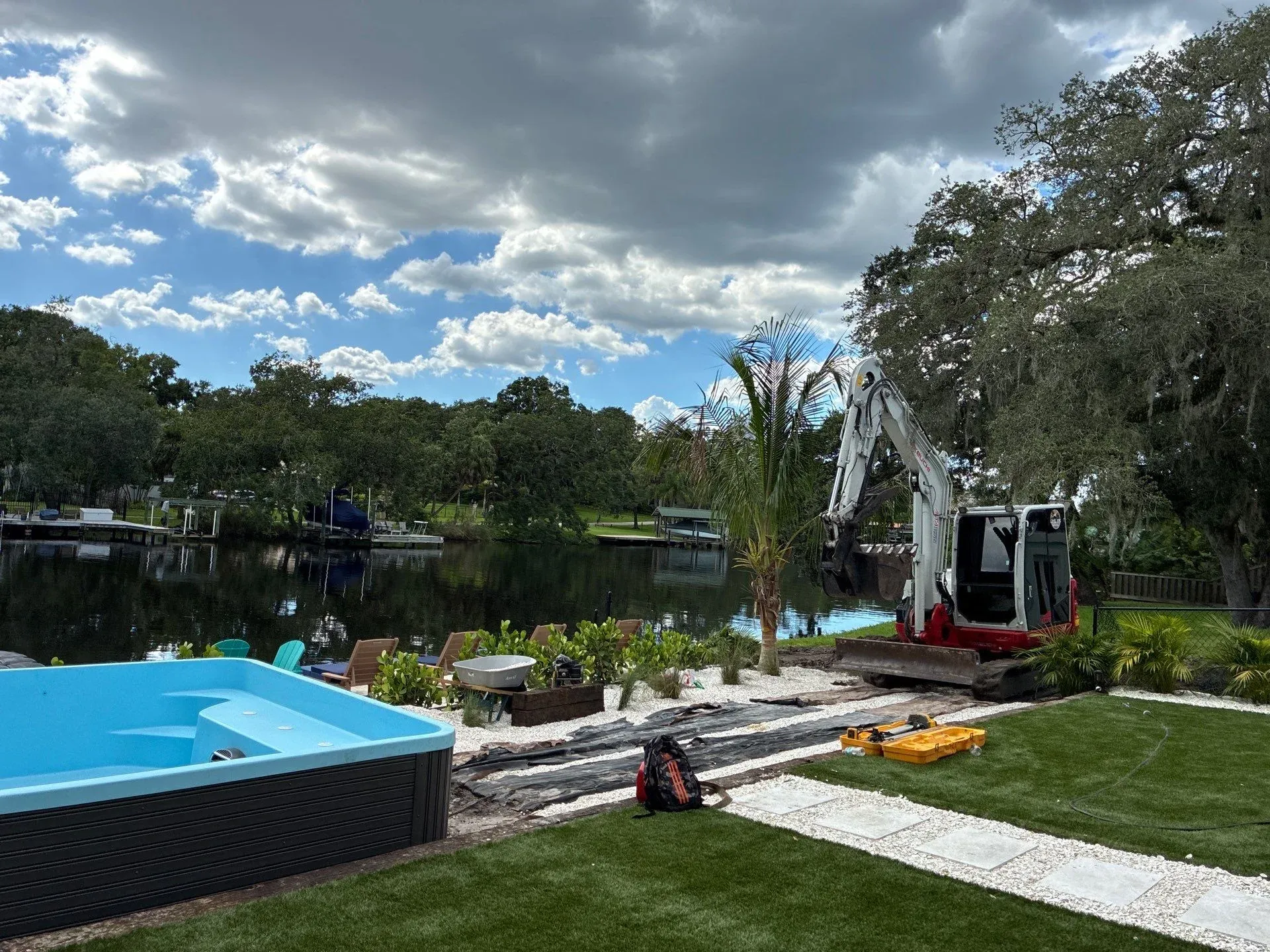
Why Central Florida Site Prep Is More Demanding Than Most Markets
Florida averages 54 inches of rainfall per year in the greater Orlando and Tampa Bay regions — one of the highest in the continental U.S. The water table in much of Central Florida sits just 2–3 feet below the surface, and the region's soil mix of expansive clay, sandy fill, and loose silty deposits behaves unpredictably under load without proper grading and compaction.
According to the American Society of Civil Engineers, poor site drainage accounts for billions in structural damage annually across the U.S. — and Florida consistently ranks among the most affected states. Proper site preparation solves this before it becomes a problem.
The Complete Central Florida Site Preparation Checklist
Step 1 — Topographic Survey and Soil Analysis
Before any equipment touches the ground, a Florida-licensed surveyor defines property boundaries and prepares a topographic map. A soil engineer then collects core samples to determine bearing capacity, clay content, and compaction behavior — critical in counties like Orange, Hillsborough, Polk, Lake, Seminole, and Osceola, where expansive clay and sandy fill are common. Soil reports typically take 1–2 weeks.
✅ Confirm: boundaries staked · topographic survey complete · soil bearing report issued · flood zone verified via FEMA · wetlands investigated
Step 2 — Permits and Approvals
Most grading, clearing, and excavation in Central Florida requires county permits before work begins. Requirements vary by county. Your grading contractor should be familiar with local permitting and can often pull permits on your behalf. Skipping this step risks stop-work orders, fines, and mandatory removal of completed work.
✅ Confirm: land alteration permit obtained · environmental clearances verified · Sunshine 811 locate completed · HOA or municipal approval secured · SJRWMD authorization if applicable
Step 3 — Site Clearing
With permits in hand, site clearing begins: removing trees, shrubs, stumps, roots, and debris from the construction area. A wooded lot in Plant City or Lakeland can take several days; a pre-cleared commercial lot near Orlando may take a few hours.
Stump grinding or full root removal is especially critical in Central Florida — Florida's warm, humid soil decomposes buried stumps faster than in colder climates, creating voids that cause foundation settlement sooner than property owners expect.
✅ Confirm: all vegetation removed within building footprint · stumps ground or excavated · debris hauled off-site · protected species and wetland buffers intact
Step 4 — Excavation
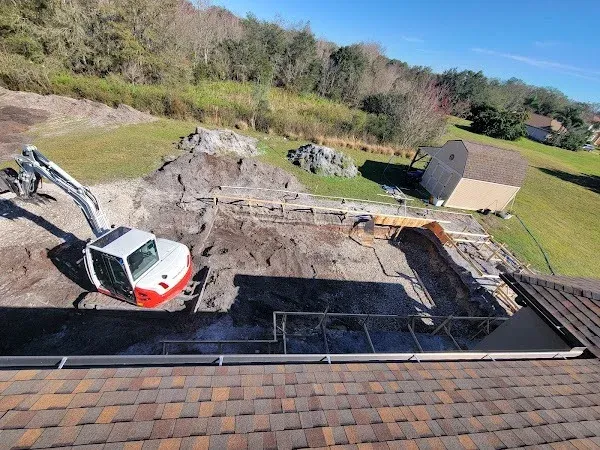
Excavation removes soil to create the correct depth for foundations, footings, utility trenches, and retention areas. A residential slab in Central Florida typically requires 12–24 inches of excavation; commercial footings can reach 10 feet or more.
Central Florida excavation contractors must also be prepared for:
- High groundwater intrusion in low-lying areas of Osceola and Lake Counties
- Loose sandy soils requiring dewatering
- Unexpected organic material in previously developed parcels
✅ Confirm: excavation depth matches engineered plans · unsuitable soil removed and replaced · dewatering plan in place if groundwater is present · spoils redistributed or hauled per plan
Step 5 — Grading and Laser Grading
Grading shapes the land to the precise elevations required by the construction plans. In Central Florida's characteristically flat terrain, where a site may have only 6–12 inches of total elevation change, even minor grading errors translate directly into standing water, flooded slabs, and chronic drainage failures.
Laser grading uses GPS-guided technology to achieve accuracy within 1/8 of an inch — the industry standard for residential pads, driveways, and commercial lots across the region. The International Residential Code (IRC) requires a minimum slope of 6 inches over the first 10 feet from any structure. On Central Florida's flat terrain, achieving this without laser-guided precision is extremely difficult.
✅ Confirm: final grade matches elevation plan · positive drainage slope away from all structures · driveway grade within 1–5% · laser grading used for critical elevation areas · no low spots or depressions in foundation area
Step 6 — Drainage and Erosion Control
From June through September, afternoon storms in Orange, Polk, Hillsborough, and Osceola counties can bring 2–4 inches of rain in a single hour. Drainage infrastructure — swales, culverts, retention ponds, and French drains — must be installed during site prep so the land manages water properly from day one.
Erosion control measures (silt fences, hay bales, turbidity barriers) are required by most Central Florida counties during active construction. Violations carry fines of up to $10,000 per day in Hillsborough County, and the FDEP actively monitors sites near waterways.
✅ Confirm: drainage structures installed per engineering plans · silt fencing installed at perimeter · culverts installed at road crossings · retention area seeded if required · FDEP and SJRWMD requirements met
Step 7 — Utility Trenching
Underground utilities — water, sewer, electric, gas, and telecom — are installed before the slab is poured. Florida law requires calling Sunshine 811 at least 2 business days before any excavation. In Central Florida's rapidly developing suburban corridors, existing underground networks are complex and require careful coordination.
✅ Confirm: 811 locate completed · trenches excavated per utility specs · bedding material placed under pipes · lines inspected and approved before backfilling
Step 8 — Compaction and Final Inspection
The final step before construction is soil compaction, typically to 95% of Modified Proctor Density, confirmed by a geotechnical engineer through a nuclear density or sand cone test. In Central Florida, where sandy soils and former wetland fills are common, this report is non-negotiable — most county building departments will not issue a foundation permit without it.
✅ Confirm: compaction testing complete with written report · 95% minimum compaction at all fill areas · final grade surveyed and documented · pre-construction inspection passed
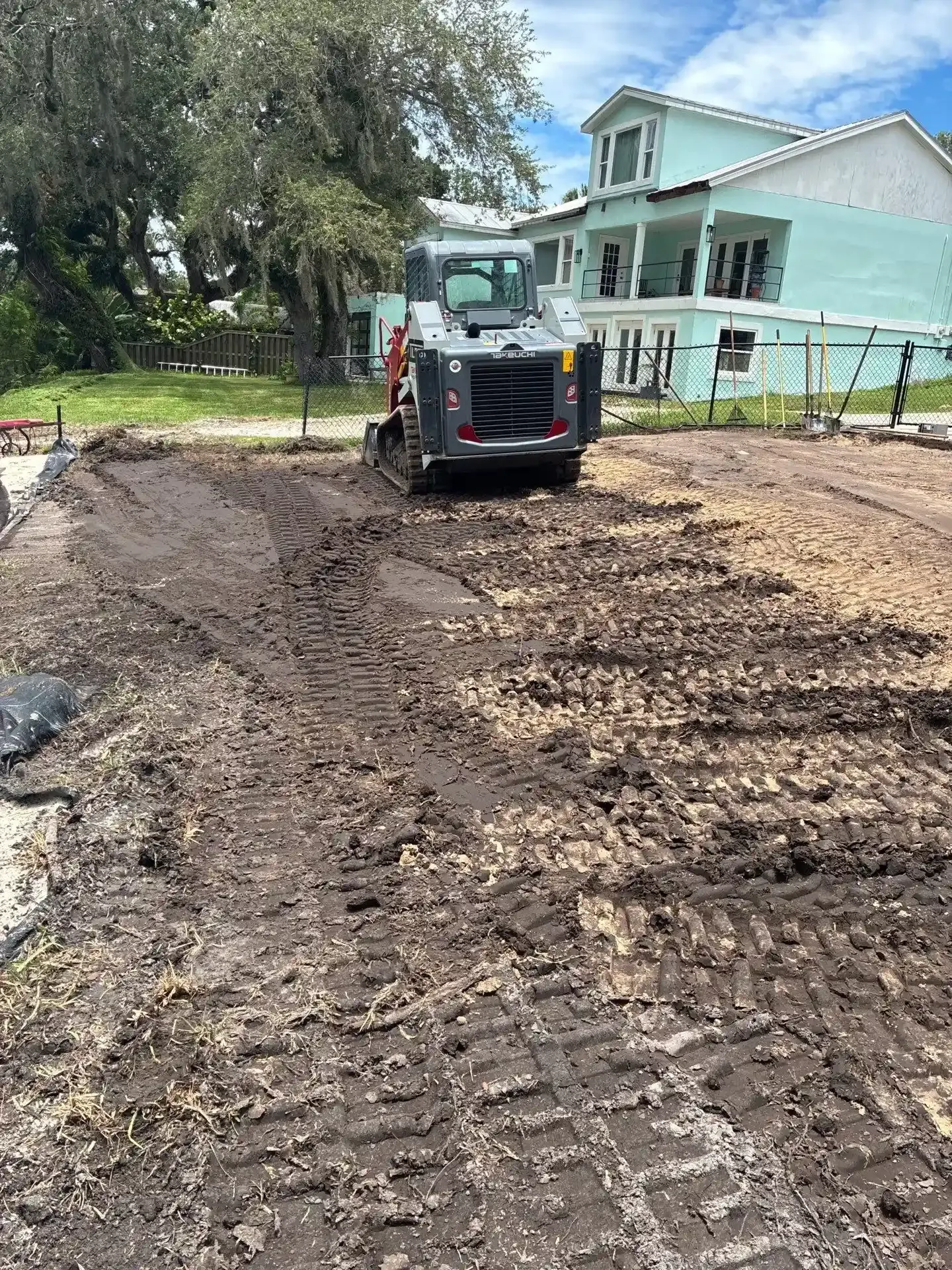
How Long Does Site Preparation Take in Central Florida?
| Project Type | Base Timeline | Possible Extension |
|---|---|---|
| Residential lot under 1 acre | 2–4 weeks | +1–2 weeks (county permits) |
| Custom home on 1–5 acres | 3–6 weeks | +additional time if soil testing needed |
| Commercial projects | 6–12 weeks | +4–6 weeks (SJRWMD review) |
| Driveway grading | 1–3 days | May require permits depending on location |
⚠️ Rainy Season Advisory: Scheduling site prep between October and May is strongly recommended. Summer starts require additional erosion control and may face equipment access limitations during heavy rain.
Frequently Asked Questions
What does a grading contractor do during site preparation?A Central Florida grading contractor handles all earthwork phases: clearing, excavation, laser grading, drainage installation, and compaction. They work from engineered plans and should be familiar with county-specific inspection processes and SJRWMD permitting requirements.
Do I need a grading contractor for a driveway project?Yes. Driveway grading contractors ensure proper slope (1–5%), correct base compaction, and stormwater management. In Central Florida's flat terrain, even small grading errors cause standing water and cracking that worsen quickly during the rainy season.
What happens if site prep is skipped or done incorrectly?Foundation settling, chronic flooding, cracked slabs, and structural damage — often costing tens of thousands to repair. Florida's climate accelerates these problems: failures that take 5–7 years to appear in drier climates can surface within 1–2 rainy seasons here.
Ready to Start Your Central Florida Project?
Site preparation is the most important investment you'll make in any construction project — and it requires an experienced team that knows the region's soil, water table, permitting landscape, and seasonal weather patterns.
Level One Grading is Central Florida's trusted earthwork and site preparation specialist, serving Plant City, Hillsborough County, Orange County, Polk County, Osceola County, Lake County, Seminole County, and surrounding communities.
📞Call us today or schedule your free estimate at levelonegrading.com

About Miguel Orozco
Miguel Orozco is the President of Level One Grading, a trusted Central Florida grading and excavation company, delivering precise earthwork solutions and dependable results for residential and commercial projects since its founding.